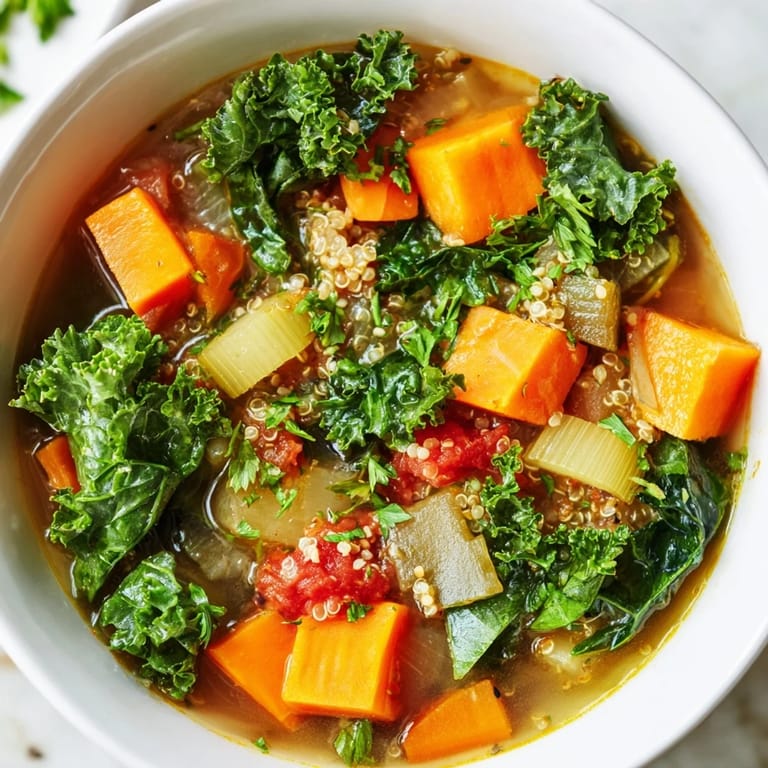
 Pin it
 There's something about the first cold snap of the season that makes me crave a bowl of something warm and alive with vegetables. One November evening, I stood in my kitchen with a bunch of kale that was starting to wilt, a few carrots rolling around in the crisper drawer, and the sudden realization that I had nothing complicated planned for dinner. That's when I threw together this soup—not from any grand plan, but from the simple desire to use what I had on hand and fill the house with steam and good smells. It became my go-to on days when the world felt a bit too cold and I needed something that tasted like care in a bowl.
I remember bringing a pot of this to a potluck on a gray Saturday in January, expecting it might get overlooked next to flashier dishes. Instead, people kept coming back for seconds, ladling it into their bowls with genuine quiet pleasure. One friend asked if there was cream in it—there wasn't—and seemed almost surprised that something so satisfying could be completely dairy-free. That moment stuck with me because it proved that good food doesn't need to be complicated or heavy to make people feel truly fed.
Ingredients
- Olive oil: Just a tablespoon to start the soup's foundation—it coaxes out the sweetness hidden in the onions and garlic.
- Onion and garlic: The aromatic backbone; I always mince the garlic fine so it melts into the broth rather than sitting as chunks.
- Carrots, celery, and parsnip: These three together create depth—the parsnip adds an earthy sweetness that rounds everything out.
- Sweet potato: It softens into the broth and gives the soup body without any cream or starch; choose one that's firm, not sprouting.
- Kale or Swiss chard: Strip the leaves from the stems before chopping so you get tender pieces that cook evenly; the stems can go into stock another day.
- Cabbage: It sounds subtle, but it keeps the broth bright and adds a gentle textural contrast to the softer vegetables.
- Tomatoes: Canned work beautifully here and actually provide more consistent flavor than watery winter tomatoes; I never rinse them because that juice is liquid gold for the broth.
- Quinoa: Rinse it under cool water before adding—this removes the bitter coating and prevents a soapy taste creeping into your soup.
- Vegetable broth: Use low-sodium so you control the salt level yourself; the quality of your broth matters more than you'd think.
- Dried thyme and oregano: These warm spices bloom in the heat and become almost floral; don't skip them.
- Bay leaf: A single leaf adds a subtle backdrop that ties everything together—remember to fish it out before serving.
- Fresh parsley and lemon juice: These are not optional extras; they wake up the soup at the very end and transform it from warm to vibrant.
Tired of Takeout? 🥡
Get 10 meals you can make faster than delivery arrives. Seriously.
One email. No spam. Unsubscribe anytime.
Instructions
- Soften the aromatics:
- Heat your olive oil in a large pot over medium heat and add the diced onion and minced garlic, stirring often. You'll know it's ready when the onion turns translucent and the kitchen fills with that unmistakable warm fragrance—usually around 2 to 3 minutes.
- Build with root vegetables:
- Add the carrots, celery, parsnip, and sweet potato all at once, stirring occasionally so nothing sticks to the bottom. Let them soften for 5 to 6 minutes; you're not trying to cook them through yet, just start breaking down their structure.
- Add the leafy greens:
- Stir in the kale or chard and cabbage along with the tomatoes and their juice, cooking for just another couple of minutes until everything is submerged and glistening with oil.
- Pour in the broth and season:
- Add the rinsed quinoa, vegetable broth, thyme, oregano, bay leaf, salt, and black pepper, stirring so everything mingles. Bring it all to a boil—you'll see the surface ripple and steam rise.
- Simmer until tender:
- Lower the heat, cover the pot, and let it bubble gently for 25 to 30 minutes, checking occasionally to make sure nothing is sticking and the vegetables are becoming genuinely tender. The quinoa will have small white spiral tails when it's done.
- Finish and taste:
- Remove the bay leaf, stir in the fresh parsley and a squeeze of lemon juice, then taste the soup and adjust the seasoning. This last moment is where the soup goes from good to unforgettable.
- Serve warm:
- Ladle the soup into bowls and hand them over with a spoon and maybe a hunk of crusty bread if you have it nearby.
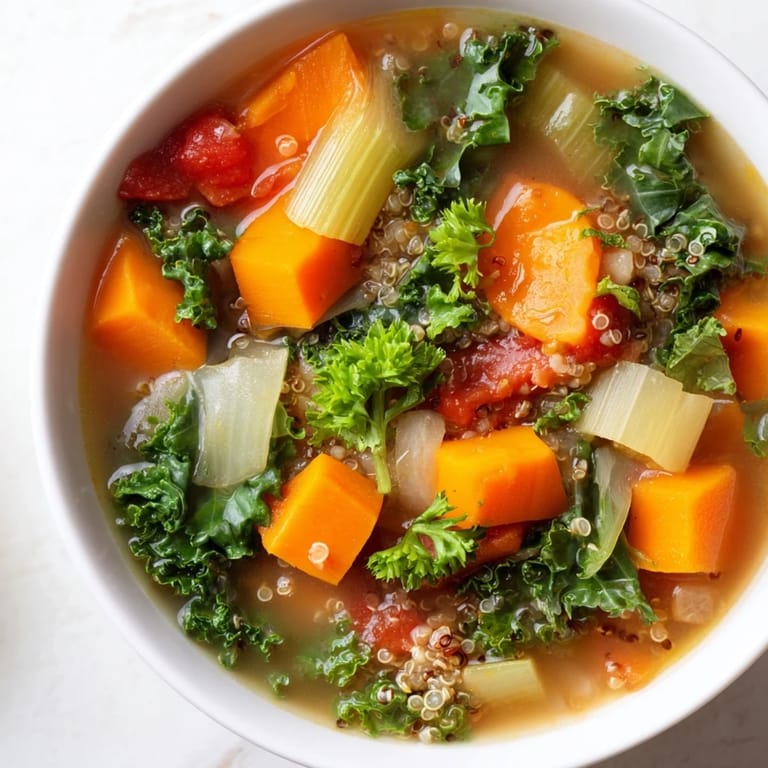 Pin it
 What strikes me most about this soup is how it transforms a random collection of vegetables into something that feels intentional and whole. I've made it for friends recovering from illness, for quiet weeknight dinners, and once for a small dinner party where it somehow became the main event. There's something humble but deeply satisfying about spooning nourishment into a bowl.
How to Make It Your Own
This soup is a framework rather than a rigid formula, which is partly why I keep making it. If you don't have parsnips, add more carrots instead. If your greens are spinach instead of kale, the soup will still be delicious—though spinach cooks faster so add it in the final minutes to keep it from turning into mush. You can swap the quinoa for millet or brown rice if that's what you have, or add a can of drained chickpeas for extra protein and earthiness. The beauty of vegetable soup is that it asks you to work with what you have and trust that it will come together.
Storage and Reheating
This soup keeps beautifully in the refrigerator for up to four days in a sealed container, and it actually tastes better on day two once the flavors have deepened and married. You can also freeze it in portions—just leave a little headspace in each container since the liquid expands slightly. When you reheat, do it gently over medium heat, stirring occasionally, and add a splash of fresh broth or water if it's thickened more than you'd like. A squeeze of lemon juice right before serving always brightens a reheated batch.
Serving Suggestions and Pairings
Serve this soup as a meal unto itself, or pair it with something simple on the side like good bread or a small green salad if you want to round out the plate. On very hungry days, a thick slice of whole-grain toast topped with mashed avocado on the side turns this into something even more satisfying and complete. The soup also works beautifully as part of a larger meal—I've served it before the main course on winter evenings when the meal needed structure and warmth.
- Try drizzling a small amount of good olive oil and a pinch of fresh herbs over each bowl just before serving for an unexpected touch of richness.
- A small wedge of lemon at the table lets people brighten their own bowl to taste, which some people love more than others.
- If you want a little heat, a small pinch of red pepper flakes stirred in while cooking adds depth without overwhelming the delicate vegetable flavors.
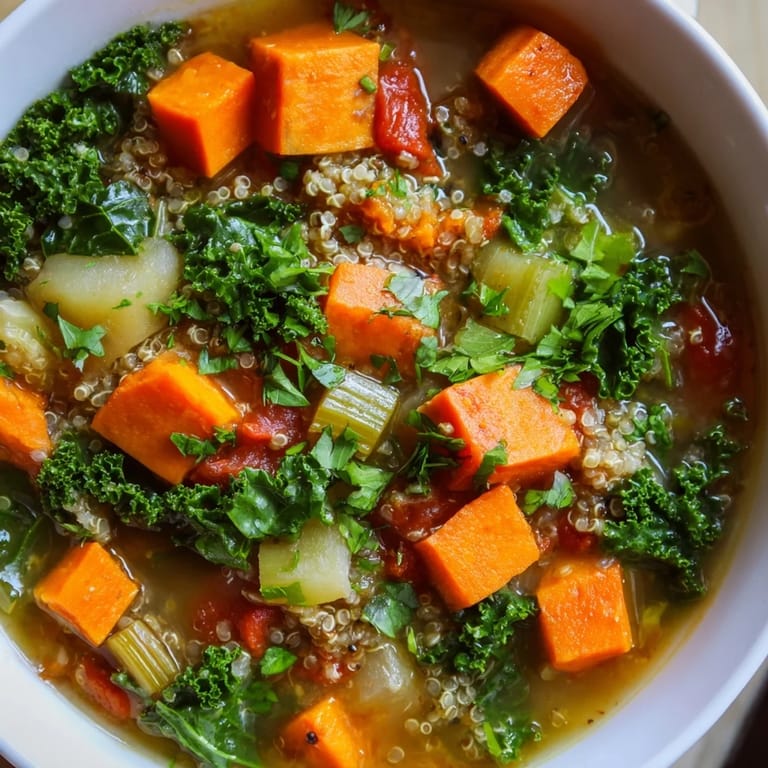 Pin it
 There's real magic in a bowl of soup that tastes like someone spent hours in the kitchen, even though you've spent less than an hour from start to finish. This is the kind of recipe I come back to again and again because it asks so little but gives so much.