 Pin it
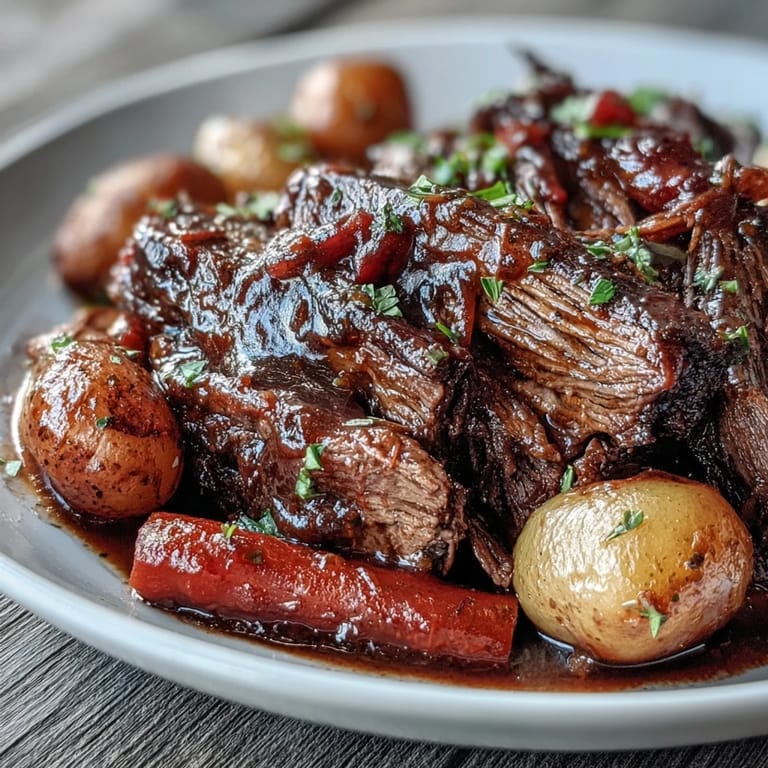
 The smell of this pot roast takes me back to a rainy Sunday when my apartment smelled so incredible my neighbor knocked on the door asking what I was making. I hadnt planned anything special, just threw things together after finding a beautiful chuck roast on sale at the market. That afternoon changed how I thought about slow cooking.
I made this for my fathers birthday last winter and watched him go back for thirds without saying a word. The meat was falling apart, the vegetables were meltingly tender, and the kitchen stayed warm for hours while we lingered at the table. Sometimes the simplest meals become the most memorable.
Ingredients
- Beef chuck roast (3-3.5 lbs): Chuck has the perfect marbling that breaks down into succulent shreds during braising, and choosing a well-marbled piece makes all the difference
- Kosher salt and black pepper: Generous seasoning creates the foundation, and dont be afraid to salt more aggressively than you normally would
- All-purpose flour: This creates a beautiful crust during searing and helps thicken the braising liquid into that luscious gravy
- Olive oil and butter: The combination gives you a high smoke point from oil plus that rich flavor only butter can provide
- Yellow onion wedges: Cut into thick chunks so they dont completely dissolve, adding sweetness and body to the sauce
- Garlic cloves: Smashed cloves release their oils more readily, infusing the entire dish with mellow garlic flavor
- Carrots, celery, and baby potatoes: Classic aromatics become tender enough to eat with just a fork, absorbing all those savory juices
- Tomato paste: Browning this in the pot before adding liquid creates deep caramelized notes that taste like hours of cooking
- Dry red wine: The acidity cuts through the rich beef, and any decent drinking wine works beautifully here
- Beef broth: Low-sodium lets you control the salt level while building that beefy backbone
- Worcestershire sauce: This secret ingredient adds umami depth that makes people ask what your special ingredient is
- Fresh rosemary and thyme: Woody herbs hold up to long cooking, releasing their essential oils slowly into the braising liquid
- Bay leaves: Two leaves add subtle floral notes that round out all the bold flavors
Tired of Takeout? 🥡
Get 10 meals you can make faster than delivery arrives. Seriously.
One email. No spam. Unsubscribe anytime.
Instructions
- Prep your oven and meat:
- Preheat oven to 300°F (150°C) and pat the beef completely dry with paper towels. Season generously with salt and pepper, then dust lightly with flour, shaking off any excess.
- Create the perfect sear:
- Heat oil and butter in a heavy Dutch oven until sizzling hot. Sear the roast 4 to 5 minutes on each side until deeply browned, getting the edges too. Transfer to a plate.
- Build the flavor base:
- Reduce heat to medium and cook onion wedges until softened and golden, about 4 minutes. Add garlic and stir for just 30 seconds until fragrant.
- Caramelize the tomato paste:
- Stir in the tomato paste and let it cook, stirring constantly, until it darkens to a deep rust color and smells sweet and intense, about 2 minutes.
- Deglaze with wine:
- Pour in the red wine and scrape up all those browned bits from the bottom of the pot. Let it bubble for 2 to 3 minutes until slightly reduced.
- Add the braising liquid:
- Pour in beef broth and Worcestershire, then add rosemary, thyme, and bay leaves. Return the roast to the pot with any juices, nestling it into the liquid.
- Begin the slow braise:
- Bring to a gentle simmer, cover tightly, and transfer to the oven. Cook for 1½ hours undisturbed.
- Add the vegetables:
- Carefully flip the roast and tuck carrots, celery, and potatoes into the liquid. Re-cover and cook another 1½ to 2 hours until meat forks apart easily.
- Rest and strain:
- Transfer meat and vegetables to a platter and tent with foil. Skim fat from the surface of the liquid.
- Finish the gravy:
- For thicker sauce, simmer the liquid and whisk in cornstarch mixture. Cook 2 to 3 minutes until glossy and coating the back of a spoon.
- Serve it up:
- Discard herb stems and bay leaves. Shred or slice beef and arrange over vegetables. Ladle plenty of gravy over everything and garnish with parsley.
 Pin it
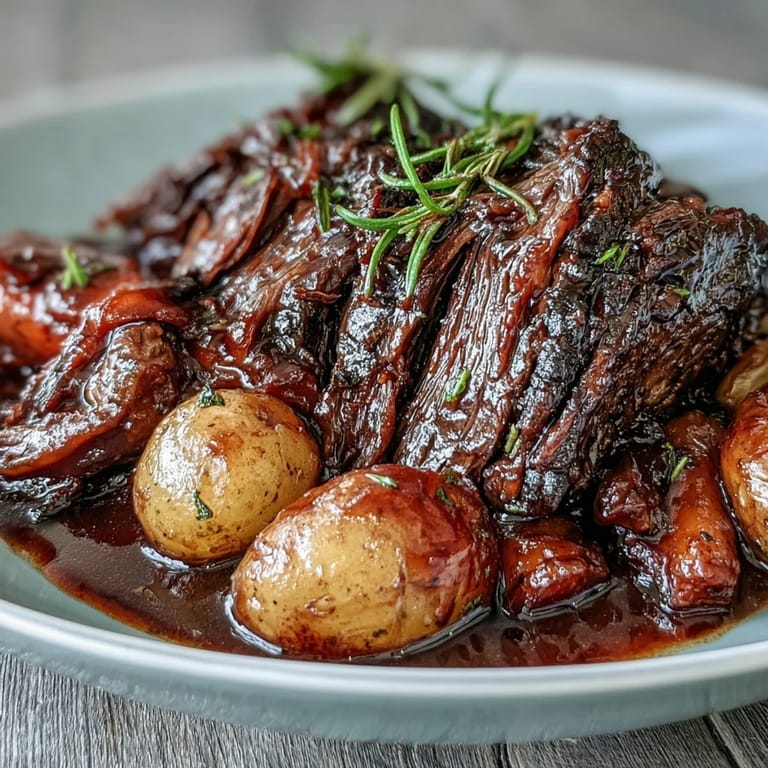
 There was a Tuesday night last November when this pot roast saved me. Work had been exhausting, it was pouring rain, and I came home to this bubbling away in the oven from prep Id done the night before. The house smelled like a restaurant, and suddenly everything felt manageable.
Making It Your Way
Sometimes I skip the wine and use extra broth, and honestly, its still incredible. The tomato paste and herbs provide so much flavor that you wont feel like something is missing. Other times, Ive added parsnips or swapped fresh rosemary for dried in a pinch. The technique matters more than exact measurements.
The Leftover Situation
This recipe makes enough that youre practically guaranteed leftovers, which I consider a feature. The flavors deepen overnight, and Ive been known to eat it cold straight from the fridge. My favorite transformation is shredding the leftover beef and making tacos with that gravy.
Getting The Timing Right
The hardest part is patience, but I promise the wait is worth it. Start checking at the 3 hour mark, but know that every piece of meat cooks differently. Youre looking for fork-tender, not just soft.
- A good chuck roast should have nice white marbling throughout, not just on the edges
- If the gravy looks too thick, just thin it with a splash of broth before serving
- Crusty bread is almost mandatory for sopping up every last drop of that sauce
 Pin it
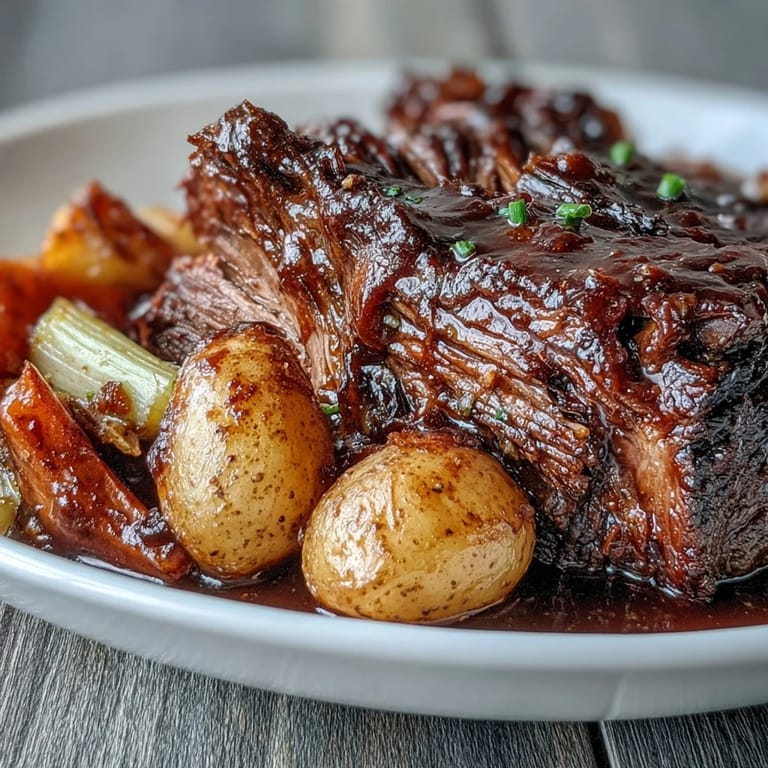
 Theres something profoundly satisfying about a meal that asks so little of you but gives so much in return. I hope this becomes one of those recipes you turn to without thinking, the one that says home no matter whats happening outside.
Recipe FAQ
- → What cut of beef works best for pot roast?
Chuck roast or blade roast are ideal choices due to their marbling and connective tissue, which break down during slow cooking to create tender, flavorful meat. Look for cuts with good fat distribution throughout.
- → Can I make this without wine?
Yes, simply replace the red wine with an equal amount of beef broth. The dish will still be delicious, though the flavor profile will be slightly less complex. You can add a splash of balsamic vinegar for acidity.
- → How do I know when the pot roast is done?
The beef should be fork-tender and easily shred or slice. It typically takes 3-3.5 hours of braising. The meat will yield easily when pierced with a fork and the internal temperature should reach around 190-205°F for optimal tenderness.
- → Can I prepare this in advance?
Absolutely. Pot roast actually improves when made a day ahead as the flavors meld. Cool completely, refrigerate, then reheat gently on the stovetop or in a low oven. The fat will solidify on top for easy removal.
- → Why is searing the meat important?
Searing creates a caramelized crust that adds deep, complex flavors through the Maillard reaction. This browning step is essential for developing rich taste in both the meat and the braising liquid.
- → What should I serve with pot roast?
While the dish includes potatoes and vegetables, it pairs wonderfully with crusty bread for soaking up gravy, buttered egg noodles, creamy mashed potatoes, or soft polenta. A simple green salad provides fresh contrast.