 Pin it
 There's a particular moment in late August when tomatoes reach their absolute peak, and my kitchen fills with that deep, almost wine-like smell as they roast. I was experimenting one afternoon, trying to recreate something I'd tasted at a small trattoria near the Amalfi Coast, and discovered that slow roasting transforms ordinary tomatoes into something almost unrecognizable—concentrated, sweet, almost caramelized. That day changed how I think about soup entirely, turning it from something you simmer hastily into something worth the wait.
I made this for my sister during one of those first cool evenings in September, when she'd been going through a rough patch and needed comfort more than conversation. Watching her spoon through that silky, aromatic depth—the way her shoulders relaxed with the first taste—reminded me that sometimes food is the kindest thing you can offer someone. She asked for the recipe that night, and now it's hers to make on her difficult days too.
Ingredients
- Ripe tomatoes, 1.5 kg (3.3 lbs), halved: Use tomatoes that smell fragrant and feel slightly soft—this is where flavor lives, so don't settle for pale supermarket varieties if you can help it.
- Large yellow onion, 1, quartered: The sweetness of yellow onions balances tomato acidity beautifully, and they caramelize into something almost honeyed during roasting.
- Garlic cloves, 6, peeled: Roasted garlic becomes gentle and almost nutty, so don't fear the quantity—it's mellow compared to raw.
- Extra-virgin olive oil, 2 tbsp: Quality matters here since it's tasted directly; cheap olive oil tastes thin and tinny once it's the star of the show.
- Kosher salt and freshly ground black pepper: Kosher salt dissolves more evenly than table salt, and freshly ground pepper gives brightness that pre-ground simply cannot match.
- Vegetable broth, 2 cups (480 ml), low sodium: Low sodium lets you control the final seasoning rather than fighting an overly salty base.
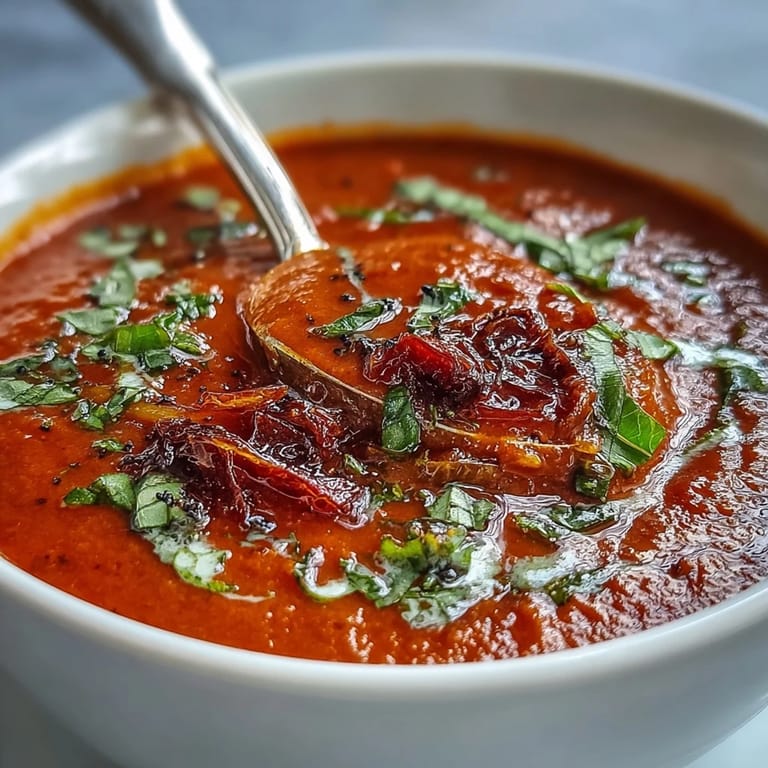
- Fresh basil leaves, 1/2 cup (15 g), packed: Add this after roasting to preserve its delicate anise-like flavor—cooking basil too long turns it bitter and darkens its color.
- Unsalted butter, 1 tbsp, optional: This adds richness that makes the soup feel luxurious without being heavy, though it can be skipped entirely.
- Sugar, 1 tsp, optional: Just a whisper of sweetness rounds out acidity without tasting sugary—use it only if your tomatoes taste harsh.
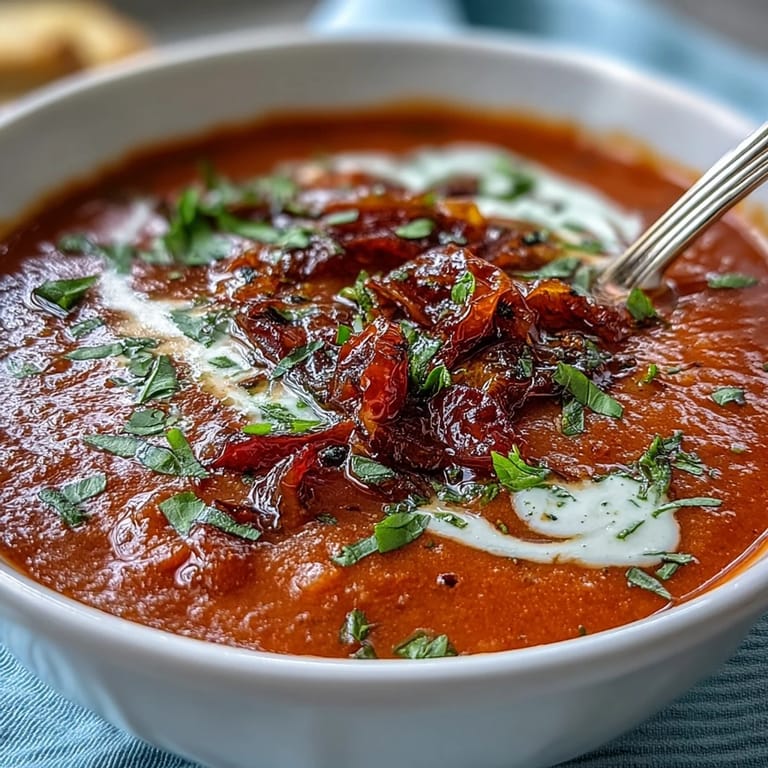
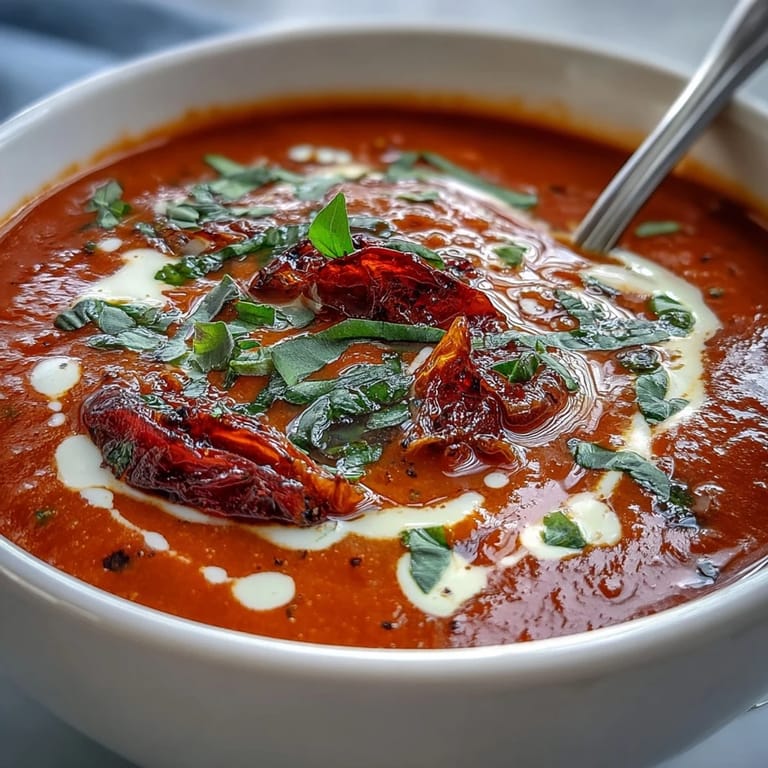
- Heavy cream or crème fraîche, 1/4 cup (60 ml), optional: A drizzle at the end creates those beautiful swirls and softens the intensity of the roasted tomato flavor.
- Fresh basil leaves and croutons for garnish: These final touches add textural contrast and make an ordinary bowl feel intentional and considered.
Tired of Takeout? 🥡
Get 10 meals you can make faster than delivery arrives. Seriously.
One email. No spam. Unsubscribe anytime.
Instructions
- Heat your oven and prepare:
- Set your oven to 220°C (425°F) and line a baking sheet with parchment paper—this prevents sticking and makes cleanup nearly invisible. Having everything ready means you can move quickly once you start arranging vegetables.
- Arrange and season the vegetables:
- Scatter your tomato halves, onion quarters, and garlic cloves across the sheet, then drizzle everything generously with olive oil and toss until coated evenly. The oil helps them caramelize and prevents drying out, so don't hold back here.
- Roast until golden and tender:
- Let them roast for 35 to 40 minutes, until the tomato edges are darkened and slightly collapsed, and the onions have softened into themselves. The longer roasting time deepens flavor in a way that faster methods simply cannot replicate.
- Build your soup base:
- Pour the roasted vegetables and every precious drop of their juices into a large pot, then add your vegetable broth and bring everything to a gentle simmer over medium heat. Don't rush this step—let the flavors meld gradually.
- Finish with fragrance and richness:
- Stir in your fresh basil leaves, butter if you're using it, and just a touch of sugar if your tomatoes taste sharp. Simmer for 5 minutes to let the basil flavor bloom without turning bitter.
- Blend until silky:
- Use an immersion blender to puree everything until completely smooth, or blend in batches in a countertop blender before returning to the pot. The immersion blender is easier and creates less mess, but either method works beautifully.
- Taste and refine:
- Taste your soup and adjust salt, pepper, or sugar as needed—this moment matters because seasoning can vary wildly depending on your tomatoes and broth. If you want a restaurant-style silky texture, pass it through a fine sieve to remove any remaining seeds.
- Serve with intention:
- Ladle into bowls while hot, and add a drizzle of cream and a few fresh basil leaves to each one. A few croutons or a piece of toasted bread makes it feel like a proper meal rather than just soup.
 Pin it
 I learned the real magic of this soup one rainy Sunday when a friend dropped by unannounced, and I realized I'd made it the day before. Reheating it gently on the stovetop, I watched the flavors somehow deepen overnight—the basil infusing deeper, the roasted notes becoming more complex. That's when I understood this isn't a soup you make and immediately forget; it's something that improves with a moment's rest and patience.
The Power of Roasting
Roasting vegetables in an oven transforms them through a process called the Maillard reaction, where heat creates entirely new flavors and colors that you simply cannot achieve by boiling or sautéing. The tomatoes lose moisture slowly, which concentrates their natural sugars and deepens their savory qualities, while the onions turn almost honeyed and the garlic becomes sweet and mellow. This is why roasted tomato soup tastes so different from boiled tomato soup—the technique changes everything, and once you understand this, you'll start roasting vegetables for almost everything.
Adjusting for Your Ingredients
The beauty and challenge of tomato soup is that tomatoes vary wildly depending on the season, where they're grown, and how ripe they are when you cook them. In peak summer, you might need less sugar because the tomatoes are naturally sweet and complex, while in winter, store-bought tomatoes might taste acidic or watery, requiring a bit more help. Tasting as you go—rather than following measurements blindly—is how you develop the soup that tastes right for your specific ingredients rather than fighting against them.
Versatility and Flavor Variations
This soup is a beautiful canvas for experimentation, and I've learned that small additions can shift it entirely in new directions. A splash of balsamic vinegar adds subtle sweetness and complexity, while red pepper flakes introduce a gentle heat that makes you notice the other flavors more acutely. Some mornings I add a teaspoon of tomato paste before blending, which deepens the umami and creates an almost wine-like richness that feels sophisticated without tasting heavy.
- For a vegan version, simply omit the butter and use your favorite plant-based cream alternative, and the soup loses nothing in the translation.
- Pair this with crusty bread, a simple salad, or even some grilled cheese for a complete meal that feels nourishing without being complicated.
- Make a double batch and freeze it in portions—it keeps beautifully for up to three months and reheats gently without separation or texture breakdown.
 Pin it
 This soup taught me that sometimes the most luxurious-tasting food comes from patience and good ingredients rather than complicated technique or expensive additions. Every time I make it, someone asks if I hired a chef, which always makes me smile.
Recipe FAQ
- → Can I use canned tomatoes instead of fresh?
While fresh tomatoes yield the best flavor, you can substitute with high-quality canned whole tomatoes. Drain them well and pat dry before roasting to achieve similar caramelization. Adjust cooking time slightly as canned tomatoes contain more moisture.
- → How do I store and reheat leftovers?
Cool completely and refrigerate in an airtight container for up to 4 days, or freeze for up to 3 months. Reheat gently over medium-low heat, stirring occasionally. Add a splash of broth if the soup thickens too much upon standing.
- → What's the purpose of roasting the vegetables first?
Roasting concentrates natural sugars in tomatoes and onions, creating deep caramelized notes you can't achieve through simmering alone. This extra step transforms ordinary ingredients into something extraordinary with complex, layered flavors.
- → Can I make this dairy-free?
Absolutely. Simply omit the butter and cream, or substitute with coconut cream, cashew cream, or your favorite plant-based alternative. The roasted vegetables provide plenty of richness on their own.
- → What toppings work best with this soup?
A drizzle of good olive oil, fresh basil chiffonade, toasted pine nuts, or homemade croutons add beautiful texture and flavor. A dollop of pesto or a sprinkle of parmesan also complements the tomatoes beautifully.