 Pin it
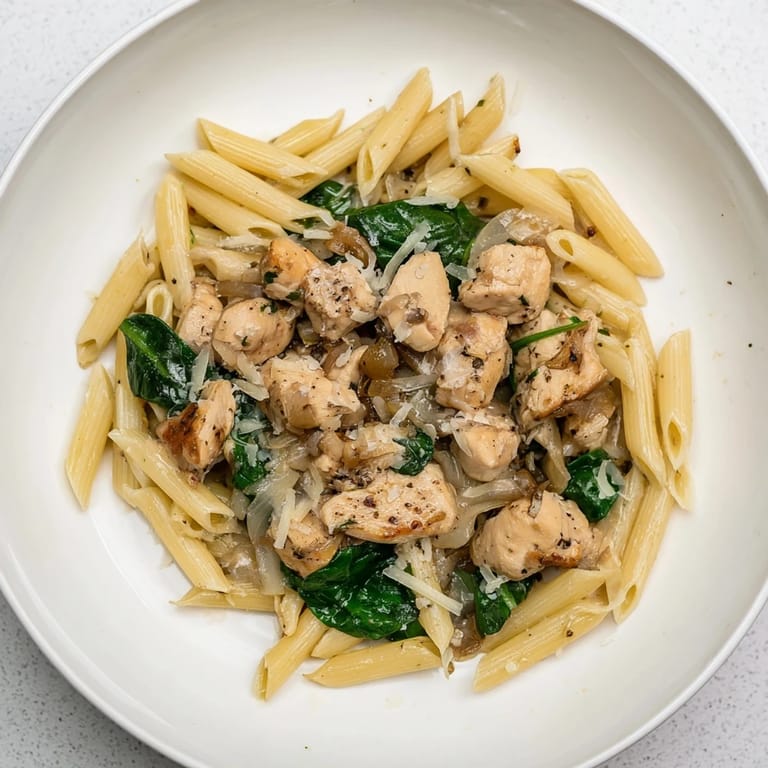
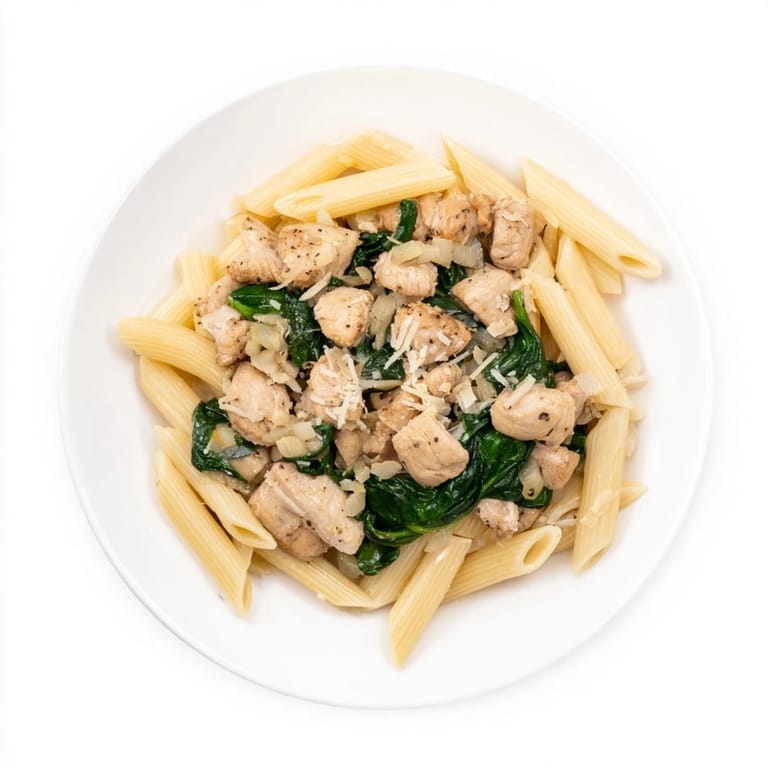
 Wednesday nights used to mean frozen pizza and exhaustion, until I stopped overthinking dinner and threw everything into one pot. The first time I made this, I wasn't trying to impress anyone—I just wanted something warm and real on the table in twenty minutes. The chicken turned golden, the garlic perfumed the kitchen, and by the time the spinach wilted into those buttery noodles, I realized I'd stumbled onto something better than convenience food. It was actually good.
My partner came home to the smell of garlic and herbs filling the apartment, and I watched his face soften before he even tasted it. He asked if I'd been planning this all day, and I had to laugh—this was pure improvisation, the kind of meal you make when you stop waiting for the perfect recipe and just trust your instincts instead.
Ingredients
- Boneless, skinless chicken breasts (2, about 300 g), diced: Cut into bite-sized pieces so they cook evenly and disappear into each spoonful; smaller chunks mean they're tender instead of chewy.
- Fresh baby spinach (3 cups, 90 g), roughly chopped: The tender leaves wilt instantly, no need to overthink it—rough chops are perfect.
- Onion (1 small), finely chopped: This builds the foundation of flavor, so don't skip it even though it's modest.
- Garlic (2 cloves), minced: Fresh garlic makes all the difference; jarred feels like a shortcut that shows.
- Short pasta (250 g), penne or fusilli: These shapes catch sauce in their ridges and twists; longer noodles just slip away.
- Low-sodium chicken broth (3 cups, 720 ml): The liquid becomes a light, savory sauce that coats everything—taste it first so you're not adding salt to something already salted.
- Olive oil (1 tablespoon): Just enough to prevent sticking and give the chicken a chance to brown gently.
- Parmesan cheese (1/4 cup, 25 g), grated: A small shower of umami that ties everything together; the optional part is truly optional, but I've never skipped it.
- Dried Italian herbs (1/2 teaspoon): This is your gentle seasoning base; fresh herbs are lovely if you have them, but dried works beautifully here.
- Red pepper flakes (1/4 teaspoon), optional: A whisper of heat that wakes up the dish if you want it to.
- Salt and black pepper, to taste: Always season as you go, especially with pasta dishes.
Tired of Takeout? 🥡
Get 10 meals you can make faster than delivery arrives. Seriously.
One email. No spam. Unsubscribe anytime.
Instructions
- Warm the oil and start the chicken:
- Pour olive oil into your pot over medium heat and let it shimmer for a moment. Add the diced chicken and let it sit for a minute before stirring—you want those pieces to catch some color and develop a golden crust, which means flavor.
- Build flavor with aromatics:
- Once the chicken is lightly browned (it doesn't need to be cooked through yet), scatter in your chopped onion and garlic. The kitchen will smell incredible almost immediately; stir for about two minutes until the onion turns translucent and soft.
- Add pasta and liquid:
- Stir in the dry pasta straight from the box, then pour in the chicken broth along with the Italian herbs, red pepper flakes if you're using them, and a pinch of salt and pepper. Bring everything to a boil—you'll see the liquid come alive and steam rise from the pot.
- Simmer until pasta is tender:
- Lower the heat to medium-low, cover the pot, and let it bubble gently for eight to ten minutes. Stir every couple of minutes so nothing sticks to the bottom and the pasta cooks evenly. The magic happens when you see most of the liquid absorbed and the pasta just barely yielding when you bite it.
- Wilt in the spinach:
- Add all that bright green spinach and stir it down—it might look like too much at first, but it collapses into the pasta like it belongs there. One to two minutes of gentle stirring and you're done.
- Finish and serve:
- Remove from heat, stir in the Parmesan if you're using it, and taste for seasoning. Drizzle with olive oil if the mood strikes, and serve it hot while the flavors are still singing.
 Pin it
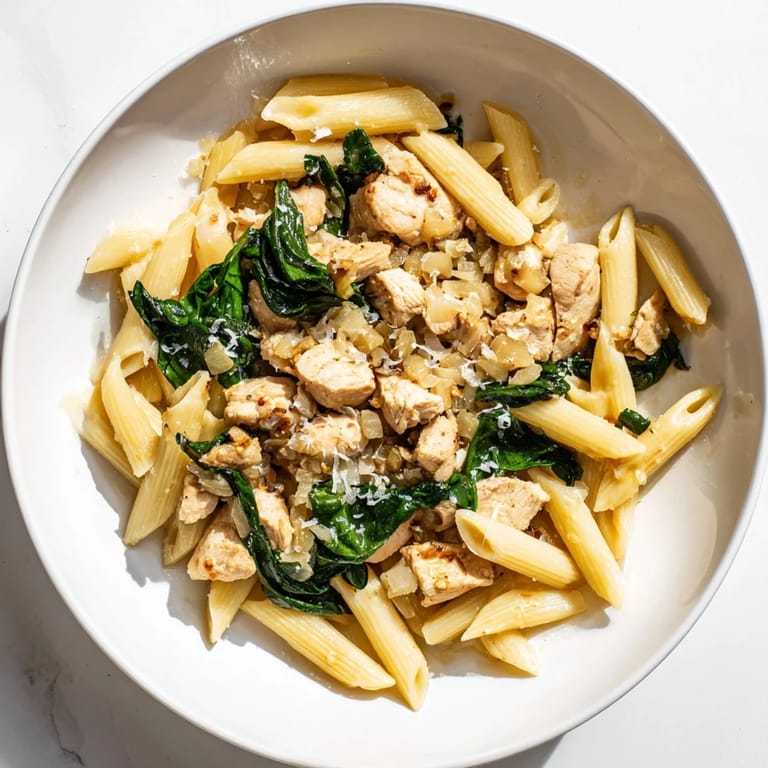
 There's a moment in cooking when everything comes together—when the steam clears and you see a pot of something golden and whole, something that started as a scattered list of ingredients and became an actual meal. This dish gave me that moment on a regular Wednesday, which is when you know you've found something worth keeping around.
The Beauty of One-Pot Cooking
One pot means less cleanup, but it also means less separation between ingredients—the pasta drinks in all the chicken broth, the spinach mingles with the garlic oil, and the chicken pieces get to know every other element in the pan. There's no pretense, just flavors building on each other while you stand there with a wooden spoon, watching it happen.
Timing and Flexibility
Twenty minutes is genuinely all you need, which makes this the kind of recipe you can pull out on nights when hunger arrives faster than inspiration. The structure is forgiving enough that if your chicken takes an extra minute or your pasta cooks slightly faster, the whole thing adapts without falling apart. It's patient cooking for impatient days.
Making It Your Own
The base is simple and solid, which means it's a canvas for your own kitchen instincts. If you love cream, a splash of it at the end turns everything silky. If mushrooms or cherry tomatoes are calling to you, throw them in with the pasta—they'll soften into the broth and add their own quiet complexity. This is the kind of recipe that gets better each time you make it because you learn where your preferences live.
- A pinch of nutmeg stirred in with the spinach adds an unexpected warmth that makes people ask what's different.
- If you use whole wheat pasta, add an extra splash of broth since it tends to drink up more liquid than regular pasta.
- Leftover pasta actually becomes more flavorful the next day as the flavors marry together overnight.
 Pin it
 Meals like this remind me why cooking matters—not because it's complicated or impressive, but because something warm made with intention tastes like care, even on the most ordinary nights. That's the whole recipe right there.
Recipe FAQ
- → Can I use different pasta shapes for this dish?
Yes, short pasta like penne, fusilli, or rotini works best due to their ability to absorb flavors and cook evenly in one pot.
- → How can I make this dish creamier?
Adding a splash of cream or a dollop of ricotta before serving enhances creaminess without overpowering the light sauce.
- → Is it possible to make this meal gluten-free?
Absolutely. Substitute regular pasta with certified gluten-free pasta to accommodate gluten sensitivities.
- → What substitutions work for dairy-free preferences?
Simply omit the Parmesan or replace it with a plant-based cheese alternative to keep the dish dairy-free.
- → Can extra vegetables be added?
Yes, adding ingredients like cherry tomatoes or mushrooms can boost flavor and nutritional value.