 Pin it
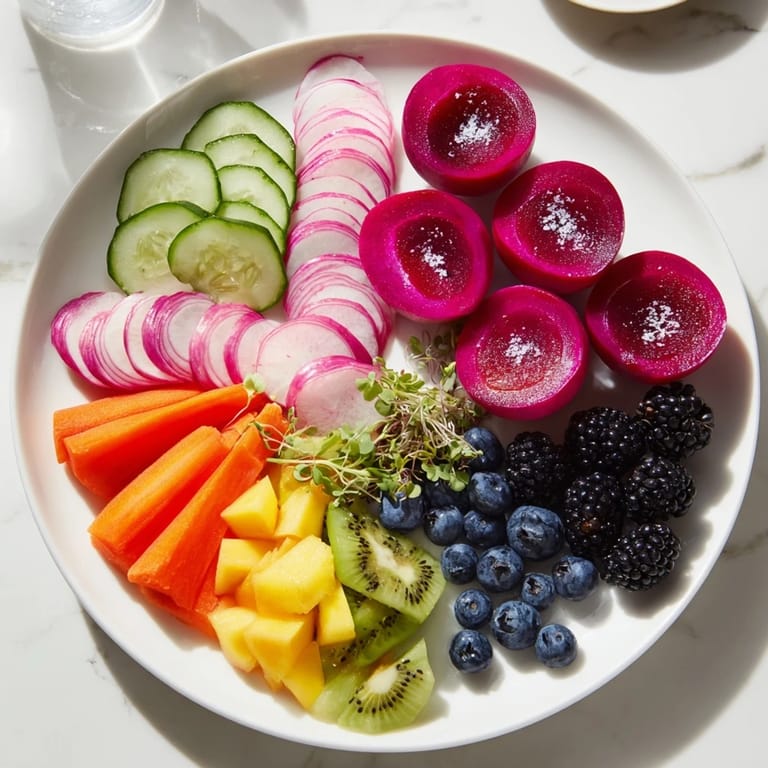
 There's something magnetic about a board that glows. I pulled out my dusty black serving platter one evening, originally meant for charcuterie, and thought: what if I arranged the brightest things my kitchen could offer? Within an hour, I'd boiled eggs in beet juice, transformed ordinary vegetables into jewel-toned pickles, and scattered fresh fruit across the darkness like edible constellations. My guests that night didn't just eat—they paused, phones out, genuinely delighted by something as simple as color and contrast.
My sister brought her new partner to a potluck, and I was nervous about impressing them both. I made this board and watched his face light up when he realized the purple eggs came from beets, not food coloring. That moment—when something visually stunning also felt honest and homemade—that's when I knew this recipe belonged in rotation for every gathering that mattered.
Ingredients
- Mini cucumbers: Their thin skins soften beautifully as they pickle, and they stay crisp longer than larger ones.
- Rainbow carrots: The bias cut isn't just for show—it actually exposes more surface area to the pickling brine, deepening flavor faster.
- Radishes: They're spicy and crisp, the backbone that keeps everything from feeling too soft and marinated.
- Red onion: Thinly sliced, it mellows into sweetness as it pickles, becoming almost translucent and silky.
- White vinegar: Clean, sharp, and neutral enough to let other flavors shine without overpowering.
- Water: Dilutes the vinegar just enough so the brine tastes bright, not punishing.
- Sugar and salt: These aren't afterthoughts—they balance acid, draw out vegetable moisture, and create that addictive salty-sweet snap.
- Mustard seeds and peppercorns: They infuse the brine with subtle spice and a whisper of earthiness that lingers on your palate.
- Eggs: Large ones matter here because they're the canvas for that stunning beet-dye effect.
- Cooked beet: Use fresh, not canned, so the color transfers cleanly and tastes bright.
- Apple cider vinegar: Warmer and slightly funky compared to white vinegar, it plays beautifully with beet sweetness.
- Blueberries, blackberries, kiwi, mango, dragon fruit: The color range is your whole point—choose what looks alive at your market.
- Microgreens or edible flowers: They add texture and that final sophisticated touch.
- Flaky sea salt: Not the fine stuff—you want texture that catches light and adds a final flourish of salt.
Tired of Takeout? 🥡
Get 10 meals you can make faster than delivery arrives. Seriously.
One email. No spam. Unsubscribe anytime.
Instructions
- Build your pickling brine:
- Combine vinegar, water, sugar, salt, mustard seeds, and peppercorns in a saucepan and bring to a simmer. You'll notice the mustard seeds start to bob and dance as the liquid heats—that's your signal everything is releasing its flavor. Let it bubble gently for just a minute or two until the sugar completely dissolves.
- Pickle the vegetables:
- While the brine is still steaming, pour it over your sliced cucumbers, carrots, radishes, and red onion in a heatproof container. Let it cool completely at room temperature—this is important because it gives the vegetables time to absorb the brine gradually rather than shocking them with heat. Once cool, cover and refrigerate for at least 2 hours, though overnight is when the real magic happens and flavors deepen into something truly addictive.
- Dye the eggs:
- Place eggs in a saucepan, cover with cold water, and bring to a boil, then reduce heat and simmer for 8 to 9 minutes. Transfer immediately to ice water to stop the cooking—this is what keeps the yolks perfectly creamy and golden. Peel them gently under cool running water, starting at the fat end where the air pocket is.
- Submerge in beet magic:
- Combine sliced beet, apple cider vinegar, water, sugar, and salt in a jar, then nestle your peeled eggs inside. The longer they sit—and I mean overnight, if you can wait—the deeper the burgundy-purple seeps into the whites, creating those haunting veined patterns. You'll be checking on them constantly, I promise.
- Arrange your board:
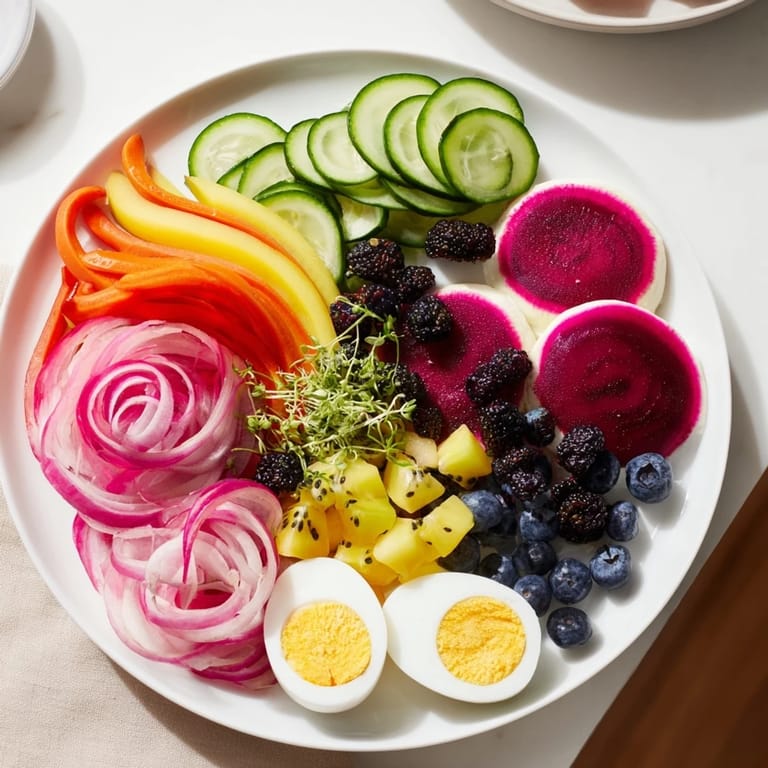
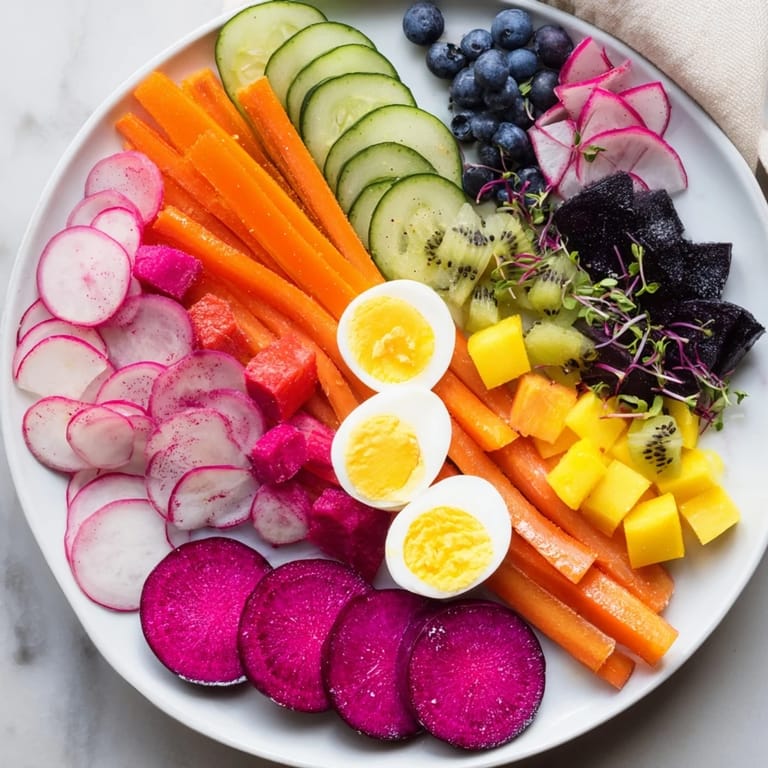
- On a large black serving board, arrange pickled vegetables in loose clusters, halved or sliced beet-dyed eggs, and fresh fruits in their own sections. This isn't about military precision—let colors pool and mingle naturally, as if they found their own balance.
- Finish and serve:
- Scatter microgreens or edible flowers over the top and finish with a pinch of flaky sea salt where it catches the light. Serve chilled, and watch people gravitate toward it before they even know what they're looking at.
 Pin it
 The moment I realized this board had become something special was when my four-year-old nephew asked if it was too pretty to eat. I told him it was specifically made to be eaten, and his face when he bit into a pickled radish—surprised by the crunch and tang—reminded me that food doesn't have to choose between being stunning and being honest.
The Pickling Secret
People think pickling is complicated, but it's really just hot vinegar doing the work while you step away. The vegetables transform without you hovering. I learned this the hard way by obsessing over my first batch, checking every hour, wondering if it was working. It was. The waiting is half the magic—the acid softens fibers, the salt draws out water and concentrates flavor, and time does the rest. Give it space, and it rewards patience beautifully.
Why Black, Really
A black board isn't just aesthetic theater. Every color snaps against that darkness in a way a white or wood board simply cannot match. The purple eggs almost glow. The berries look like jewels. Even the pale kiwi seems to sing. I tested this once out of curiosity on a light gray board, and everything just looked nice. On black, it looks impossible and joyful. That contrast is where the magic lives.
Customizing Your Brine
Once you understand the basic ratio—equal parts vinegar and water, with sugar and salt to taste—you can spin infinite variations. Turmeric stains everything golden. Purple cabbage juice creates an eerie blue that shifts toward gray. Fresh dill and coriander seed whisper different stories than mustard and pepper. I've played with them all, and each one teaches you something about balance and what your palate actually wants. The foundation stays the same, but the personality changes completely.
- Try a 3-to-1 ratio of white vinegar to rice vinegar for something slightly sweet and delicate.
- Add a star anise or two if you want an anise-forward depth that surprises people.
- Fresh herbs like tarragon or thyme go in right before serving so they don't get lost in the pickling process.
 Pin it
 This board taught me that simple ingredients—vegetables, eggs, fruit, salt—become memorable when you give them space to shine and arrange them with intention. It's the kind of recipe that feels like a small, edible art project, and isn't that the whole point of cooking for people you care about?
Recipe FAQ
- → How long should the pickled vegetables marinate?
Pickled vegetables benefit from at least 2 hours of refrigeration, but overnight marinating enhances flavor and crunch.
- → What’s the best way to dye the eggs naturally?
Simmer cooked beet slices with vinegar and water, then soak peeled hard-boiled eggs in the mixture until they reach desired color.
- → Can I prepare the platter in advance?
Yes, the pickles and eggs can be prepared ahead and refrigerated. Assemble fresh fruits and garnish just before serving.
- → What garnishes complement this vibrant platter?
Microgreens or edible flowers along with a sprinkle of flaky sea salt enhance both appearance and flavor.
- → Are there any suggested variations for dietary needs?
To keep it vegan, simply omit eggs and add extra pickled vegetables for color and texture.