 Pin it
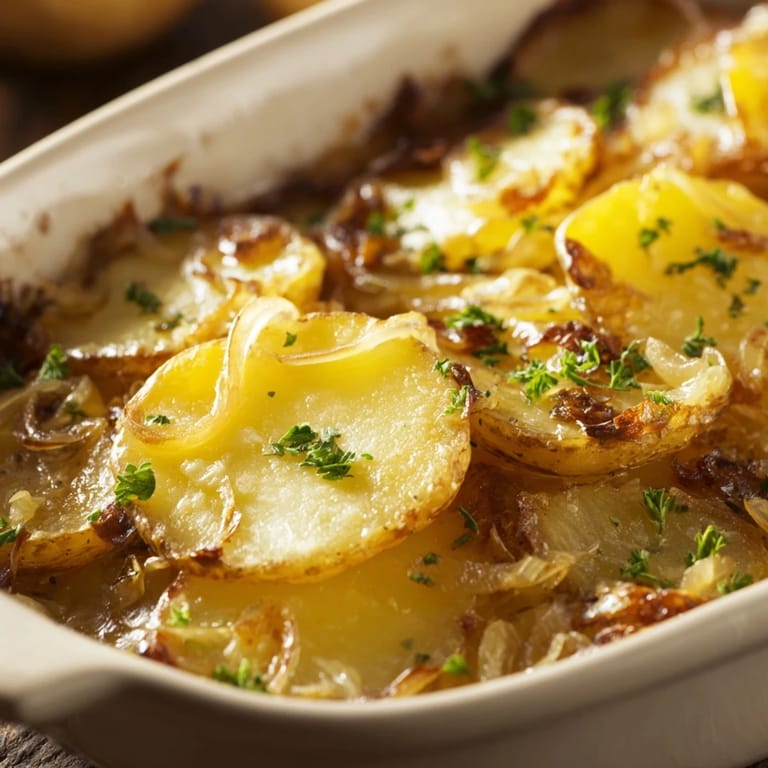
 There's something about the smell of onions turning golden that makes a kitchen feel like home. One lazy Sunday afternoon, I was trying to recreate the magic of French onion soup but didn't want to commit to a full bowl—so I layered those caramelized beauties over roasted potatoes with melted Gruyère instead. What started as an improvisation became the thing I make whenever I want that deep, savory comfort without the fuss of broth and bread.
I made this for my neighbor after she mentioned craving something warm and substantial, and she literally said it tasted like someone had distilled autumn into a dish. We ate it straight from the baking dish while it was still bubbling, passing it back and forth, and that's when I knew this wasn't just a side—it was a moment maker.
Ingredients
- Yukon Gold potatoes: These waxy potatoes hold their shape beautifully when roasted and have a naturally buttery flavor that doesn't need embellishment.
- Olive oil: Use good quality for the potatoes; it affects how golden they get.
- Yellow onions: The sweetness develops as they caramelize—don't rush this step.
- Unsalted butter: Half butter, half oil keeps the onions from burning while adding richness.
- Sugar: Just a pinch to coax out the natural sweetness without making anything taste sweet.
- Fresh thyme: If using dried, use half the amount—it's more concentrated.
- Gruyère cheese: Its nutty, slightly salty profile is exactly why French onion soup calls for it specifically.
Tired of Takeout? 🥡
Get 10 meals you can make faster than delivery arrives. Seriously.
One email. No spam. Unsubscribe anytime.
Instructions
- Prepare and season your potatoes:
- Toss those sliced potatoes with oil, salt, and pepper—don't skimp on the seasoning; it's the foundation of flavor. Arrange them in a single layer so they can actually get golden instead of steaming.
- Get them golden and tender:
- Twenty-five to thirty minutes at 425°F, flipping halfway through. You're looking for edges that are crispy and golden, centers that give when you press them gently.
- Begin the onion transformation:
- Melt butter with oil over medium-low heat and add those onions with a pinch of salt. This isn't a race—they'll sweat first, then gradually turn a deep amber color as they caramelize over 30–35 minutes total.
- Coax out the deep caramel:
- After the onions soften, sprinkle in a tiny bit of sugar and the thyme. Keep stirring occasionally, letting them deepen to that rich, almost mahogany color. If they're browning too fast, lower the heat.
- Layer with intention:
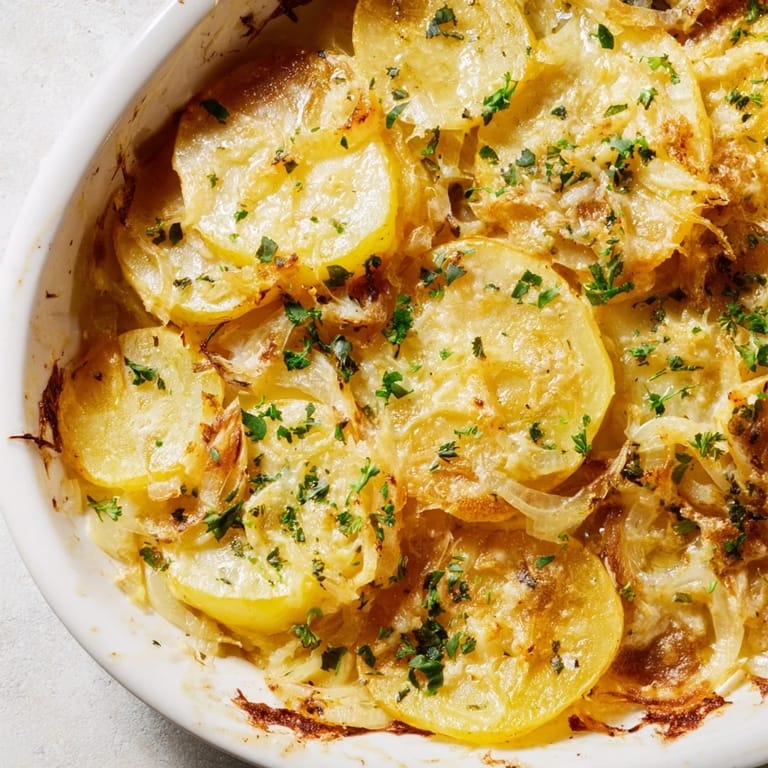
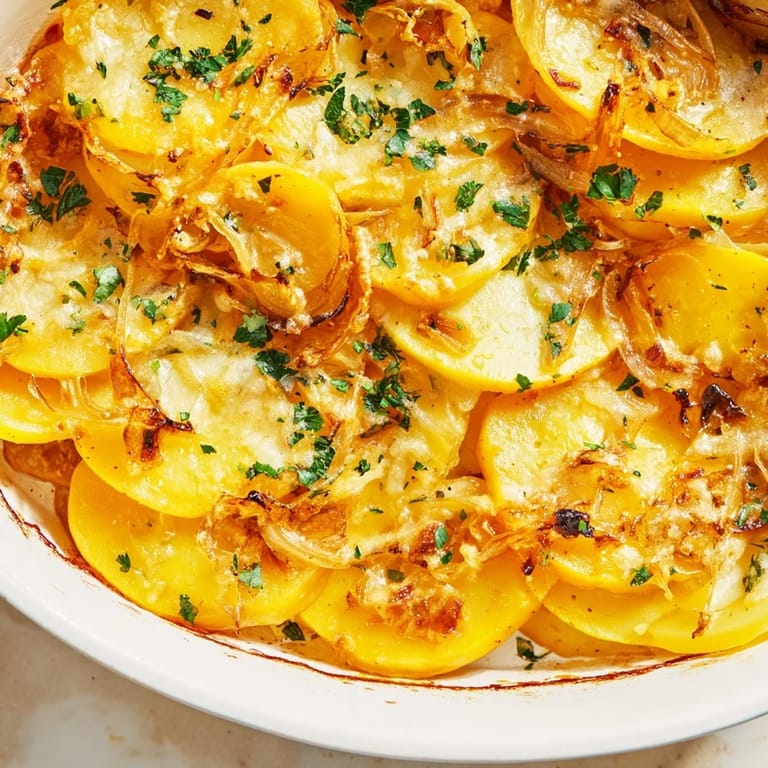
- Arrange the roasted potatoes in your baking dish, slightly overlapping them like roof tiles. Spread those caramelized onions evenly on top—this is where the flavor lives.
- Crown it with cheese:
- Scatter grated Gruyère over everything and return to the oven for 10–12 minutes until the cheese is melted and bubbling at the edges.
- Optional final touch:
- A quick 2–3 minute broil will give you those gorgeous brown spots on the cheese if that's what you're after.
 Pin it
 There was a moment when my family tasted this—the oldest one closed their eyes and said, 'This is what I wanted to feel like today'—and that's when I understood that food is really just translated emotion. This dish became our quiet anchor on nights when everyone needed grounding.
The Magic of Caramelization
The real secret isn't in the ingredients; it's in the chemical reaction that happens when you give onions time and heat. Those natural sugars break down and recombine, creating hundreds of new flavor compounds that don't exist in raw onions—it's why thirty minutes of caramelized onions tastes nothing like raw ones, and everything like depth. This is what makes the dish feel fancy without any fancy technique.
Why Gruyère Matters Here
You could use Swiss or Emmental if that's what you have, and it would still be delicious—but Gruyère has a nuttiness and slight earthiness that echoes the caramelized onions instead of competing with them. It's the cheese equivalent of knowing exactly what someone needs to hear; it just fits. The flavor multiplies when they cook together, making the whole dish feel intentional rather than thrown together.
Beyond the Side Dish
This works as a vegetarian main course if you serve it with a sharp green salad and crusty bread to soak up any golden cheese at the bottom. It's equally at home next to roasted chicken or a thick steak, where it acts as a sophisticated, homey counterpoint. Some nights I've made it the centerpiece, and no one complained.
- If you want to add a splash of dry white wine or sherry to the onions in their final minutes, let it cook off completely first.
- Make the caramelized onions a day or two ahead—they actually develop more flavor as they sit in the refrigerator.
- Leftover portions reheat beautifully in a low oven, keeping the cheese creamy and the potatoes tender.
 Pin it
 This is the kind of dish that reminds you why cooking for people matters—it's not about impressing anyone, it's about saying 'I made something warm and golden and I want you to have it.' That's everything.
Recipe FAQ
- → What type of potatoes work best?
Yukon Gold potatoes are ideal for their firm texture and buttery flavor, holding shape well during roasting.
- → How can I achieve perfectly caramelized onions?
Cook the onions slowly over medium-low heat with butter, oil, and a pinch of sugar, stirring occasionally to develop a deep golden color without burning.
- → Can I substitute the Gruyère cheese?
Yes, Swiss or Emmental cheeses are excellent substitutes providing a similar melt and nutty flavor.
- → Is it necessary to broil at the end?
Broiling briefly adds a desirable golden-brown crust to the cheese topping but can be skipped if preferred.
- → How to add extra flavor to the onions?
A splash of dry white wine or sherry near the end of caramelizing adds depth and subtle acidity.
- → What dishes pair well with this side?
This gratin complements roast chicken, steak, or a fresh green salad, enhancing the meal with rich, savory notes.