 Pin it
 I stumbled onto this salad during a stretch when I felt sluggish and bloated, reaching for something that promised lightness without sacrifice. Standing in the farmers market on a bright Saturday morning, surrounded by vendors shouting about their just-picked greens, I grabbed a bunch of kale that looked impossibly fresh and decided to build something around it. The first version was rough—too much vinegar, not enough herbs—but after a few tweaks and a friend's suggestion to add avocado for creaminess, it became the salad I now make when I need to feel genuinely nourished, not guilty.
My coworker Dana watched me eat this for lunch three days straight and finally asked what I was doing differently—apparently I'd stopped the 3 p.m. energy crash that used to send me hunting for coffee. She tried it the next week and now brings her own version to our desk cluster, and suddenly we're that annoying pair talking about how good raw vegetables taste when they're actually properly dressed and seasoned.
Ingredients
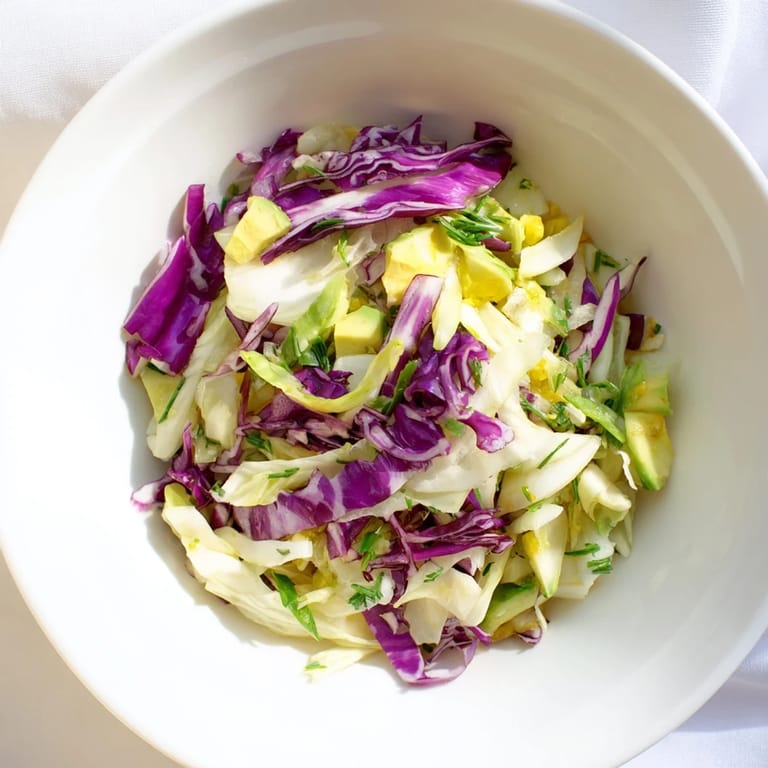
- Green cabbage, 4 cups finely shredded: The backbone of the salad—shred it thin enough that it almost melts when you bite it, which happens way faster with a sharp knife or mandoline than hacking at it with a dull blade.
- Purple cabbage, 1 cup finely shredded: Adds color and a slightly sweeter, earthier flavor that makes the salad visually arresting and taste more complex.
- Kale, 1 cup thinly sliced, stems removed: Don't skip removing the woody stems; they'll stay chewy no matter how long you massage the greens, and they wreck the texture.
- Cucumber, 1 large thinly sliced: Provides cooling crunch and helps balance the earthiness of the greens without adding heaviness.
- Sugar snap peas, 1 cup sliced: These stay crunchy and add a natural sweetness that plays perfectly against the acidic dressing.
- Avocado, 1 diced: Creates creaminess without dairy, but only add it right before serving or it'll turn brown and sad-looking.
- Fresh parsley, 1/2 cup chopped: Brightens everything and adds a peppery note that makes you taste it—not just feel like you're eating rabbit food.
- Fresh dill, 1/4 cup chopped: Sounds odd in a salad, but it introduces this delicate herbal quality that makes people ask what makes it taste so different.
- Green onions, 2 thinly sliced: A sharp bite that keeps the salad from tasting too soft or one-dimensional.
- Radishes, 1/4 cup thinly sliced: The peppery kick that reminds you this is fresh and alive, not some blended wellness smoothie.
- Extra virgin olive oil, 1/4 cup: Use actual good olive oil here—the cheap stuff makes the whole thing taste greasy instead of rich.
- Fresh lemon juice, 3 tablespoons: The acid that wakes up your mouth and prevents the salad from tasting dull or watery.
- Apple cider vinegar, 1 tablespoon: Adds depth and a subtle sweetness that lemon juice alone can't achieve.
- Dijon mustard, 1 teaspoon: Acts as an emulsifier so the dressing actually coats the leaves instead of pooling at the bottom.
- Garlic, 1 clove minced: Raw garlic is sharp—mince it fine and let it sit in the dressing for a minute so it doesn't assault your palate.
- Fresh chives, 1 tablespoon chopped: Gentler than raw onion, adds a whisper of that savory allium flavor.
- Fresh tarragon, 1 tablespoon chopped (optional): If you have it, it adds a subtle anise note that feels fancy and makes the salad taste like you know what you're doing.
- Sea salt, 1/2 teaspoon: Brings everything into focus and helps the vegetables release their own juice.
- Black pepper, 1/4 teaspoon: Freshly ground makes all the difference—pre-ground tastes like dust.
Tired of Takeout? 🥡
Get 10 meals you can make faster than delivery arrives. Seriously.
One email. No spam. Unsubscribe anytime.
Instructions
- Shred and prep the vegetables:
- Use a sharp knife or mandoline to slice everything thin—this isn't the time to be rough with your cutting. The thinner the pieces, the faster they soften slightly and the more evenly the dressing clings to them.
- Combine everything in the bowl:
- Dump all the shredded vegetables, herbs, and sliced fruits into a large bowl, but hold the avocado back for now. Toss everything together gently so nothing bruises.
- Make the dressing:
- Whisk the olive oil, lemon juice, vinegar, mustard, and minced garlic together in a small bowl or jar, then add the chives, tarragon, salt, and pepper. Taste it before you dress the salad and adjust if it needs more lemon or salt—you want it bright enough that it makes your mouth wake up.
- Dress and toss:
- Pour the dressing over the salad and toss everything together thoroughly so every leaf gets coated, not just the pretty top layer. This is also where you can massage the kale gently for 30 seconds if you want it to soften slightly.
- Let it sit:
- Give the salad 5–10 minutes to let the vegetables absorb the dressing and the flavors meld together. The cabbage will start to soften just enough to be tender without becoming mushy.
- Finish and serve:
- Add the diced avocado right before serving, taste one more time, and adjust the seasoning if it needs a little more salt or lemon. Serve immediately so nothing gets soggy.
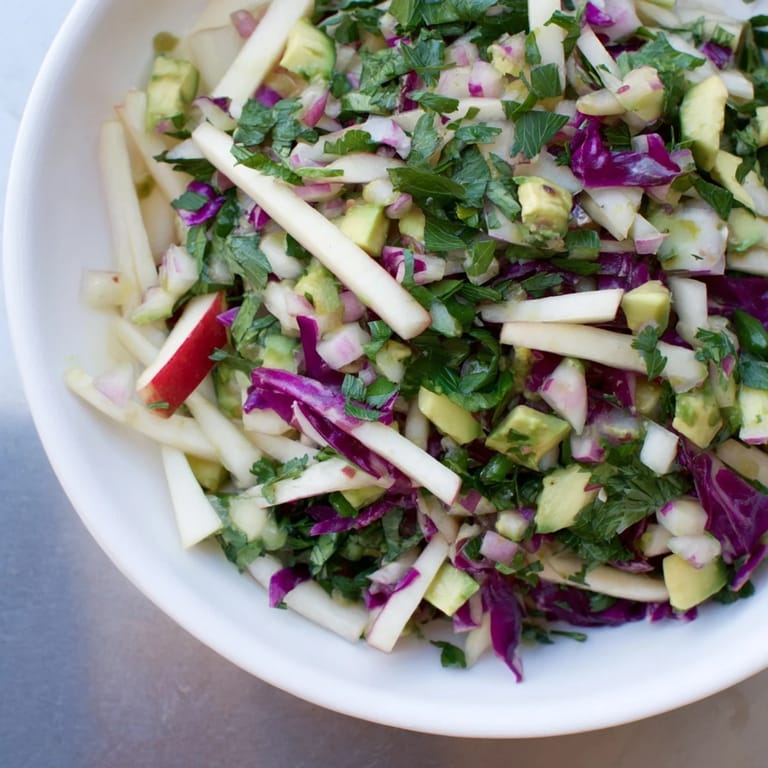 Pin it
 I brought this salad to a potluck once expecting it to sit untouched next to the mac and cheese, and instead I watched people go back for seconds, asking me how I made something so simple taste like actual flavor. Someone's kid, who usually survives on chicken nuggets, asked for a second plate, and their mom looked genuinely shocked—that moment made me realize this isn't just a salad for people on a diet, it's genuinely delicious food.
The Art of the Dressing
The dressing is what transforms this from crunchy vegetable chaos into something cohesive and memorable. Most people skip the mustard or think it's weird in a salad dressing, but it's the ingredient that makes the oil and lemon juice actually bond together instead of separating back into greasy and sour. I learned this the hard way after making this salad five different ways before understanding that emulsification matters, even in something as casual as a raw vegetable salad.
Why Fresh Herbs Are Non-Negotiable
The difference between this salad tasting bright and alive versus flat and forgettable comes down entirely to whether you use fresh herbs or dried. Dried tarragon or dill tastes musty and one-dimensional, but fresh herbs add this almost electric quality to every bite. If you don't have fresh tarragon, skip it instead of using the dried version—sometimes absence is better than a bad substitution.
Customization Without Losing the Plot
This salad is forgiving enough to swap vegetables depending on what looks good at the market or what you have lurking in your crisper drawer. The only rule is keeping the ratio of tender greens to crunchy vegetables roughly balanced so you get texture in every bite. Spinach works beautifully instead of kale, and bell peppers add sweetness if you want less peppery heat from the radishes.
- Add toasted seeds like sunflower or pumpkin right before serving to introduce another layer of crunch and nuttiness.
- If you want protein, a handful of hemp seeds or chopped walnuts makes it a complete meal without heaviness.
- A soft-boiled egg on the side or flaked salmon transforms this into something completely different but equally satisfying.
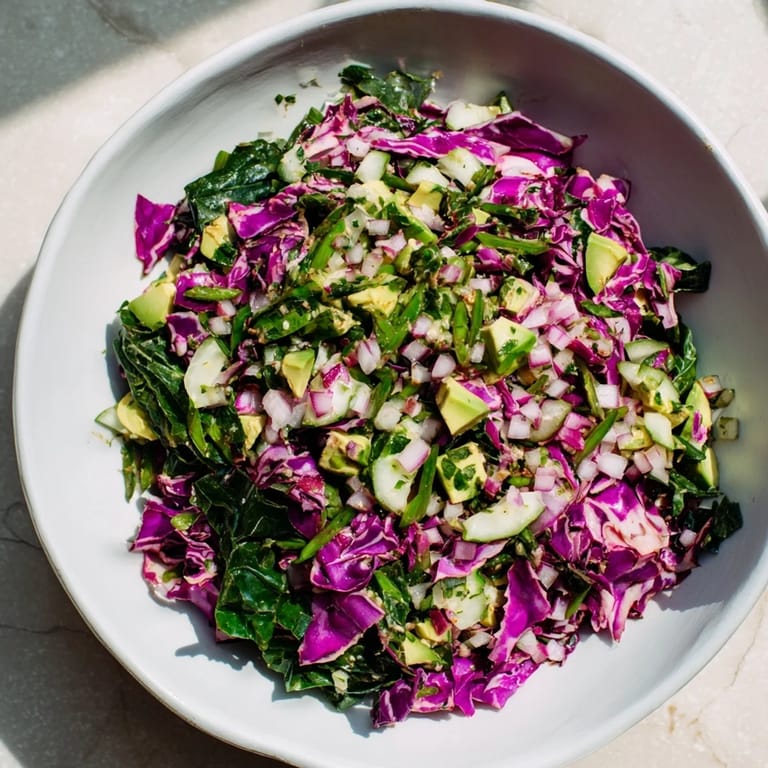 Pin it
 This salad doesn't need to be a guilt-driven meal or a punishment for eating poorly earlier in the week. It's just genuinely good food that happens to be good for you, which is the kind of thing that sticks around in your regular rotation instead of feeling like a phase.
Recipe FAQ
- → What is the best way to prepare the vegetables for this salad?
Finely shred the green and purple cabbage and thinly slice the kale, cucumber, sugar snap peas, and radishes to ensure a crisp and balanced texture throughout the salad.
- → How can I enhance the crunchiness of the salad?
Adding roasted sunflower or pumpkin seeds right before serving adds extra crunch and complements the fresh vegetables.
- → Can I prepare this salad in advance?
Yes, you can prepare the vegetables and dressing up to 2 hours before serving. Add avocado just before serving to prevent browning.
- → What dressing ingredients create the zesty flavor?
The lemon juice, apple cider vinegar, Dijon mustard, and fresh garlic blend together to produce a bright, tangy dressing that complements the greens.
- → Are there any suitable substitutions for kale in this salad?
Baby spinach can be used instead of kale for a milder flavor and softer texture while maintaining the salad’s freshness.