 Pin it
 There's something about butternut squash season that makes me want to slow down. One chilly October afternoon, I was sorting through the farmers market when the smell of roasted squash from a nearby vendor's booth stopped me in my tracks. I came home determined to recreate that warm, caramelized sweetness, and this soup became the answer I didn't know I was looking for. It's the kind of dish that tastes like it took hours, but honestly demands very little from you.
I made this for my sister during her first week in her new apartment, which had exactly one pot and a blender. We sat on her kitchen floor eating it from mismatched bowls, and she got this look on her face like she couldn't believe something this silky came from such simple ingredients. That moment taught me that the best meals aren't about perfection—they're about the warmth they bring.
Ingredients
- Butternut squash: Choose one that feels heavy for its size; the deep orange flesh is where all the natural sweetness lives, and roasting concentrates those flavors into something almost caramel-like.
- Yellow onion, garlic, carrot, and celery: This aromatic base is the foundation that makes everything taste intentional and layered.
- Olive oil: Use it on the squash for roasting because it helps create those caramelized edges that add depth.
- Unsalted butter: Optional but genuinely makes the soup feel luxurious without being heavy.
- Vegetable broth: Low sodium gives you control over the final seasoning; I learned this after making a too-salty batch that taught me a hard lesson.
- Ground cinnamon and nutmeg: These aren't afterthoughts; they're what make people pause and ask what they're tasting.
- Kosher salt and black pepper: Season as you go, not all at once at the end.
- Heavy cream or coconut milk: For serving, though neither is required—the soup is creamy from the squash alone.
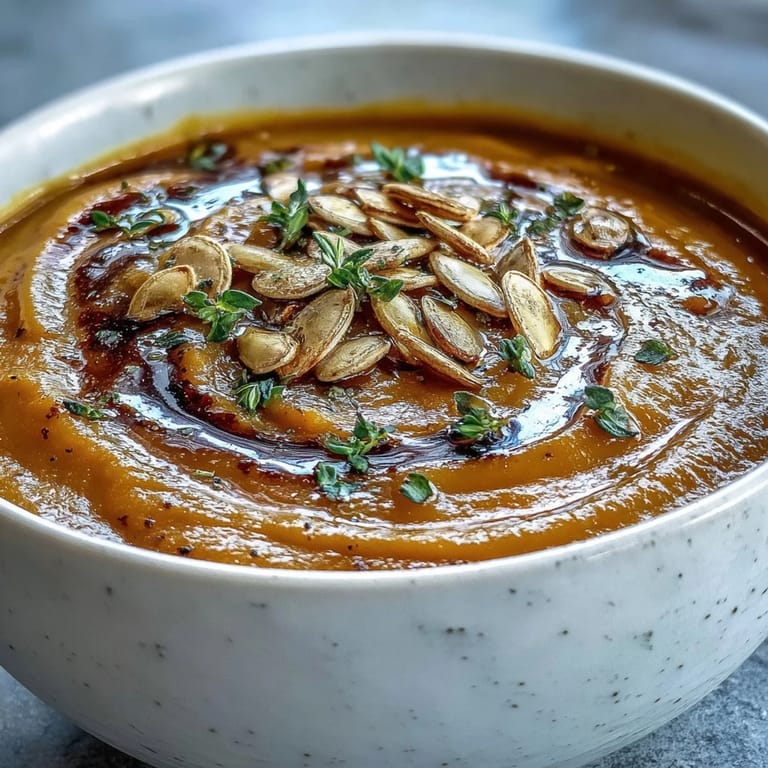
- Toasted pumpkin seeds and fresh thyme: These garnishes turn a weeknight dinner into something that feels a little special.
Tired of Takeout? 🥡
Get 10 meals you can make faster than delivery arrives. Seriously.
One email. No spam. Unsubscribe anytime.
Instructions
- Set your oven and prep your squash:
- Preheat to 400°F and line a baking sheet with parchment paper. This keeps cleanup minimal and prevents sticking. If you're nervous about cutting the squash, microwave it whole for three minutes first—it softens the skin just enough to make peeling manageable.
- Roast the squash until caramelized:
- Toss your cubed squash with olive oil, salt, and pepper, then spread it out in a single layer. Roast for 25 to 30 minutes, stirring halfway through if you remember. You're looking for the edges to turn golden and slightly darkened; that's where the sweetness intensifies.
- Build your flavor base:
- While the squash roasts, heat butter and olive oil in a large pot over medium heat. Add your onion, carrot, and celery—these need about 5 to 7 minutes to soften and release their fragrance. Add the garlic in the last minute; any longer and it turns bitter.
- Combine and simmer:
- Once your roasted squash comes out of the oven, add it to the pot along with vegetable broth, cinnamon, nutmeg, salt, and pepper. Bring everything to a boil, then lower the heat and let it bubble gently for 10 to 15 minutes so the flavors meld. The kitchen will smell impossibly good at this point.
- Blend until silky:
- If you have an immersion blender, use it directly in the pot—it's easier and creates less mess than transferring to a countertop blender. Blend until completely smooth, working in batches if needed, and be patient; the result should be velvety.
- Taste and adjust:
- This is crucial. Dip a spoon in and taste before serving. Soup is forgiving about seasoning tweaks, so add a pinch more salt or spice if something feels off.
- Serve with intention:
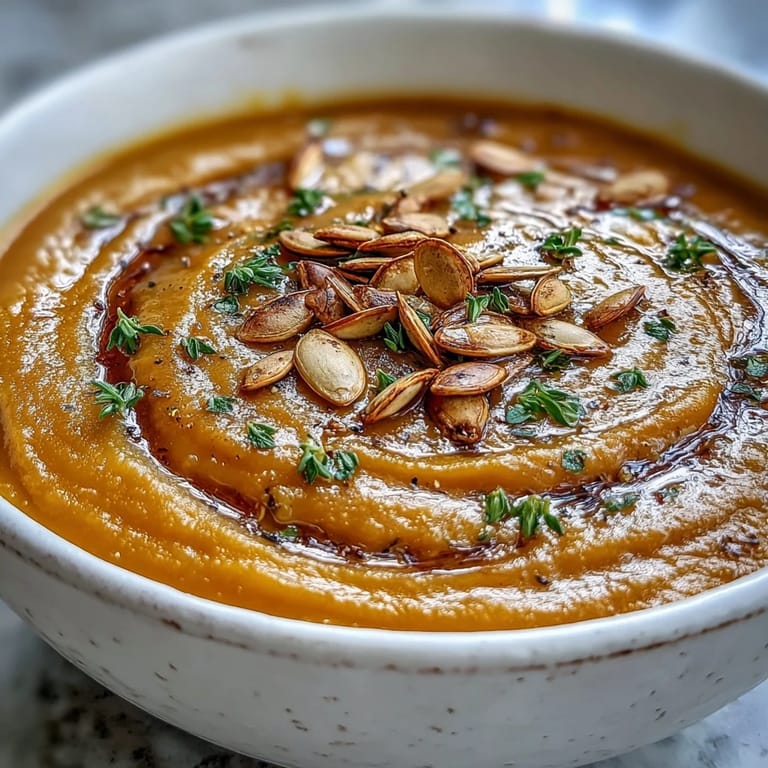
- Pour into bowls and top with a drizzle of cream or coconut milk, a scatter of toasted pumpkin seeds, and a few fresh thyme leaves if you have them.
 Pin it
 A friend who usually skips soup entirely asked for seconds, which felt like winning something. That's when I realized this dish bridges the gap between weeknight comfort and something that feels genuinely considered.
Why This Soup Became a Favorite
There's an honesty to butternut squash soup that I've come to love. It doesn't pretend to be fancy, but it somehow always feels a little bit special. The sweetness from the squash combined with the warmth of cinnamon and nutmeg creates something that tastes like it's giving you a hug from the inside out.
Making It Your Own
Once you've made this soup a few times, you'll start playing with it. Add a pinch of cayenne if you want heat, a touch of maple syrup if you like it sweeter, or even a splash of apple cider for autumn depth. The base is forgiving enough that your instincts will usually guide you right.
Serving and Storage
This soup actually gets better the next day once the flavors have had time to know each other. Store it in an airtight container in the fridge for up to four days, or freeze it for up to three months—just thaw overnight and reheat gently on the stove. Serve it with crusty bread, a simple salad, or on its own when you need something that tastes like care.
- Reheat leftovers on the stove rather than the microwave; it brings back that silky texture.
- Make a double batch on Sunday and you'll thank yourself all week.
- Save some pumpkin seeds to toast yourself if you want the soup to feel even more intentional.
 Pin it
 Butternut squash soup has a way of turning ordinary evenings into moments that feel a little warmer. Make it when you need comfort, serve it when you want to show someone they matter.
Recipe FAQ
- → Can I freeze this soup?
Yes, this soup freezes beautifully. Allow it to cool completely, then transfer to airtight containers or freezer bags. It will keep well for up to 3 months. Thaw overnight in the refrigerator before reheating gently on the stovetop.
- → What's the best way to serve butternut squash soup?
Serve piping hot in warm bowls. A swirl of heavy cream or coconut milk adds visual appeal and richness. Top with toasted pumpkin seeds for crunch and fresh thyme for aromatic contrast. Crusty bread makes an excellent accompaniment for soaking up every drop.
- → How do I know when the squash is properly roasted?
The squash cubes should be tender when pierced with a fork and show golden-brown caramelization at the edges. This usually takes 25-30 minutes at 400°F. The roasting process concentrates the natural sugars, creating deeper flavor that boiling alone cannot achieve.
- → Can I make this soup without an immersion blender?
Absolutely. Carefully transfer the cooled soup in batches to a countertop blender, filling no more than halfway per batch. Remove the center cap from the lid and cover with a kitchen towel to allow steam to escape. Blend until smooth, then return to the pot to rewarm.
- → What vegetables work well as additions?
Fresh spinach or kale can be stirred in during the final minutes of simmering for added nutrition. A diced apple pairs beautifully with the existing spices. For protein, consider adding white beans or serving alongside grilled cheese sandwiches for a complete meal.