 Pin it
 I remember the first time I saw this salad at a minimalist dinner party in a friend's loft—everything arranged in perfect geometric lines, and I was immediately taken by how something so simple could feel so intentional. The cook explained that she spent an hour cutting every single ingredient into identical cubes, and at first I thought she was obsessed. But then I took a bite and understood: by treating each element equally, each ingredient got its moment to shine. That night, I realized that sometimes in cooking, precision isn't about pretension—it's about respect. Now whenever I make this salad, I'm transported back to that moment, knife in hand, discovering that patience with a cutting board can actually be meditative.
I made this for a dinner party last summer when someone challenged me to create something that tasted as good as it looked. I spent the afternoon carefully cutting everything into uniform cubes, and by the time I arranged them on my grandmother's old slate platter, the geometric pattern almost felt like a small piece of edible art. When my friend took her first bite, she closed her eyes, and I knew I'd nailed it—that's when food becomes more than nourishment, it becomes a moment worth remembering.
Ingredients
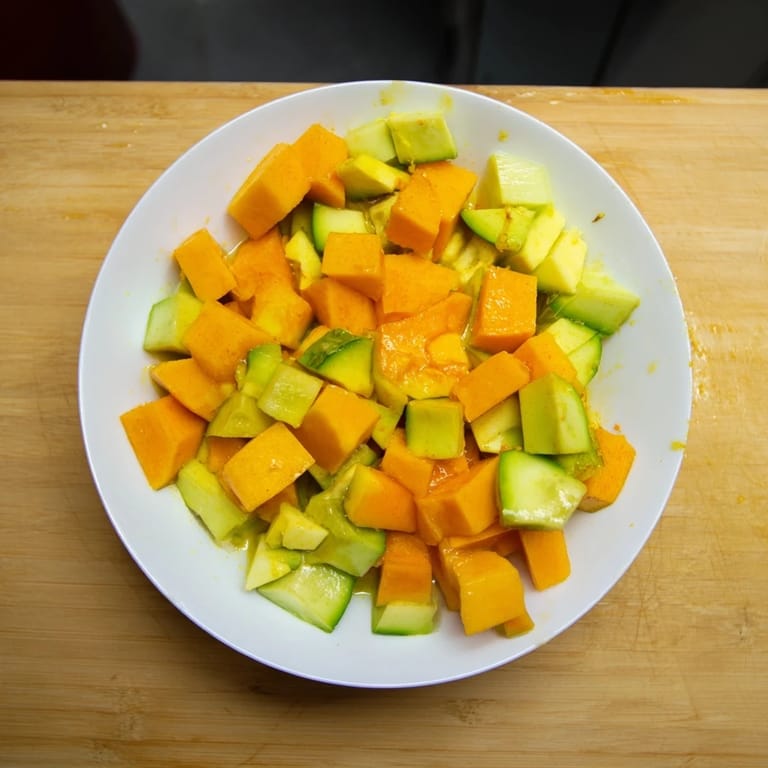
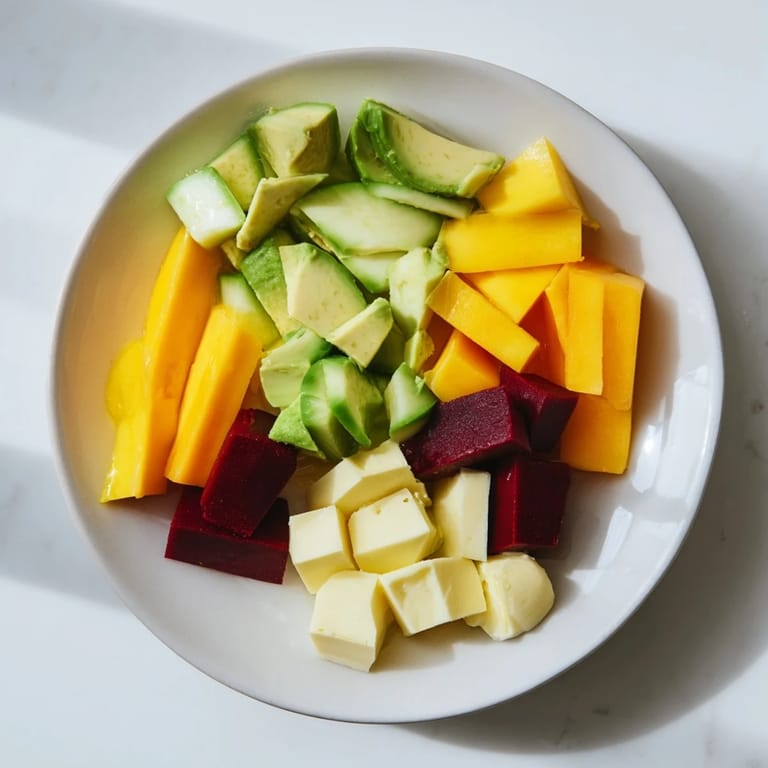
- 1 small cucumber, peeled and cut into 1 cm cubes: Choose a firm, crisp cucumber (Persian or English varieties work beautifully) and peel it thinly so you keep that lovely pale green flesh; this is your textural anchor, staying crunchy even after a few minutes
- 1 ripe mango, peeled and cut into 1 cm cubes: Hunt for mangoes that yield slightly to pressure but aren't mushy—a ripe mango brings natural sweetness and that signature silky interior that contrasts perfectly with the crispness around it
- 1 ripe avocado, peeled and cut into 1 cm cubes: Use a ripe avocado that cuts cleanly without crumbling, as this is your creamy element and the visual moment of rich green in your grid
- 1 small red beet, cooked, peeled, and cut into 1 cm cubes: Cook your beet ahead of time (boil until fork-tender, about 25 minutes), then chill it completely before cubing—the earthiness and jewel-like color make it the unexpected hero
- 1 small yellow bell pepper, seeded and cut into 1 cm cubes: Pick peppers with thick walls that slice cleanly, and remove every bit of the white pith for a pure, clean sweetness
- 1 small watermelon wedge, rind removed, cut into 1 cm cubes: The most underrated salad ingredient—watermelon brings unexpected refreshment and a delicate sweetness that makes people pause and ask what that flavor is
- 120 g feta cheese, cut into 1 cm cubes: Use a good quality feta that's firm enough to cube without crumbling; the salty tang is what brings all these bright flavors into harmony
- 2 tbsp extra-virgin olive oil: This is your base—a fruity, good quality olive oil that whispers rather than shouts
- 1 tbsp lemon juice: Freshly squeezed is non-negotiable; bottled just doesn't carry the same brightness and acidity that pulls everything together
- 1/2 tsp sea salt: Sea salt has a cleaner, rounder flavor than table salt, and you can taste the difference in something this delicate
- 1/4 tsp freshly ground black pepper: Always grind your pepper fresh—pre-ground loses its bite and warmth
- 1/2 tsp honey (optional): Just a whisper of honey rounds out the acidity and deepens the dressing's flavor in ways that feel almost invisible until you taste the difference
Tired of Takeout? 🥡
Get 10 meals you can make faster than delivery arrives. Seriously.
One email. No spam. Unsubscribe anytime.
Instructions
- Prep Your Canvas (The Cutting Part):
- Get your sharpest knife—this is not the time for a dull blade—and lay out all your ingredients on a clean cutting board. Start with the cucumber and red beet since they're already somewhat firm. The secret I learned is to cut with confidence and consistency; if you hesitate mid-cut, your pieces become uneven. Some cooks use a ruler, and honestly, there's no shame in it. The goal is for every single piece to be roughly the same size so they look intentional and cook evenly. Take your time here; this is where the magic happens. As you cut the softer items like mango and avocado, handle them gently so you maintain their structure. The beet should already be cooled by now—cutting a warm beet makes it crumbly.
- Make Your Dressing (The Quick Part):
- While you're doing the final cutting, whisk together the olive oil, fresh lemon juice, sea salt, pepper, and honey in a small bowl. Taste as you go—you want to balance brightness with depth. The honey is truly optional, but I've found that just a tiny bit prevents the dressing from feeling too sharp. Whisk until it looks emulsified, though it's okay if it's not perfectly smooth; the best dressings have a little personality to them.
- Build Your Grid (The Artistic Part):
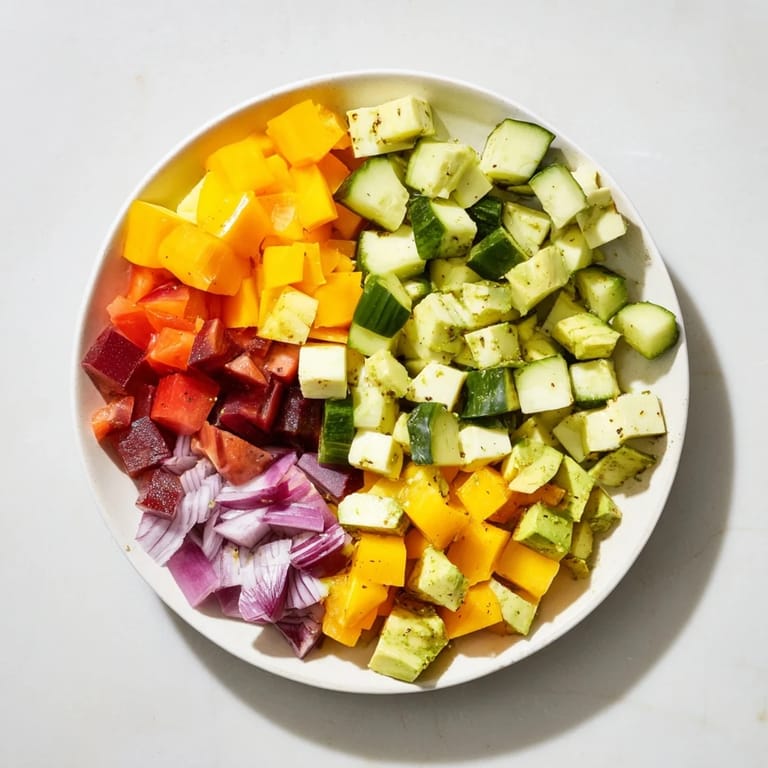
- This is where patience becomes art. On a large platter or wooden board, begin arranging your cubes in neat rows, alternating colors as you go. Think of it like a checkerboard—maybe red beet, yellow pepper, mango, cucumber in one row, then feta, avocado, watermelon, and another color in the next. There's no single right way; you're creating a pattern that pleases your eye. If you step back and something doesn't feel balanced, rearrange until it does. This isn't rushed; this is the part where you're actually cooking with intention.
- The Final Moment (The Finishing Touch):
- Just before people come to the table, drizzle your dressing lightly over the arranged cubes. Don't drown them; just give them a gentle baptism. The reason for this last-minute drizzle is everything—you want the vegetables to stay crisp and the geometry to stay sharp and clean. Serve immediately while everything is at its peak.
 Pin it
 I served this at a potluck once, and a guest who claimed to never eat vegetables because they were 'boring' came back for thirds. She said it was the geometry that tricked her brain into being curious—if vegetables could be arranged with this much intention, maybe they deserved more respect on her plate. That's when I understood that sometimes the presentation is the kindest invitation to try something new.
The Philosophy of Precision
There's something deeply satisfying about cutting everything to the same size. It's not about being fussy; it's about creating equality on the plate. When every cube is the same size, no ingredient dominates—the cucumber gets equal voice to the mango, the feta to the watermelon. This is a salad that teaches you something about balance, if you're paying attention while you're cutting.
Timing and Temperature
This salad lives in a narrow window of perfection. You want the vegetables cold and crisp, the dressing cold, and everything coming together just as you're ready to serve. If it sits too long, the juices from the vegetables begin to pool, the avocado softens, and some of that geometric clarity gets lost. It's a salad that rewards you for being present and focused, not one you can make hours ahead.
Playing with Color and Substitution
Once you understand the framework of this salad, it becomes a playground. Don't have a mango? Use papaya or fresh pineapple. Can't find a good avocado? Swap it for cubes of crisp jicama or even thinly cubed apple tossed in lemon juice. Want to make it vegan? Firm tofu cubes seasoned with a pinch of sea salt replaces the feta beautifully. The structure remains the same—you're still building a grid of contrasting textures and flavors. The vegetables are just players in an ensemble, and as long as you respect the balance of textures and colors, you're creating something special.
- Try adding paper-thin radish slices or cubes for a spicy crunch that catches people by surprise
- Edible flowers or microgreens arranged between the cubes elevate this from dinner party appetizer to something that feels almost gallery-worthy
- Serve it on a dark slate platter for maximum visual impact—the colors practically sing against the background
 Pin it
 This salad is a reminder that sometimes the simplest ingredients, treated with precision and love, become something that feels almost luxurious. Every time you make it, you're not just serving food—you're offering a moment of intentionality in a world that often feels rushed.
Recipe FAQ
- → What vegetables and fruits are used in this salad?
The salad includes cucumber, mango, avocado, red beet, yellow bell pepper, and watermelon, all cut into uniform 1 cm cubes.
- → How is the dressing prepared?
The dressing is a mix of extra-virgin olive oil, lemon juice, sea salt, freshly ground black pepper, and optional honey, whisked until combined.
- → What tools help achieve the perfect cube shapes?
A sharp chef’s knife and a ruler for precise 1 cm measurements are used to cut the ingredients into uniform cubes.
- → Can this salad be adapted for a vegan diet?
Yes, substitute the feta cheese with firm tofu cubes for a vegan-friendly alternative.
- → How should the salad be served to maintain freshness?
Arrange the cubed ingredients just before serving and drizzle the dressing lightly to keep the textures crisp and visually appealing.