 Pin it
 There's something almost magical about transforming the simplest ingredients—bread, garlic, cream—into something that tastes like comfort itself. I discovered this soup on a gray afternoon when I had half a loaf of sourdough going stale and a sudden craving for garlic bread that didn't require heating the whole oven. What started as kitchen improvisation became the kind of soup you find yourself making over and over, each time wondering why you don't make it more often.
I made this for friends who showed up unannounced on a cold November evening, and watching their faces when they tasted it was worth every minute. One of them actually said, 'This tastes like someone bottled the smell of a good bakery,' and I think that's the truest compliment a soup could get.
Ingredients
- Day-old rustic bread (4 cups cubed): Stale bread is your secret weapon here—it soaks up the broth and cream without falling apart into mush, giving the soup its silky body instead of thinning it out.
- Unsalted butter (2 tbsp): This is where the magic starts, creating a rich base for all the garlic and aromatics to bloom in.
- Olive oil (2 tbsp): Use a decent quality oil since it's one of the few fats doing the heavy lifting.
- Yellow onion (1 medium, finely chopped): The sweetness balances the earthiness of the bread and garlic.
- Garlic cloves (6 large, minced): Don't skimp here—this is a garlic-forward soup, and mincing them fine lets them melt into the broth rather than sitting in chunks.
- Celery (1 stalk, finely chopped): A quiet flavor that rounds everything out without announcing itself.
- Fresh thyme (1 sprig): Just enough to whisper 'herbaceous' without drowning out the garlic and bread.
- Fresh parsley (2 tbsp chopped, plus more for garnish): Adds brightness at the end and makes it look less pale in the bowl.
- Vegetable broth (4 cups): This is your liquid foundation, so use something you'd actually drink straight.
- Heavy cream (1 cup): The finale that turns everything velvety and rich.
- Parmesan cheese (1 cup grated): This thickens the soup while adding umami depth that makes people ask for the recipe.
- Salt and black pepper: Taste as you go—seasoning at the end makes all the difference between 'nice' and 'unforgettable.'
Tired of Takeout? 🥡
Get 10 meals you can make faster than delivery arrives. Seriously.
One email. No spam. Unsubscribe anytime.
Instructions
- Build your flavor base:
- Heat the olive oil and butter together in a large pot over medium heat until they're bubbling gently. Add the chopped onion and celery with a pinch of salt, then sauté for about 5 minutes until they're soft and starting to turn golden at the edges—this is where the sweetness begins.
- Wake up the garlic:
- Stir in all that minced garlic along with the thyme sprig and let it cook for 2 minutes, stirring often so it turns fragrant instead of burnt. Your kitchen should smell irresistible at this point.
- Toast the bread:
- Add your cubed bread and stir it around in all that garlicky, buttery fat for 3 to 4 minutes. You're not trying to brown it crispy—you want it to soak up those flavors and turn slightly golden.
- Simmer into softness:
- Pour in the vegetable broth, bring everything to a boil, then lower the heat and let it simmer gently for about 15 minutes with the lid on. Stir occasionally and watch as the bread pieces gradually soften and start to fall apart into the liquid.
- Create the creaminess:
- Fish out the thyme sprig, then use an immersion blender to puree the soup right in the pot until it's completely smooth. If you don't have an immersion blender, carefully transfer it in batches to a regular blender—just let it cool slightly first and hold the lid loosely so steam can escape.
- Finish with cream and cheese:
- Stir in the heavy cream and grated Parmesan cheese, letting the soup simmer gently for another 3 to 4 minutes until it's heated through and the cheese melts into a silky coating. Taste it now and adjust the salt and pepper until it sings.
- Serve with ceremony:
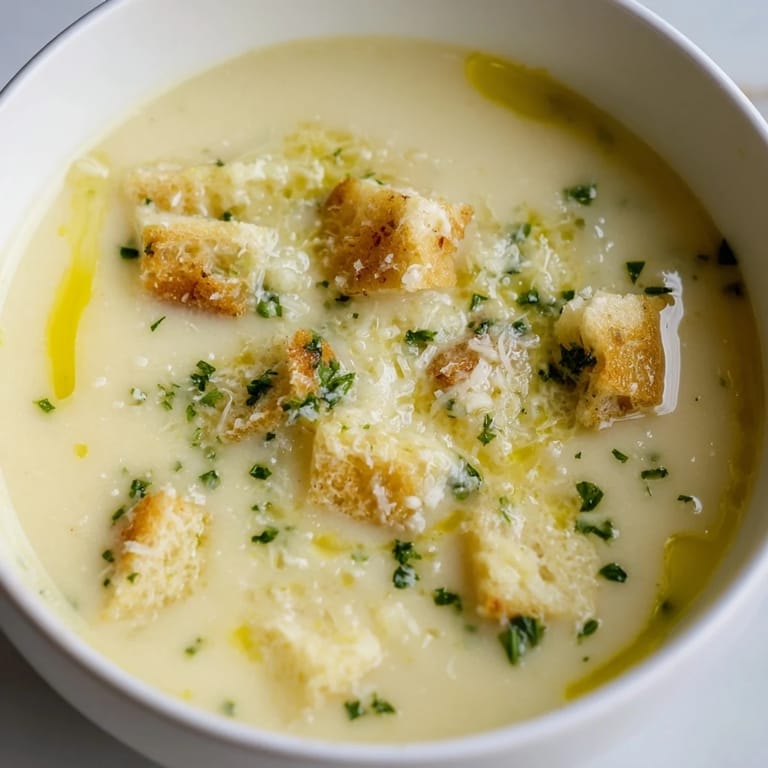
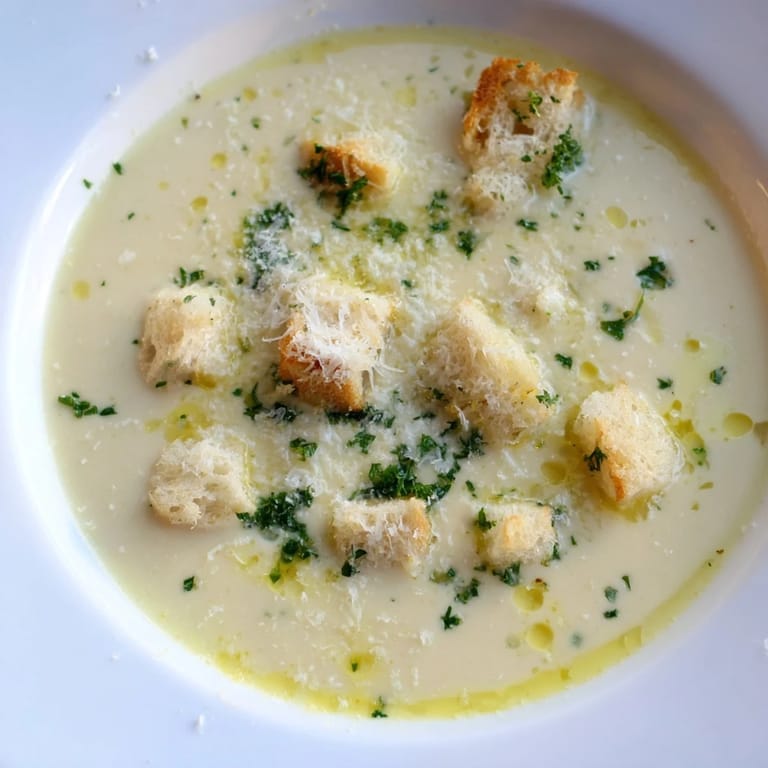
- Ladle it into bowls, garnish with fresh parsley and maybe a little extra Parmesan, and serve while it's still steaming hot.
 Pin it
 There was a moment last winter when my neighbor came over and had three bowls of this soup, and afterward just sat quietly, and I realized it wasn't just about the flavors—it was about how a simple bowl of soup could make someone feel genuinely taken care of. That's when I knew this wasn't just a recipe; it was a way to show up for people.
The Soul of Simple Ingredients
This soup works because it trusts that a few quality ingredients, treated with patience, can taste like something complicated. There's no cream of mushroom base, no fancy stock, no tricks—just bread that learned to be something new, garlic that had time to mellow and sweeten, and enough fat to carry those flavors into every spoonful. It's the kind of cooking that reminds you why people gather around tables in the first place.
Make It Your Own
Once you understand how this soup works, you can play with it. I've added a small handful of chopped roasted red peppers for color and sweetness, stirred in crispy sage leaves at the end, even draped it with a thin crisp of garlic-rubbed sourdough toast. The structure stays the same—bread, garlic, creaminess—but the variations are endless once you understand the core.
Storage and Timing
This soup keeps beautifully in the refrigerator for up to 4 days and actually deepens in flavor as it sits, making it perfect for meal prep or a quick lunch when life gets busy. When you reheat it, use low to medium heat and add a splash of broth or cream since it thickens slightly as it cools. You can also freeze it for up to 3 months, though I've found it tastes best enjoyed fresh or within a few days.
- For a lighter version, use half-and-half or even whole milk instead of heavy cream.
- If you want extra richness, whisk in an egg yolk or two just before serving (off the heat, stirring constantly so it doesn't scramble).
- Always remove the thyme sprig before blending unless you enjoy finding bits of it between your teeth.
 Pin it
 This soup is proof that you don't need complicated techniques or an exhausting ingredient list to create something memorable. Make it when you need comfort, serve it when you want to show someone they matter, and come back to it whenever you need to remember why cooking at all is worth the effort.
Recipe FAQ
- → What type of bread works best?
Day-old rustic bread like sourdough or country loaf absorbs flavors well and toasts nicely for this dish.
- → Can I make this dish vegan?
Yes, substitute heavy cream with plant-based alternatives and use vegan Parmesan to maintain creaminess.
- → How do the herbs enhance the flavor?
Thyme and parsley add fresh, earthy notes that balance the rich garlic and creamy elements.
- → Is it necessary to blend the mixture?
Blending creates a smooth, velvety texture, melding the bread and aromatics into a cohesive, creamy base.
- → Can I add spice to the dish?
Yes, a pinch of red pepper flakes or garlic-infused oil can add a gentle kick without overpowering the flavors.