 Pin it
 There's something about a steaming bowl of broccoli soup that stops time for me, especially on those grey afternoons when the kitchen feels like the warmest room in the house. My neighbor once mentioned she'd never had homemade broccoli soup, only the canned stuff, and I made a batch right then and there—watching her face light up when she tasted the difference was everything. The velvety texture, the way the cream swirls into the green, the smell of butter and garlic meeting fresh broccoli—it's honestly one of my favorite things to make when I want to feel like I'm taking care of someone, even if that someone is just me.
I made this for a friend going through a rough spell, and she told me later that it was the first meal in days that actually tasted like something, not just calories. That's when I realized this soup isn't just about flavor—it's about bringing something warm and intentional to the table when ordinary meals feel pointless.
Ingredients
- 1 large head broccoli (about 500 g), chopped into florets: This is the star, and fresh matters—the greener and tighter the florets, the better your soup will taste and look.
- 1 medium onion, diced: Sweet and mellow once cooked, it becomes the invisible foundation that makes everything taste more like itself.
- 1 medium carrot, peeled and diced: A tiny bit of natural sweetness and color that balances the earthy broccoli beautifully.
- 2 cloves garlic, minced: Don't skip or reduce this—garlic is what gives the soup depth and keeps it from tasting one-note.
- 1 liter (4 cups) vegetable broth: Use good broth if you can; it's one of only a few main components, so it deserves to be something you'd actually drink on its own.
- 120 ml (½ cup) heavy cream: This transforms the soup from nice to luxurious, but it's also the element you can swap out if you want to lighten things up.
- 2 tablespoons unsalted butter: The starting point for that rich, aromatic base that makes people say, 'This tastes like home.'
- 1 tablespoon olive oil: Keeps the butter from burning and adds its own subtle flavor note to the sauté.
- ½ teaspoon salt, or to taste: Add gradually and taste as you go—you'd be surprised how much the final seasoning depends on your specific broth.
- ¼ teaspoon ground black pepper, or to taste: Fresh cracked is better than pre-ground, and it becomes more noticeable in a smooth soup.
- Pinch of ground nutmeg (optional): This is the secret whisper that makes people say, 'Something's different about this—in a good way.'
- Fresh chives, finely chopped: A green flick of brightness and mild onion flavor that wakes up each spoonful.
- Croutons: For texture contrast and because sometimes the soup wants a little crunch to feel complete.
Tired of Takeout? 🥡
Get 10 meals you can make faster than delivery arrives. Seriously.
One email. No spam. Unsubscribe anytime.
Instructions
- Get your base going:
- Heat butter and olive oil together over medium heat until the butter foams and smells like caramel and comfort. Add onion, carrot, and garlic, then let them soften for 4–5 minutes, stirring occasionally so nothing sticks or browns too much.
- Introduce the broccoli:
- Toss in your chopped florets and stir them through the aromatics for 2–3 minutes—this brief cooking starts to soften them and lets the flavors begin their conversation.
- Build the soup:
- Pour in your vegetable broth, bring everything to a rolling boil, then reduce the heat and cover. Simmer for 15–18 minutes until the broccoli is tender enough that a fork slides through it easily.
- Blend until smooth:
- Remove from heat and use an immersion blender, working the wand through the pot in slow, patient motions until you have a completely velvety texture. If using a countertop blender, work in batches and be careful with the hot liquid.
- Finish with cream and spice:
- Stir in the heavy cream and a pinch of nutmeg if using it, then taste and adjust salt and pepper. Reheat gently over low heat if needed—never let it boil once the cream is in, or it might break.
- Serve with intention:
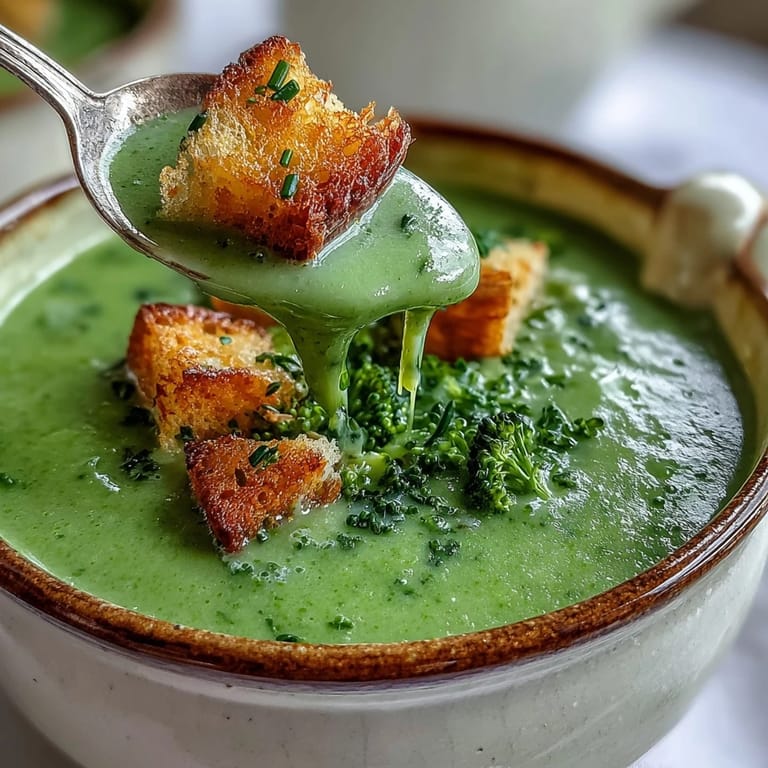
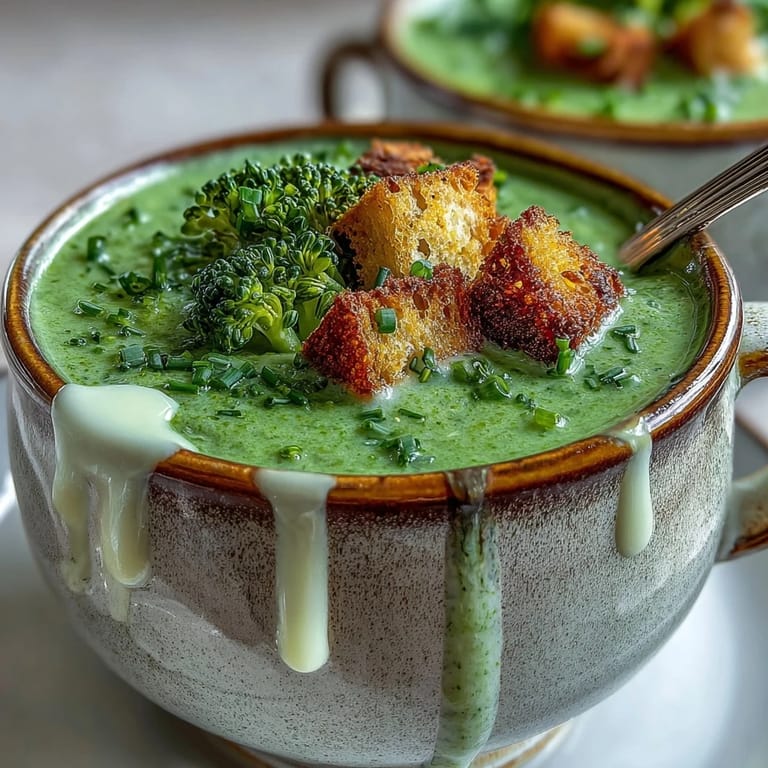
- Ladle into bowls, drizzle with a touch of cream or sprinkle with chives and croutons, and deliver it while it's still steaming.
 Pin it
 I once brought this soup to a potluck where someone had made a broccoli casserole, and I remember feeling a little nervous about the comparison. But people went back for thirds of the soup, and that's when I understood that sometimes simple and elegant beats complicated and heavy—and that knowing the difference is its own kind of wisdom.
Making It Your Own
This recipe is a canvas, not a prescription. I've stretched it with potato chunks when I wanted something more substantial, made it vegan with coconut milk and olive oil instead of cream and butter, and kept it lighter with half-and-half instead of heavy cream. Each version is equally valid, equally satisfying, because you're still building from that same foundation of butter, aromatics, broccoli, and intention. The beauty is that once you understand how the elements work together, you can trust your instincts about what the soup needs on any given day.
The Texture Secret
The real magic isn't in any single ingredient—it's in understanding why blending matters so much. A chunky broccoli soup would be fine, but a smooth one feels like someone cared enough to do an extra step for you. That difference between fine and memorable is often just about texture, about whether your mouth feels pleasure or just indifference. An immersion blender does this better than a countertop one because it lets you feel the transition happening and stop at the exact moment of silkiness.
Timing and Temperature
One of my kitchen lessons came from rushing—I once tried to serve this soup immediately after adding the cream, thinking heat was heat. But reheating gently over low makes a difference that's almost mysterious; the flavors seem to find each other differently, and the texture stays more luxurious. It's a small thing, but it's the kind of small thing that separates a good soup from one people ask you to make again.
- Make this ahead if you want; it reheats beautifully and often tastes even better the next day when flavors have settled.
- If the soup breaks or looks separated after reheating, a quick whisk with a splash of broth or milk will bring it back together.
- Serve in warmed bowls to keep the soup hot longer and make the whole experience feel more intentional and complete.
 Pin it
 This soup has become one of my go-to dishes for moments when I want to offer comfort without fuss, elegance without pretension. Make it for someone, make it for yourself, and notice how something this simple can still feel like a small act of love.
Recipe FAQ
- → Can I make this soup ahead of time?
Absolutely. This soup actually develops deeper flavor when made ahead. Store in an airtight container in the refrigerator for up to 3 days. Reheat gently over low heat, stirring occasionally to prevent scorching. Add a splash of cream or broth if the consistency seems too thick after refrigeration.
- → How do I achieve the smoothest texture?
An immersion blender works wonderfully directly in the pot. For ultra-smooth results, use a high-speed countertop blender in batches, venting slightly to release steam. Blend for 60-90 seconds until completely silky. Strain through a fine-mesh sieve if you prefer an exceptionally refined texture.
- → Can I freeze this broccoli soup?
Yes, though cream-based soups can sometimes separate when frozen. For best results, freeze before adding the cream—simply blend the vegetables and broth, cool completely, and freeze for up to 3 months. Thaw overnight in the refrigerator, reheat, then stir in the cream just before serving.
- → What can I use instead of heavy cream?
Half-and-half creates a lighter soup with 65% less fat. Whole milk works too, though the soup will be thinner. Coconut milk adds richness and creates a dairy-free vegan version with subtle coconut notes that complement broccoli beautifully. Greek yogurt stirred in off the heat adds tangy creaminess.
- → How can I make this soup thicker?
Add a peeled, diced medium potato along with the broccoli—the starches naturally thicken the soup. For a quick fix, mash a few cooked florets into the blended base, or create a slurry with 1 tablespoon cornstarch and 2 tablespoons cold broth, then stir into the simmering soup.
- → What garnishes work best?
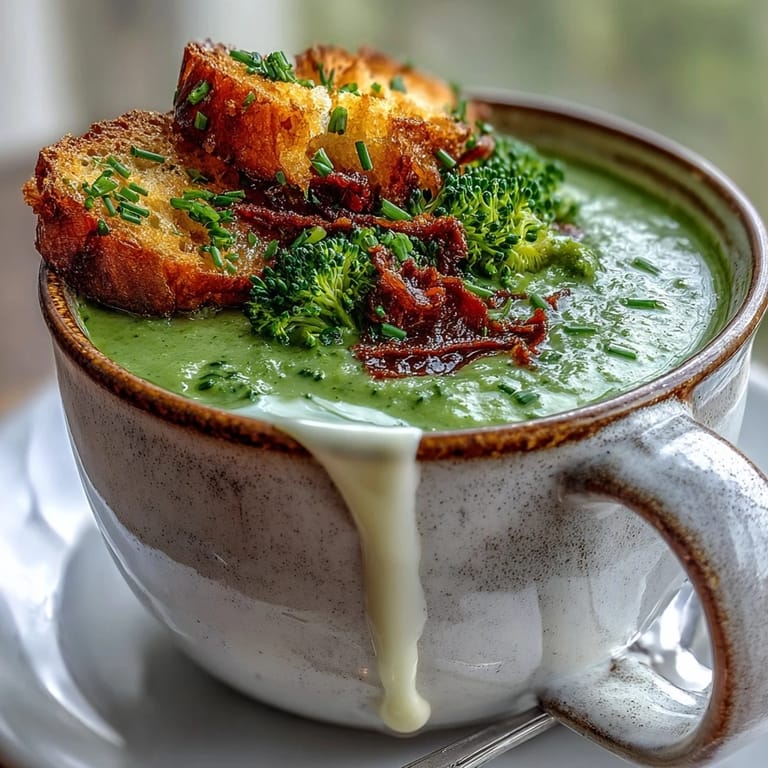
A drizzle of cream creates beautiful swirls. Fresh chives, parsley, or dill add color and herbal brightness. Homemade croutons, toasted pumpkin seeds, or a dusting of grated Parmesan provide delightful texture contrast. For something special, top with crispy pancetta or bacon bits.