 Pin it
 I discovered this dish by accident on a Tuesday night when I had leftover birria simmering on the stove and a craving for ramen noodles. My partner walked in, smelled the rich, spiced beef broth, and said, "Why isn't this in a bowl with noodles?" That question changed everything. What started as a chaotic kitchen moment became something I couldn't stop making—a bold fusion that somehow feels both familiar and wildly exciting.
The first time I served this to actual guests, I was nervously stirring the broth, worried it might be too bold or too weird for the fusion-skeptical crowd. But watching them crack their soft-boiled eggs into the steaming bowl, squeeze lime juice over the noodles, and take that first slurp—their faces just lit up. One person asked for seconds before finishing their first bowl.
Ingredients
- Beef chuck roast (2 lbs): This cut has just enough fat and connective tissue to become silky and rich after slow cooking; resist the urge to use a leaner cut or you'll lose that incredible texture.
- Dried guajillo and ancho chilies: These are the soul of birria—toasting them first releases their deep, smoky flavor that no chili powder can replicate.
- Chipotle in adobo: One pepper is all you need; it adds heat and a subtle smokiness that bridges the Mexican and umami-forward Asian sides of this dish.
- Apple cider vinegar: This cuts through the richness beautifully and keeps the broth from feeling heavy, even after three hours of simmering.
- Spices (cumin, cinnamon, cloves, oregano): Cinnamon and cloves sound unusual for birria, but they're traditional Mexican spices that add warmth and depth without tasting sweet.
- Fresh ramen noodles or instant (discard seasoning packets): Fresh noodles are silkier, but instant works fine if that's what you have—just don't use the flavor packet.
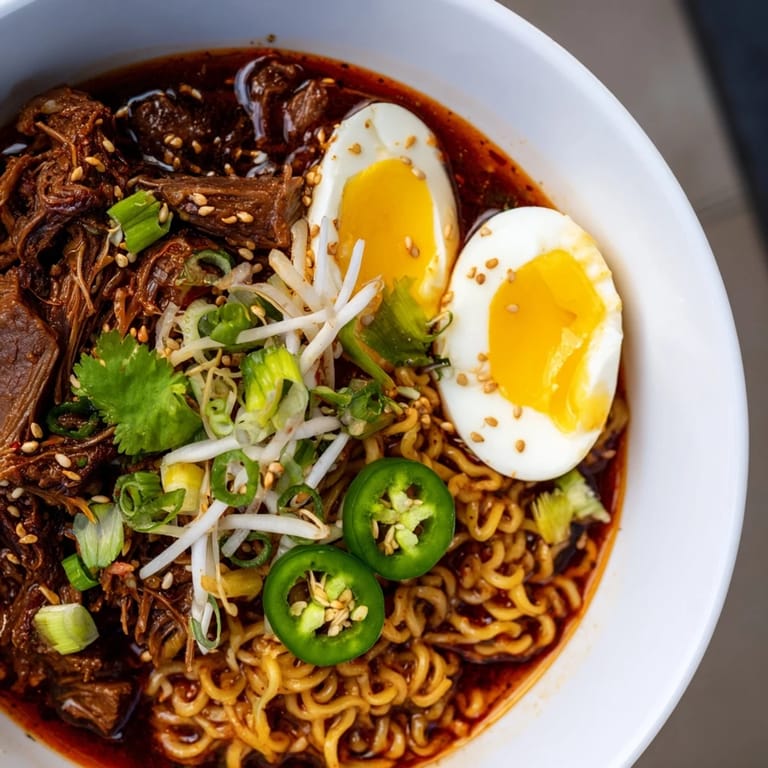
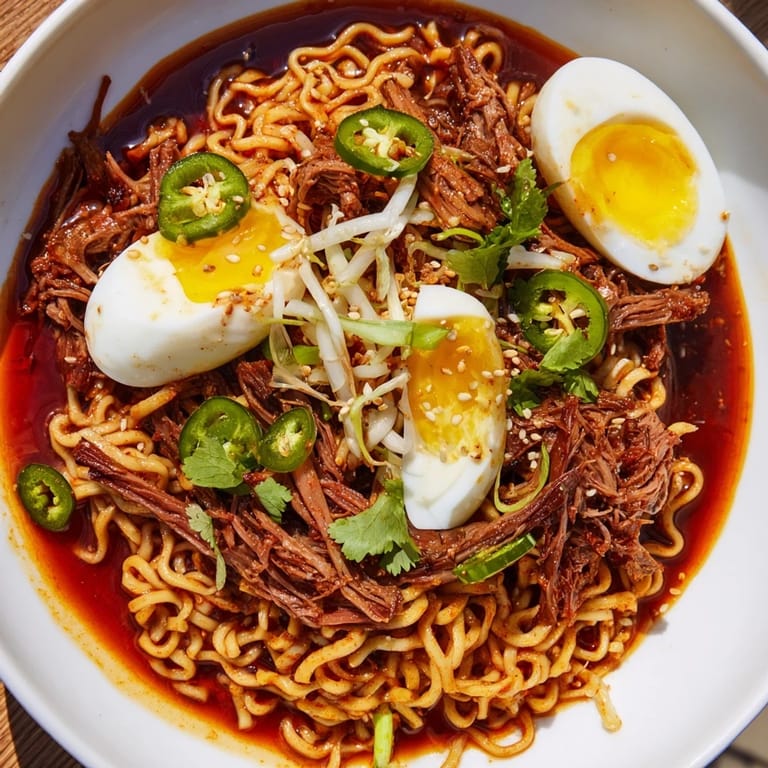
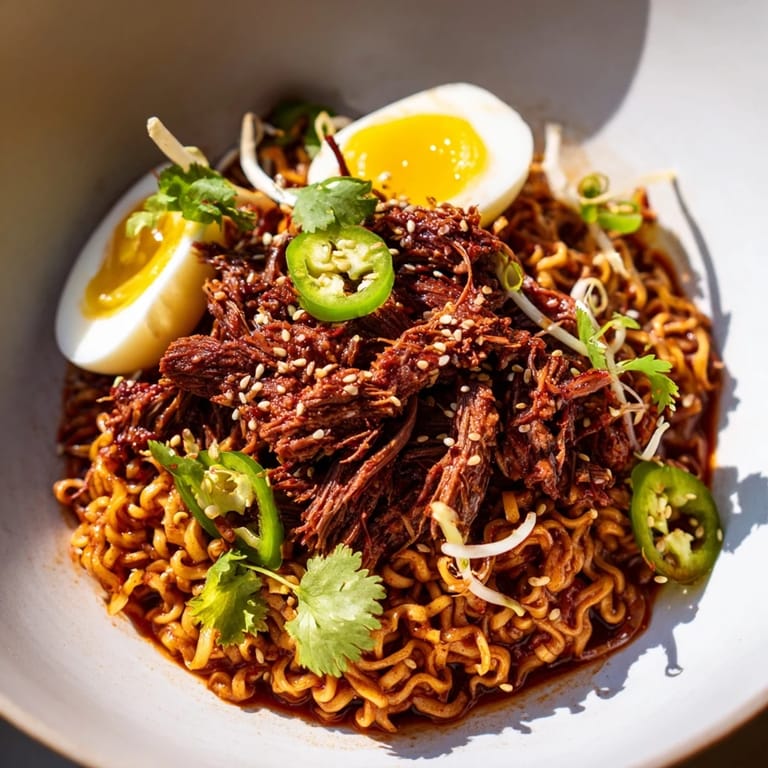
- Soft-boiled eggs, scallions, bean sprouts, cilantro: These toppings aren't garnishes; they add texture, freshness, and personality to every spoonful.
Tired of Takeout? 🥡
Get 10 meals you can make faster than delivery arrives. Seriously.
One email. No spam. Unsubscribe anytime.
Instructions
- Toast and soak your chilies:
- Heat those dried chilies in a dry skillet for just a minute or two—you'll smell when they're ready. This toasting step wakes up their flavor before they soften in hot water.
- Blend the chile base:
- This is where all those layers of flavor come together into a smooth, brick-red paste. Don't skip the blender; a rough sauce won't coat the beef the same way.
- Brown the beef properly:
- Get some color on those chunks in a hot pot with oil—this is where the Maillard reaction happens, building flavor that no amount of simmering alone can create. Don't crowd the pot or the meat will steam instead of sear.
- Simmer low and slow:
- Once you add the chile mixture and beef broth, let it barely bubble on low heat for nearly three hours. The meat should shred with barely any pressure from a fork.
- Shred and skim:
- Pull the meat out with tongs and shred it while the broth cools slightly, then skim any excess fat from the surface. This keeps the dish rich but not greasy.
- Build the final broth:
- Combine the birria broth with chicken broth and a touch of soy sauce and sesame oil. This marriage of Mexican and Japanese flavors is what makes this feel intentional, not accidental.
- Cook noodles and assemble:
- Soft noodles go in the bowl first, then the hot broth, then the tender beef, then all those toppings in whatever order makes you happy. Every bowl is different.
 Pin it
 There's a moment after everyone's taken their first bite when the table goes quiet except for the sound of slurping and appreciative murmurs. That's when you know this dish has done its job—it stops being about fusion or technique and becomes about comfort, warmth, and the joy of sharing something that tastes like you put real thought into it.
Why This Fusion Works
Birria and ramen shouldn't work together on paper, but they share a fundamental truth: both are about coaxing incredible flavor from long, patient simmering and building complexity through layers. The Mexican spices and slow-cooked beef bring earthiness and heat, while the ramen noodles and soy oil add that silky umami that makes everything feel intentional. It's not a gimmick; it's two cultures recognizing they speak the same language of depth and care.
Making It Your Own
This is the kind of dish that invites personalization without falling apart. Some people crisp extra beef in a skillet before serving—those caramelized edges are addictive. Others load up on cilantro and jalapeños, turning it spicy. The soft-boiled eggs can be swapped for poached, and the toppings are genuinely optional; this dish can stand on its own if you're in a hurry.
The Long Braise and What It Teaches
Spending three hours on one pot of broth teaches you something about cooking that no quick recipe can. You learn that patience isn't just about time—it's about transformation. The beef doesn't just get tender; it absorbs the spices, the acid, the bay leaves, until each piece tastes like it was born in that broth. This is meditation disguised as cooking.
- Start the braise early in the day if you want to serve dinner at a normal hour; it's worth planning around.
- Taste the broth halfway through and adjust seasoning if needed, though it usually balances itself out by the end.
- Leftover birria broth freezes beautifully, so make extra and have ramen night ready whenever you need it.
 Pin it
 This dish became my answer to the question of what to make when I wanted to impress people without spending the whole day cooking—or more accurately, when I wanted to spend the whole day cooking something that actually improves while it sits on the stove. Make it, and watch how fast it becomes a favorite in your kitchen too.
Recipe FAQ
- → What type of beef is best for the birria broth?
Beef chuck roast is ideal due to its marbling and toughness that becomes tender after slow simmering.
- → How do the dried chilies contribute to the dish?
Toasted and soaked guajillo and ancho chilies add smoky, fruity depth and balanced heat to the broth.
- → Can the broth be prepared in advance?
Yes, the broth benefits from overnight refrigeration to deepen flavors before reheating and serving over noodles.
- → What toppings complement this fusion bowl best?
Fresh scallions, bean sprouts, cilantro, soft-boiled eggs, lime wedges, and optional jalapeños offer brightness and texture contrast.
- → Are there alternatives to beef for this dish?
Chicken can be used for a lighter version, adjusting cooking times accordingly to maintain tenderness.