 Pin it
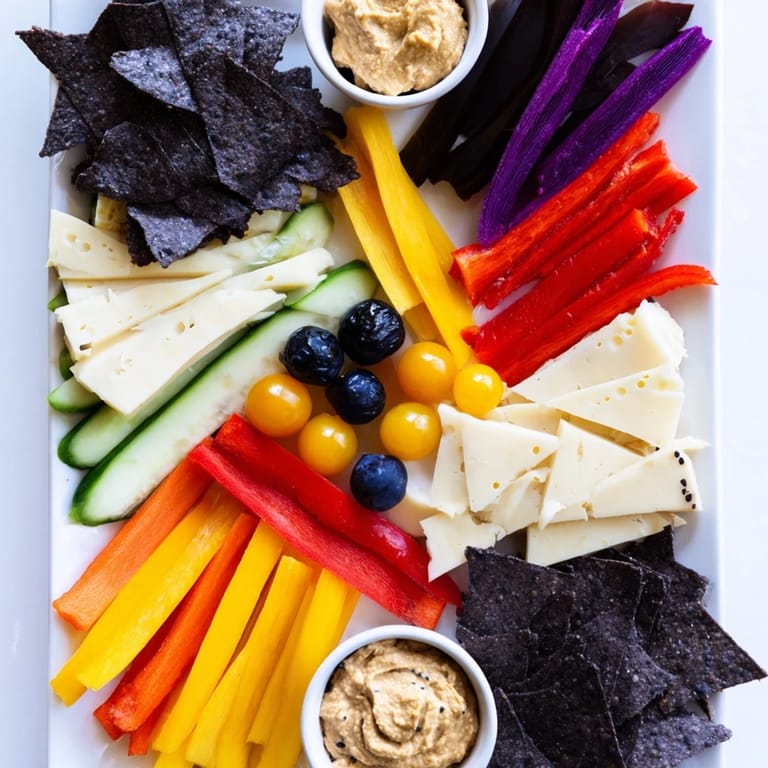
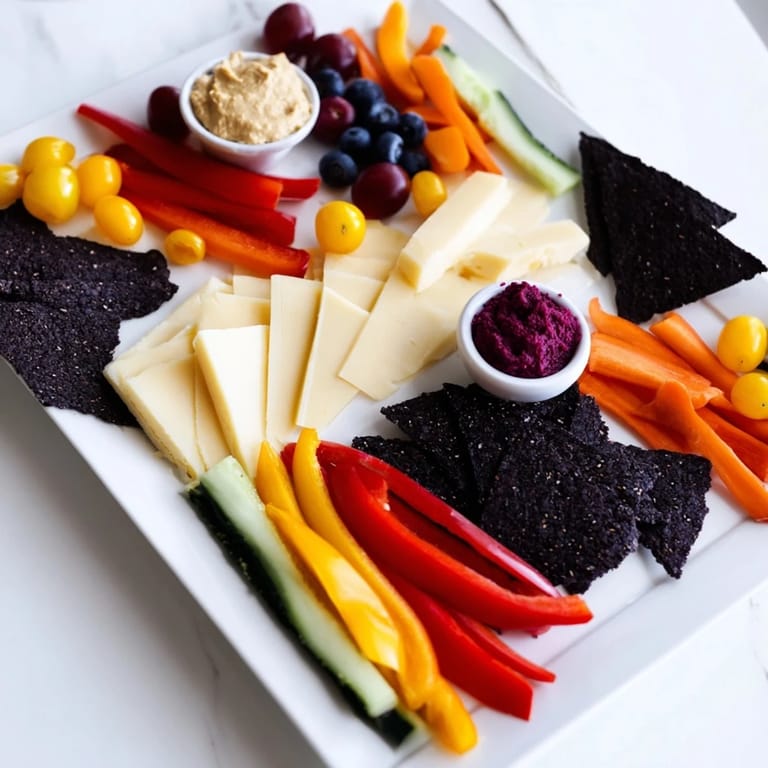
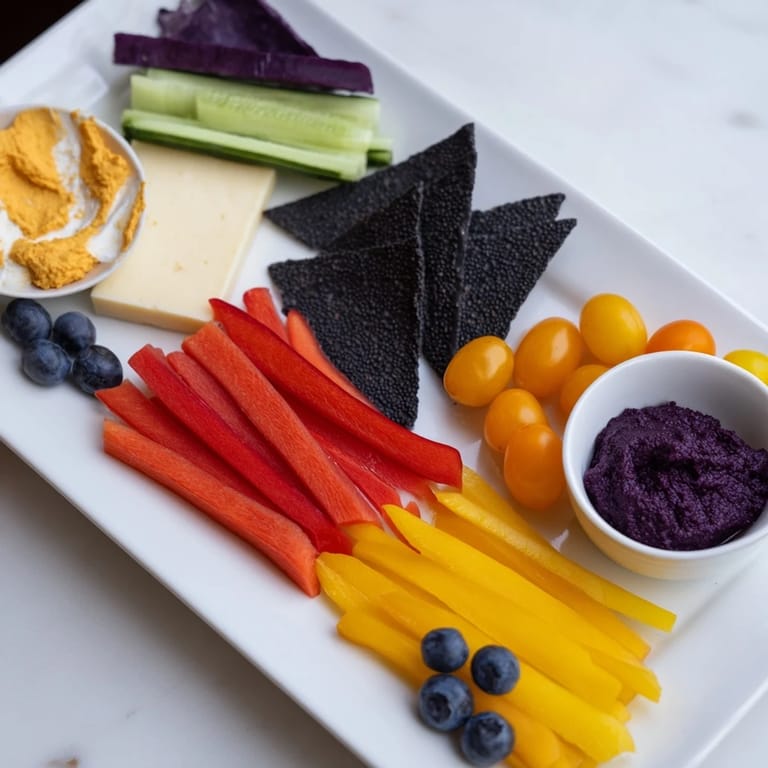
 I still remember the moment a friend challenged me to create something that would stop people mid-conversation at a dinner party. Not just tasty, but visually arresting—something that made you pause and say, 'Wow, I want to photograph that.' That's when the Zig-Zag Lightning Strike was born. I was playing with contrast, with angles, with the idea that a platter could be as bold as a brushstroke. It turned out that when you arrange vibrant vegetables and cheeses in sharp, diagonal lines, something almost electric happens on the board.
I made this for my sister's modern art exhibition opening, and it became the unexpected star of the evening. Guests kept gravitating toward the platter, not just to eat, but to admire the geometry of it. Watching people's eyes trace that lightning bolt pattern, pausing before they took a piece—that's when I knew this wasn't just appetizer; it was edible design.
Ingredients
- Red bell pepper strips: These are your primary color pop and the foundation of your zig-zag. Cut them into long, clean strips to emphasize the sharp lines of your pattern. Red photographs beautifully and stays vibrant all evening.
- Yellow bell pepper strips: The warmth and brightness here is essential for breaking up the intensity of red. I learned to cut these first to keep my vision clear before adding darker elements.
- Cucumber sticks: Fresh, pale, and crisp—they create natural breathing room in your pattern and keep everything feeling light and summery.
- Purple carrots, cut into sticks: Not all boards need traditional orange. Purple carrots add an unexpected sophisticated touch and create stunning contrast against the cheeses.
- Sharp white cheddar, sliced into thin angular pieces: White cheddar has a bite that stands up to the vegetables. Slice it thin so it's elegant rather than chunky, and arrange it to catch light.
- Black wax gouda, sliced: This is your wildcard. The dark exterior contrasts dramatically with its golden interior, and the subtle smokiness deepens your flavor profile.
- Blueberries: They nestle into the gaps of your pattern like tiny jewels. Use them strategically to break up long stretches of one color.
- Golden cherry tomatoes, halved: These are your warm notes—the antidote to too much cool vegetable. Halving them lets them sit naturally in the pattern.
- Beet hummus: Beyond the gorgeous deep magenta color, beet hummus has an earthy sweetness that grounds all the bright vegetables. I've learned it's better slightly chilled.
- Classic hummus: Your neutral anchor—creamy, familiar, and the bridge between bold flavors.
- Blue corn tortilla chips: These aren't just for texture; they're another visual layer. Blue corn deepens the entire palette of your board in unexpected ways.
- Black sesame rice crackers: Delicate and crispy, they reinforce your angular theme and add a sophisticated nod to the geometric arrangement.
Tired of Takeout? 🥡
Get 10 meals you can make faster than delivery arrives. Seriously.
One email. No spam. Unsubscribe anytime.
Instructions
- Gather and prep your canvas:
- Wash all your vegetables and pat them completely dry—this matters more than you'd think. Damp vegetables will make your board look tired. Cut everything into long, clean strips or geometric pieces. As you cut, visualize your diagonal line running from the top left to the bottom right of your board. This mental mapping keeps you focused on the architecture of what you're building.
- Establish your zig-zag foundation:
- Start with your red peppers, laying them diagonally across your board in a bold line. Think of this as drawing your lightning bolt. Now, immediately next to it, place your white cheddar to create that high-contrast pop. The contrast is everything here—it's what stops people's eyes.
- Build opposing lines:
- Work back along a parallel diagonal with yellow peppers and black gouda. This creates the 'zig' of your zag. You're essentially creating two lightning bolts—one bright, one dark, interlocking. Step back frequently and look at your work from above. Perspective matters here.
- Fill with intention:
- Layer in your cucumber and purple carrots along additional diagonals. Each new stripe should either echo a color or create contrast. There's no random placement—every piece is part of the pattern. This is the meditative part of the process.
- Position your dips:
- Where your zig-zag lines intersect or where you feel the pattern needs an anchor, place your hummus bowls. These aren't afterthoughts; they're focal points. They ground the geometry and give people a reason to pause.
- Edge work:
- Tuck your chips and crackers along the perimeter, reinforcing the angular shape of the entire board. They frame the composition and add that final architectural flourish.
- Scatter your jewels:
- Blueberries and cherry tomato halves go along your zig-zag lines, acting as tiny punctuation marks. Don't overdo this—just enough to guide the eye along your pattern and add unexpected sweetness.
- The final reveal:
- Step back. Look at your work. This is your moment. Serve immediately while everything is cool, crisp, and vibrant. The longer it sits, the more condensation builds, and vegetables begin to wilt slightly. Timing is part of the beauty.
 Pin it
 The moment I'll never forget was when my 8-year-old nephew arrived at a family gathering and immediately started tracing the lightning bolt with his finger before eating anything. He said it looked like 'electricity on a plate.' That's when I realized this dish transcends appetizers—it's a conversation starter, a moment of joy, a little piece of edible art that reminds us food is about more than hunger.
The Science of Contrast
What makes this board work isn't magic—it's color theory meeting plate composition. When you place white cheddar directly next to a red pepper, your eye can't help but stop there. The contrast is almost vibrating. I learned this by accident when I misplaced a piece of cheese and suddenly the whole board snapped into focus. High contrast isn't a flourish; it's the structural foundation of the entire dish. This is why I insist on cutting ingredients into long lines rather than cubes or rounds—the shape itself reinforces the zig-zag pattern and makes your eye follow the lightning bolt you've created.
Making It Your Own
The beauty of this board is how forgiving it is of customization. I've made versions with roasted beets instead of cherry tomatoes, added thin slices of prosciutto for a non-vegetarian twist, and even used rainbow heirloom carrots to deepen the color palette. The underlying principle stays the same: establish angular lines, maximize contrast, and let the geometry do the visual work. Your board tells the story of what's in season, what speaks to you, what colors make your heart happy. The zig-zag is just the framework.
Pairing and Serving Wisdom
This board is as much about what you serve beside it as what's on it. I've paired it with crisp Sauvignon Blancs and found the acidity of the wine mirrors the brightness of the peppers. Sparkling water with lemon echoes the same theme—refreshment, lightness, a cleansing palate. For larger gatherings, I've learned to make the board in stages: prep everything an hour ahead, assemble 15 minutes before guests arrive. This way, the vegetables stay cold and snappy, the cheeses haven't begun to soften, and your arrangement stays gallery-worthy. If you're worried about allergies, keep labels for the hummus and crackers nearby—sesame and legumes can surprise people.
- Chill all ingredients and your serving board beforehand to keep vegetables crisp throughout the gathering
- Refresh blueberries and cherry tomatoes halfway through if your party runs long—add new ones to maintain visual impact
- Cut vegetables just before assembling to prevent oxidation and keep colors true
 Pin it
 Every time I arrange this board, I'm reminded that food is a language. You don't need to say anything when this hits the table—the visual conversation starts immediately. That's the real magic.
Recipe FAQ
- → How do I achieve the bold zig-zag arrangement?
Cut vegetables and cheeses into long angular strips, then alternate colors diagonally across the serving board for maximum contrast.
- → What dips pair best with this platter?
Beet hummus and classic hummus add creamy textures and vibrant colors that blend well with the fresh produce.
- → Can this platter accommodate dietary restrictions?
Yes, plant-based cheeses and gluten-free crackers can be substituted to suit vegan or gluten-free needs.
- → How should I prepare fruits and vegetables for the platter?
Wash, peel, and slice into consistent, angular shapes to emphasize sharp lines and enhance visual impact.
- → What beverages complement this modern appetizer?
A crisp Sauvignon Blanc or sparkling water with lemon pairs well, balancing the bold flavors and colors.