 Pin it
 There's something about the darkest day of the year that makes me want to create something visually striking on the table. A few years ago, I stopped fussing with complicated appetizers and instead arranged a board that felt like a conversation between two seasons—dark, earthy richness on one half and bright, honeyed sweetness on the other. It took maybe fifteen minutes to assemble, but watching people's faces light up as they discovered the intentional contrast made it feel like something special had happened in the kitchen.
I remember assembling this board for the first time during a winter solstice gathering, uncertain if the theme would feel too artsy or pretentious. But as people stood around it, they naturally gravitated to both sides—some returned for another piece of chocolate with an olive, others layered honeycomb with Brie. The board became a map of different conversations, and I realized it wasn't the theme that mattered; it was the permission to play with contrasts.
Ingredients
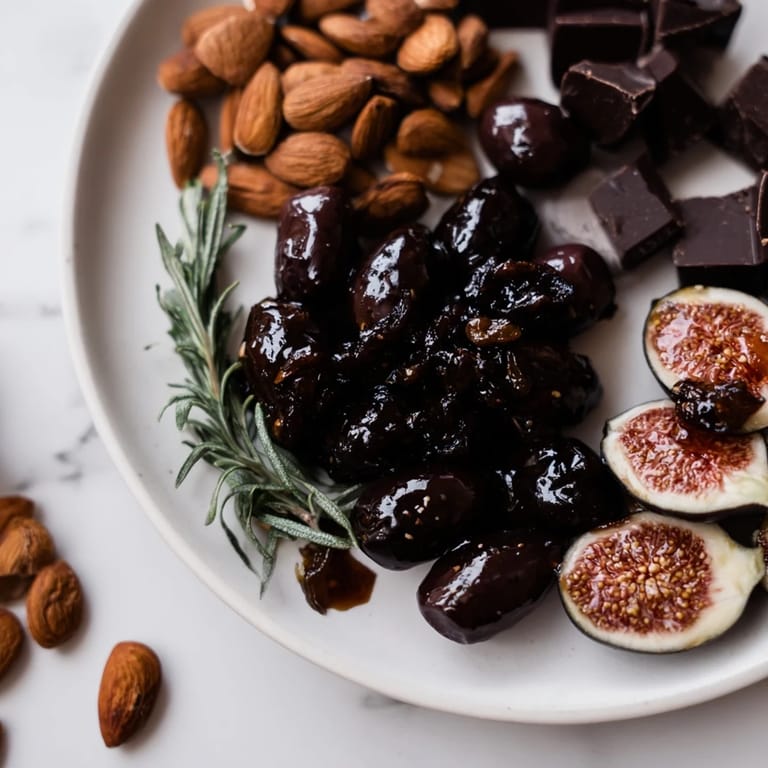
- Kalamata olives: These dark, briny gems are the backbone of the shadow side—pitting them yourself gives you control and keeps the board neat.
- Oil-cured black olives: Less familiar than kalamata but worth seeking out for their deeper, almost winey intensity.
- Dried mission figs: Halve them just before serving so their golden interior catches the light and they don't dry out further.
- Fig jam: Acts as a sweet anchor that bridges the salty and rich elements together.
- Dark chocolate: Break it into uneven pieces rather than neat squares—it feels more inviting and less staged.
- Roasted almonds: Their slight crunch and salt bring textural relief to the softer, stickier elements.
- Fresh rosemary: Use it as both garnish and a natural divider; the smell alone sets the mood.
- Ripe Brie cheese: Check that it yields gently to pressure—too firm and it won't have that luxurious creamy quality.
- Pears: Slice them just before service or they'll brown; a light squeeze of lemon juice helps if you're prepping early.
- Honeycomb: If you can find it, it's worth it for the textural surprise; honey drizzle works but feels less generous.
- Toasted walnuts: Toast them yourself briefly if possible—they'll be warmer and more fragrant than store-bought.
- Green grapes: Their bright coolness is what makes the light side feel fresh rather than heavy.
- Fresh thyme: A quiet garnish that smells of subtle earthiness and signals care in the arrangement.
- Baguette slices: Toast them lightly if you prefer more structure, or leave them soft for a contrast in texture.
- Assorted crackers: Choose a mix of plain and seeded; they help guests navigate the board and add visual texture.
Tired of Takeout? 🥡
Get 10 meals you can make faster than delivery arrives. Seriously.
One email. No spam. Unsubscribe anytime.
Instructions
- Divide your stage:
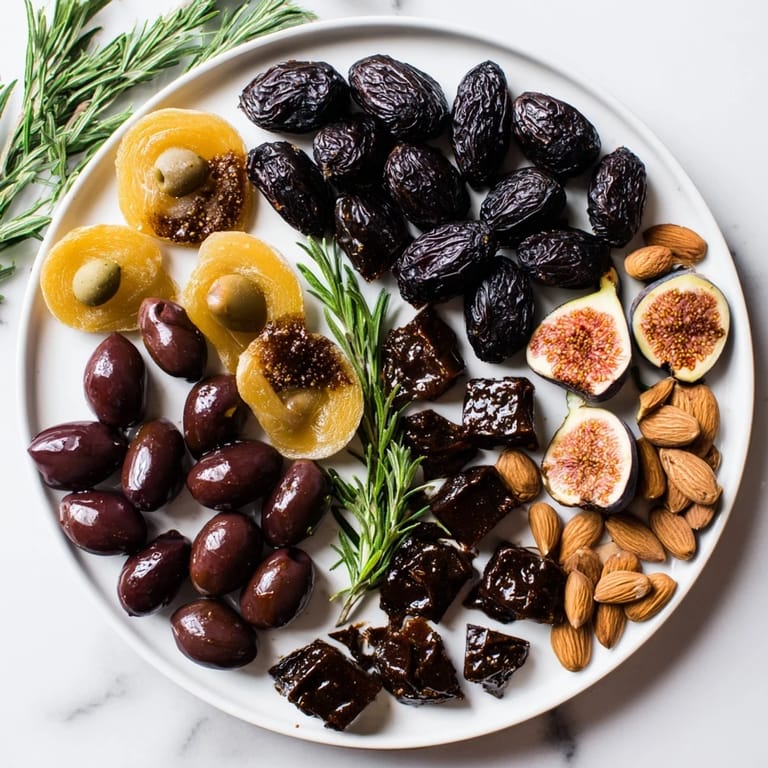
- On your largest board, create a clear line down the middle—use a row of rosemary sprigs as a natural divider or set down a line of crackers if you prefer something visual but edible. This isn't about precision; it's about a suggestion of contrast.
- Build the dark side:
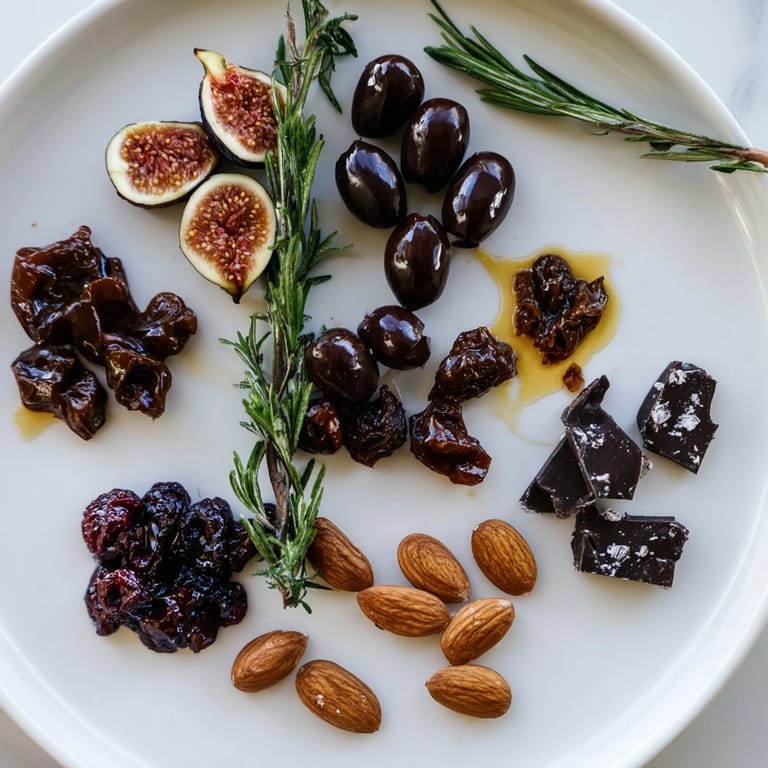
- Cluster the kalamata and oil-cured olives together so their briny aromas mingle, then scatter the halved figs nearby. Dollop the fig jam in one corner as an anchor, arrange the broken dark chocolate pieces so they catch light, and pile the roasted almonds in a small mound. A sprig of rosemary across the top feels like a final brushstroke.
- Compose the light side:
- Arrange the Brie as a generous wedge or whole wheel—it should look like it's inviting a cheese knife. Fan the pear slices around it, then set down a piece of honeycomb or a gentle drizzle of honey nearby. Scatter the walnuts and grapes in loose clusters rather than neat rows; a scattered look feels more abundant.
- Connect with breads:
- Place baguette slices and crackers along the center line where the two worlds meet, or pile them on a small side plate. This prevents the board from feeling too full and gives guests a clear way to interact with everything.
- Serve at once:
- Set it on the table while everything is at room temperature and the arrangement still feels fresh. The moment people start reaching for pieces, the board becomes alive in a way that a perfect frozen image never could.
 Pin it
 What I've learned about this board is that it's less about the ingredients and more about permission—permission to eat something beautiful, to stand and linger, to try flavors you might not have considered together. I've watched Brie-and-honeycomb eaters venture to the dark side for a chocolate-almond moment, and olive enthusiasts discover that pear and walnut is a revelation.
The Story Behind the Balance
The winter solstice board came to me one December when I was thinking too hard about symbolism and not enough about what actually tastes good. I realized the strongest symbols aren't imposed from outside—they emerge naturally when you honor the ingredients themselves. Dark fruits and chocolate aren't dark because I decided they were moody; they're dark because they taste that way. The contrast isn't forced; it's just honest.
Building a Board That Tells a Story
Every element on this board has a reason to be there—flavor, texture, visual weight, and the subtle conversation between them. The olives speak to salt and tradition, the Brie speaks to cream and gentle luxury, the chocolate speaks to richness, and the pears speak to brightness. When you understand why each piece matters, you can rearrange or substitute with confidence rather than following a template.
Pairing and Serving Ideas
This board is more of a platform for flavors than a finished dish, which is why it's so versatile. The dark side pairs beautifully with a full-bodied red or a dry sparkling wine, while the light side calls for something crisp and cool. Serve it as a slow appetizer that guests graze from over 20 minutes, or as the entire meal on a quiet evening.
- A dry sparkling wine bridges both sides and cleanses the palate between bites of sweet and salty.
- If you want to add protein, thinly sliced prosciutto or good salami belong on the dark side where their salt echoes the olives.
- This board is forgiving—swap apples for pears, use Camembert instead of Brie, add dried apricots wherever you please.
 Pin it
 A cheese board isn't complicated, but it becomes memorable when you remember that you're not just feeding people—you're creating a moment where they can slow down and taste what's in front of them. That's the real gift.
Recipe FAQ
- → How do I create the dividing line on the board?
Use a sprig of rosemary or arrange crackers in a straight line down the middle to separate the two flavor sections.
- → Can I substitute the cheeses or fruits?
Yes, Roquefort or Camembert can replace Brie, and pears may be swapped for apples while figs can be replaced with dried apricots.
- → What nuts complement this board?
Roasted almonds and toasted walnuts provide crunchy texture and nutty flavors that enhance both sides of the board.
- → Are there any suggested pairings?
A dry sparkling wine or a light-bodied red pairs beautifully, enhancing the balance of rich and fresh elements.
- → Is this suitable for vegetarians?
Yes, the board is vegetarian-friendly, but prosciutto can be added for those who prefer meat options.