 Pin it
 There's something about a bowl of warm quinoa that feels like you're doing something right for yourself, you know? I discovered this particular combination on a Tuesday afternoon when my fridge was looking pretty bare except for some sad carrots and a bag of frozen peas, and somehow it turned into something I now crave on those days when I need comfort that doesn't feel heavy. The nutty warmth of the grain mixed with the sweetness of roasted vegetables just clicks, especially when you drizzle that tangy mustard dressing over everything. It's become my go-to bowl for those moments when I want nourishment without overthinking dinner.
I made this for my neighbor last spring when she mentioned feeling overwhelmed by work, and watching her face light up when she tasted how bright and fresh it was reminded me that good food is sometimes just what someone needs to feel grounded. She came back three days later asking if I'd teach her how to make it, and now it's become our thing—we'll text each other photos of our bowls with different seasonal vegetables swapped in. That's when I knew this recipe was special, not because it's fancy, but because it genuinely makes people feel better.
Ingredients
- Quinoa, rinsed: This ancient grain has such a delicate, slightly nutty flavor that gets better when you actually rinse it first—it removes that bitter coating nobody talks about but everyone notices.
- Water or vegetable broth: Broth gives the quinoa an underlying depth that plain water just can't match, so use it if you have it on hand.
- Carrots, peeled and sliced into 1/2-inch rounds: That specific thickness matters because it lets them get caramelized and tender without turning into mush or staying hard in the middle.
- Green peas, fresh or frozen: Frozen peas are actually your friend here because they're picked and frozen at peak freshness, so don't feel any guilt about skipping the farmer's market version.
- Red onion, sliced: The slight bite of raw red onion against the warm grains is what gives this bowl its personality, so don't skip it or swap it out.
- Olive oil: Use the decent stuff you actually like tasting, not the cheapest bottle, because you can absolutely taste the difference when oil is one of your main flavors.
- Lemon juice: Fresh lemon is non-negotiable here—bottled just tastes tinny and sharp in a way that doesn't work with everything else going on.
- Dijon mustard: It might sound odd in a dressing for a grain bowl, but it creates this bridge between all the flavors that makes the whole thing feel cohesive.
- Honey or maple syrup: Just a touch of sweetness to balance the mustard's bite and the tartness of the lemon.
- Salt and freshly ground black pepper: Taste as you go because seasoning is about balance, not following a formula.
- Fresh parsley, chopped: The green brightens everything up right at the end, so fresh herbs actually matter here.
- Feta cheese, crumbled (optional): If you add it, the saltiness plays beautifully against the earthiness of the roasted vegetables.
- Toasted pumpkin seeds (optional): They add a nice crunch and a subtle nuttiness that makes the texture feel more interesting.
Tired of Takeout? 🥡
Get 10 meals you can make faster than delivery arrives. Seriously.
One email. No spam. Unsubscribe anytime.
Instructions
- Get your oven ready:
- Heat your oven to 400°F and give it a few minutes to come to temperature, because cold ovens are sneaky saboteurs that nobody warns you about.
- Prepare and roast the vegetables:
- Toss those carrot rounds and red onion slices with olive oil, a pinch of salt, and some pepper, then spread them out on a baking sheet in a single layer so they actually roast instead of steam. Halfway through the 25 to 30 minutes, give them a stir so they caramelize evenly on both sides and get this gorgeous golden color that makes you excited to eat them.
- Cook the quinoa while vegetables roast:
- Put your rinsed quinoa in a saucepan with water or broth and bring it to a boil, then lower the heat, cover it, and let it simmer for about 15 minutes until the liquid disappears and the grain looks fluffy and separated. After you remove it from heat, leave the lid on and let it sit for 5 minutes—this is where the magic happens and it becomes light and tender instead of mushy.
- Handle the peas gently:
- If you're using frozen peas, drop them in boiling water for just 2 minutes then drain them quick; if they're fresh, steam them until they're tender but still have that slight firmness that means they're not overcooked.
- Make a dressing that actually tastes good:
- Whisk together your olive oil, fresh lemon juice, Dijon mustard, and a drizzle of honey or maple syrup in a small bowl until it's smooth and combined, then taste it and adjust the salt and pepper until it makes you happy.
- Bring it all together:
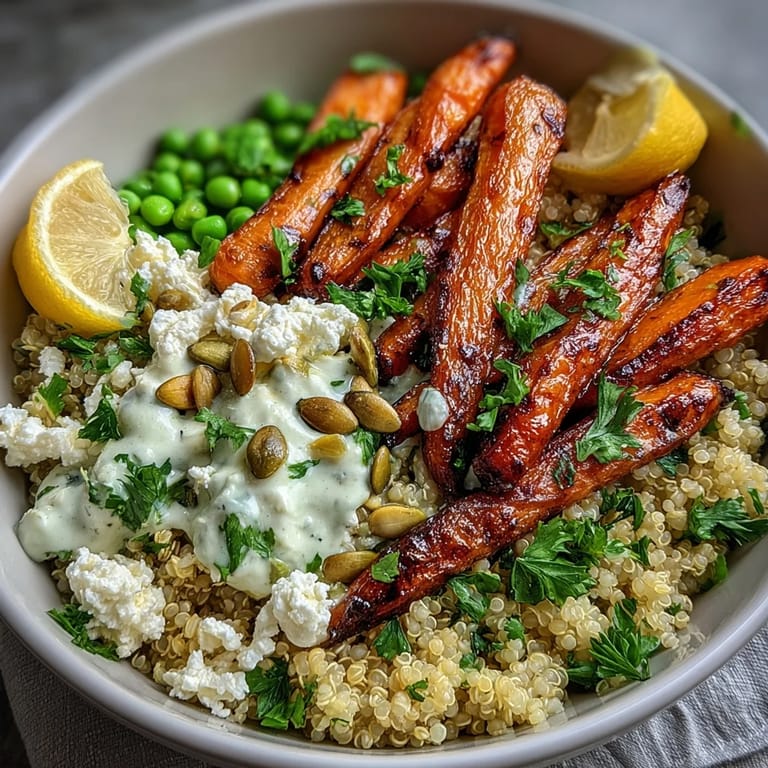
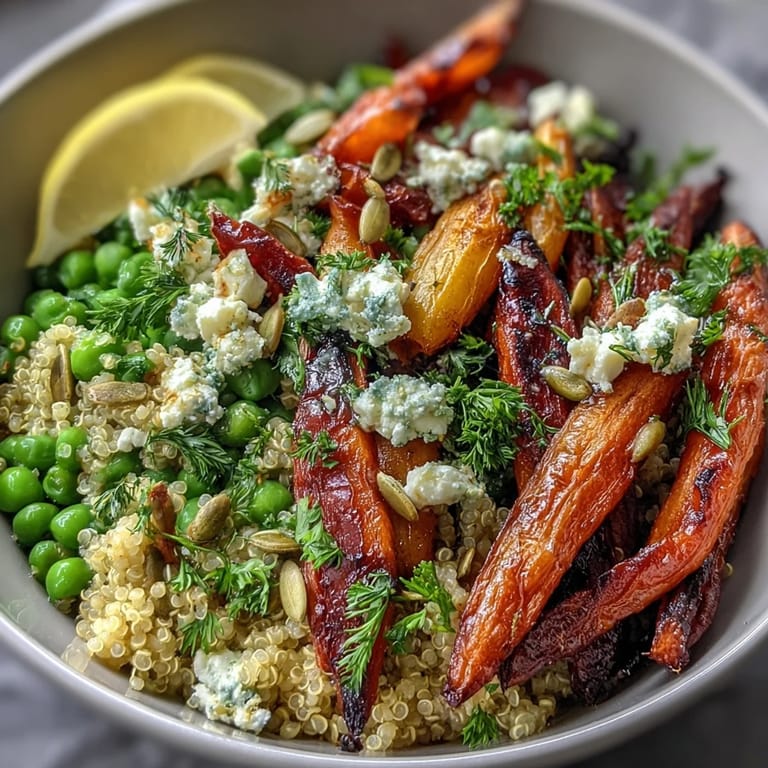
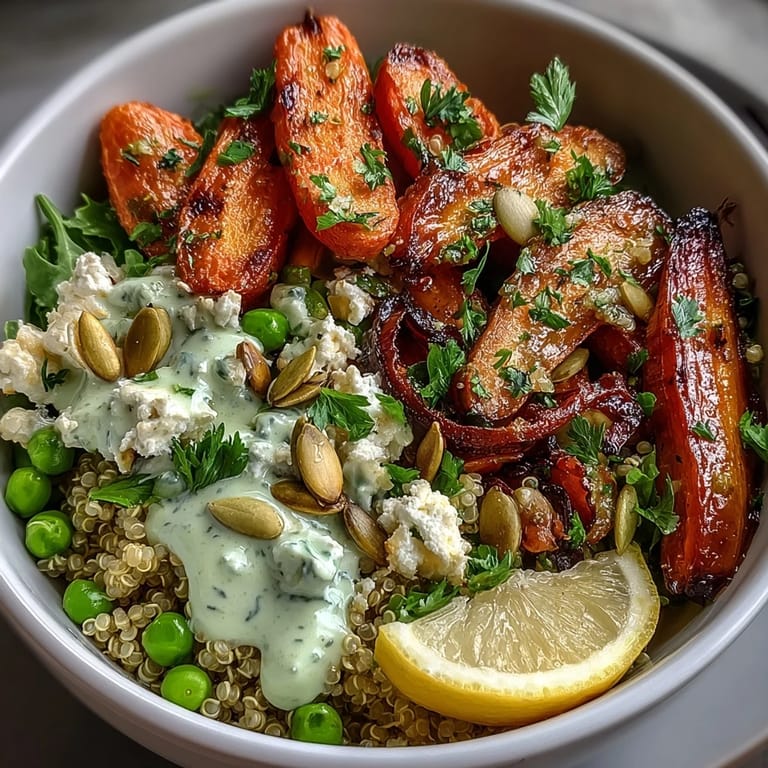
- Divide the fluffy quinoa among your bowls, then arrange the warm roasted carrots and onion on top along with the peas, creating something that looks intentional and tastes even better than it looks. Drizzle that dressing over everything so it soaks into the warm grains a little bit.
- Finish with the good stuff:
- Scatter your fresh parsley over the top, add feta if you're using it, sprinkle those toasted pumpkin seeds around, and serve it while everything is still warm enough to make the whole bowl feel cozy.
 Pin it
 My mom texted me last month saying she'd made this bowl three times in two weeks and wanted to know if something was wrong with her for eating the same thing so often, and I realized that sometimes a recipe becomes less about novelty and more about reliability—it's the bowl you make when you want to feel taken care of by your own hands. That's when you know you've found something worth keeping.
Why Seasonal Swaps Actually Work
The genius of this bowl is that it doesn't care what's in season because the technique stays the same and everything still works. In summer, I'll swap the carrots for zucchini and cherry tomatoes, and in fall I'll use butternut squash and Brussels sprouts, and somehow the dressing and quinoa base just make it all feel like the same beloved bowl wearing different clothes. The roasting method is what really matters—that caramelization and tenderness that comes from the oven heat is what makes whatever vegetable you use taste intentional and delicious.
Making It Work for Different Diets
If you're vegan, just skip the feta or grab a plant-based version from the store, and honestly the bowl doesn't miss it because the dressing and vegetables have enough personality to stand on their own. Adding grilled chicken or roasted chickpeas turns this into something heartier if you need more protein, and the beauty is that the bowl just expands to hold whatever you want to add without feeling confused about what it is anymore. You're really just building on a solid foundation that's flexible enough to bend without breaking.
Bowl Moments and Memories
There's something almost meditative about assembling a bowl like this, the way you're arranging colors and textures and flavors that you know are going to work together because you've tasted each component. My partner jokes that I'm oddly particular about how I layer things in the bowl, but it's not about perfectionism—it's about the ritual of it, the intentionality that makes eating alone feel like taking yourself on a date. Somehow this simple combination of ingredients has become the bowl I reach for when I need to remember that taking care of yourself tastes good and doesn't have to be complicated.
- Make a double batch of dressing and keep it in the fridge because it's great on literally everything for the next week.
- Toast your own pumpkin seeds if you can because store-bought are fine but homemade taste nuttier and fresher.
- Don't assemble your bowl too far ahead if you want the dressing to soak into the warm quinoa instead of sitting on top and getting weird.
 Pin it
 This bowl has somehow become the recipe I make most often, not because it's trendy or impressive, but because it genuinely makes me feel good every single time. Keep it in your back pocket for those days when you need something nourishing that tastes like care.
Recipe FAQ
- → What type of quinoa is best for this dish?
Use white or mixed quinoa rinsed thoroughly to ensure a light, fluffy texture once cooked.
- → Can I substitute the carrots with other vegetables?
Yes, sweet potatoes or butternut squash work well when roasted to add natural sweetness and texture.
- → How should I prepare the green peas?
Fresh peas can be steamed until tender, while frozen peas should be blanched briefly to preserve their vibrancy.
- → What dressing complements the ingredients best?
A simple blend of olive oil, lemon juice, Dijon mustard, and honey balances the earthy and sweet flavors wonderfully.
- → Are there options to make this dish vegan?
Omit the feta or substitute it with a plant-based alternative to keep it vegan-friendly without compromising flavor.
- → How can I add extra protein to this bowl?
Adding roasted chickpeas or grilled chicken boosts protein content and enhances meal satisfaction.