 Pin it
 There's a particular afternoon in August when my kitchen felt too hot to use the stove, so I started chopping vegetables almost without thinking—tomatoes, cucumber, bell pepper—and tossing them into the blender with olive oil and vinegar. What emerged was this luminous, chilled soup that tasted like summer itself, cool and bright and so simple I wondered why I'd never made it before. My neighbor came over complaining about the heat, and I handed her a bowl without explanation; she was quiet for a moment, then asked for seconds.
I made this for a dinner party on a night so humid the air felt thick, and something shifted when people started eating—conversations slowed, people savored instead of rushed, and someone asked if I'd gone to culinary school, which made me laugh until I explained it was just vegetables and a blender. That moment taught me that sometimes the most impressive meals are the ones that require almost nothing but the right ingredients at their peak.
Ingredients
- Ripe tomatoes, 4 large: Choose tomatoes that smell sweet and give slightly when you press them; this is where most of the flavor lives, so don't compromise here.
- Cucumber, 1 large: Peel it to remove bitterness from the skin, especially if it's been sitting around.
- Red bell pepper, 1: The red ones are sweeter than green, which matters in a soup this delicate.
- Red onion, 1 small: This adds a gentle bite that keeps the soup from tasting flat or one-dimensional.
- Garlic, 1 clove: Just one—garlic is ambitious in chilled soups, and you want it to whisper, not shout.
- Extra-virgin olive oil, 2 tablespoons: Use the good stuff here; you'll taste it directly, and it shouldn't taste like an afterthought.
- Red wine vinegar, 2 tablespoons: This brightens everything and prevents the soup from tasting heavy or sweet.
- Sea salt, 1 teaspoon: Salt awakens all the vegetable flavors, so don't skip it or reduce it.
- Freshly ground black pepper, ½ teaspoon: Grind it yourself if you can; pre-ground pepper tastes tired by comparison.
- Cold water, 1 ½ cups: This is your dial for consistency—add less for a thicker soup, more for something you could almost drink.
Tired of Takeout? 🥡
Get 10 meals you can make faster than delivery arrives. Seriously.
One email. No spam. Unsubscribe anytime.
Instructions
- Get Your Vegetables Ready:
- Wash and roughly chop everything—the tomatoes, cucumber, bell pepper, onion, and garlic. Don't worry about precision; the blender will handle it.
- Make the Base:
- Put all the chopped vegetables into your blender or food processor and blend until it's smooth and there are no visible chunks left. This is meditative work if you let it be.
- Add the Flavor:
- Pour in the olive oil, red wine vinegar, salt, pepper, and cold water, then blend again until the whole thing looks silky and unified. You should taste something alive and bright at this point.
- Taste and Adjust:
- This is the moment when you become the cook instead of just following along—taste it, and if it needs more salt, vinegar, or seasoning, add it now while the flavors are still speaking to you.
- Chill Thoroughly:
- Pour everything into a bowl or pitcher, cover it, and put it in the refrigerator for at least two hours. The cold transforms the flavors, making them sharper and more distinct than they were when warm.
- Finish and Serve:
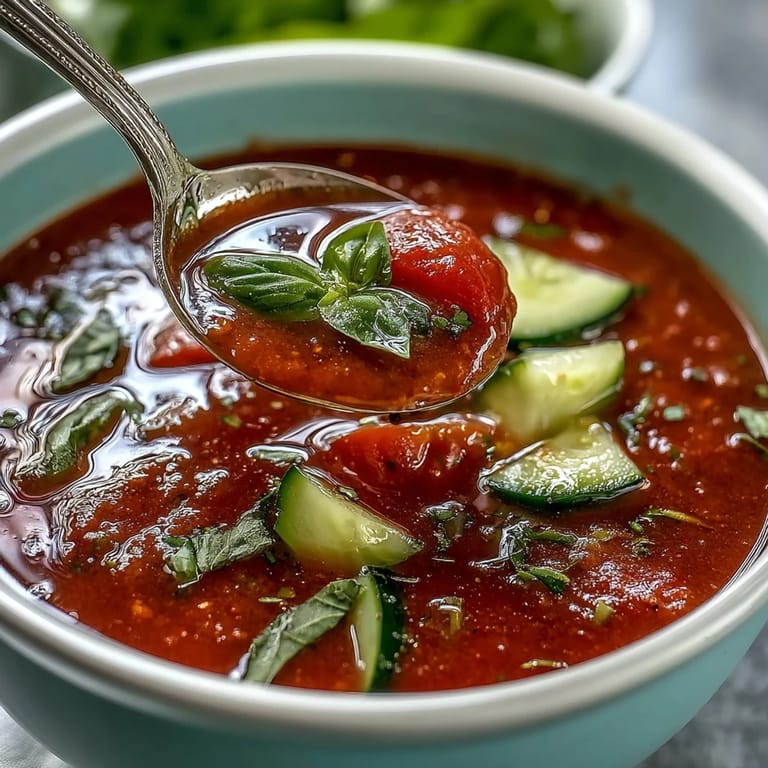
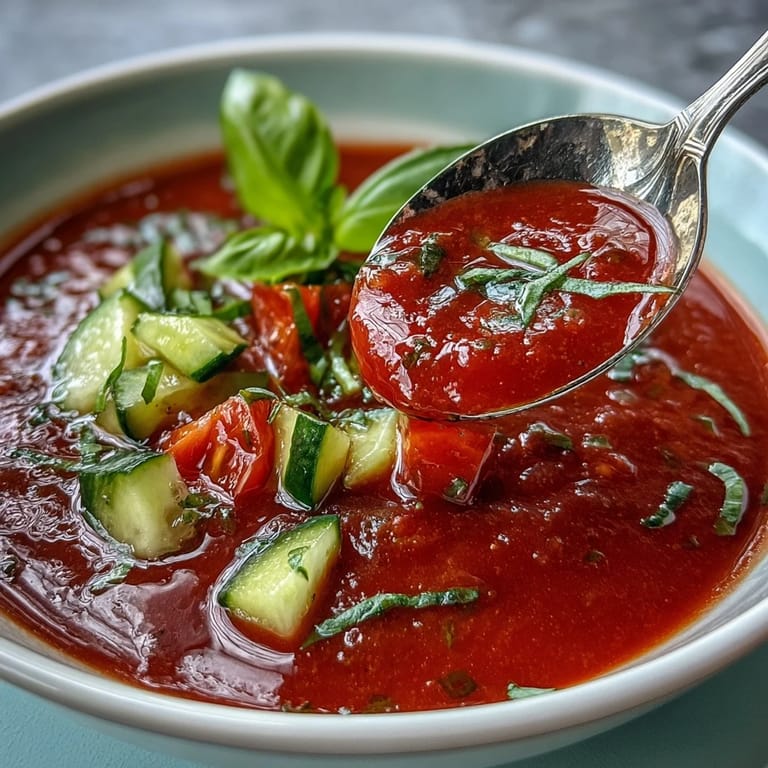
- Stir it once before serving to make sure everything is evenly cold and mixed. Ladle it into bowls and top with diced vegetables, fresh herbs, and a drizzle of olive oil if you have the energy.
 Pin it
 There was an evening when my daughter, who usually moves through meals quickly, sat with a spoon and this soup for what felt like hours, not eating particularly fast but just present with it. Food doesn't have to be complicated to be meaningful; sometimes it's just the rightness of cold, fresh vegetables on the exact day you needed them.
The Temperature Question
One summer I made gazpacho and forgot to chill it properly, just putting it in the fridge for 30 minutes, and it tasted acceptable but not quite right—pleasant enough but missing something essential. The next day I tasted the leftovers, which had been chilled overnight, and understood immediately what I'd done wrong; cold gazpacho tastes like a completely different soup than lukewarm gazpacho. Temperature isn't just a detail here; it's the whole point.
Playing with Texture
Some people blend gazpacho until it's perfectly smooth, and some people leave it slightly chunky—I've done both, and honestly, there's no wrong answer. The smooth version feels more sophisticated, almost velvety on the tongue, while the chunky version lets you taste each vegetable individually and reminds you of what you're actually eating. If you're uncertain, blend it smooth first, and if someone requests more texture, blend less next time and learn from their preference.
Variations That Actually Work
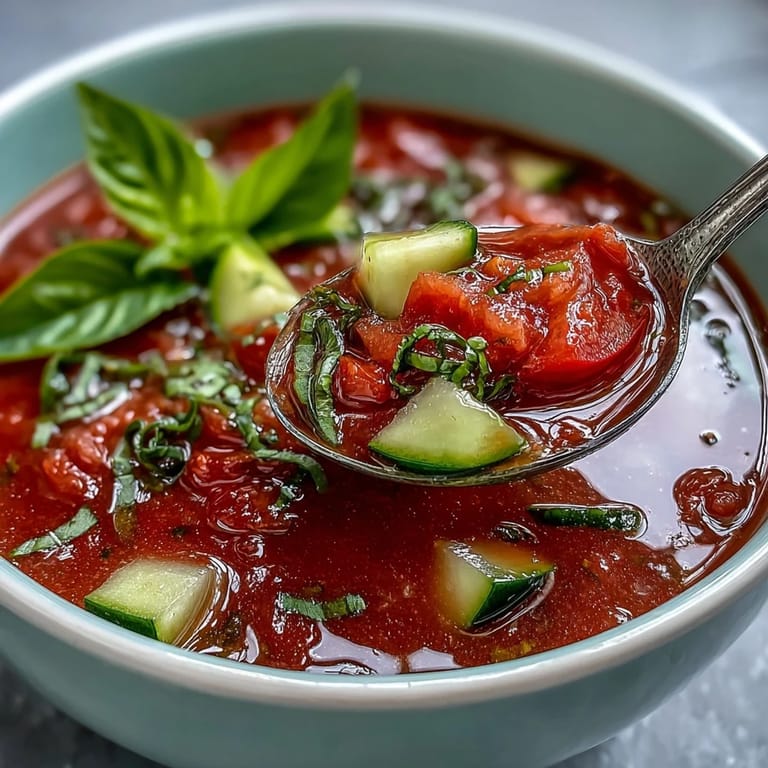
I've experimented with additions over the years, sometimes successfully and sometimes not, and I've discovered what actually improves this soup and what just distracts from it. A pinch of smoked paprika adds depth without changing the character of the dish, and a small splash of Tabasco or hot sauce wakes everything up if you're in the mood for that. Some people add a touch of balsamic vinegar, which rounds out the acidity with sweetness, or a handful of fresh basil at the end, which tastes like summer remembering itself.
- Smoked paprika brings a whisper of smoke without overwhelming the fresh vegetable flavors.
- A tiny splash of Tabasco is better than nothing if the soup tastes a little flat on its own.
- Fresh herbs like basil, parsley, or cilantro added at the very end taste brighter than if you blend them in.
 Pin it
 Gazpacho lives in that beautiful space between soup and salad, between cooking and not cooking, where the kitchen stays cool and the table stays full. It's proof that sometimes the best meals arrive not from technique or effort, but from respecting what's already good about the ingredients themselves.
Recipe FAQ
- → What is the best way to achieve a smooth texture?
Blending the vegetables thoroughly helps, and for extra smoothness, straining through a fine sieve removes any pulp.
- → Can I adjust the seasoning to taste?
Yes, taste before chilling and add salt, pepper, or vinegar to balance the flavors as desired.
- → How long should the dish be chilled?
Chilling for at least two hours ensures flavors meld and the dish is sufficiently cold and refreshing.
- → What garnishes complement this dish well?
Diced cucumber, tomato, fresh basil or parsley, and a drizzle of olive oil enhance both flavor and presentation.
- → Is this suitable for special diets?
Yes, it’s naturally vegan, gluten-free, and low in calories, making it suitable for a variety of dietary preferences.