 Pin it
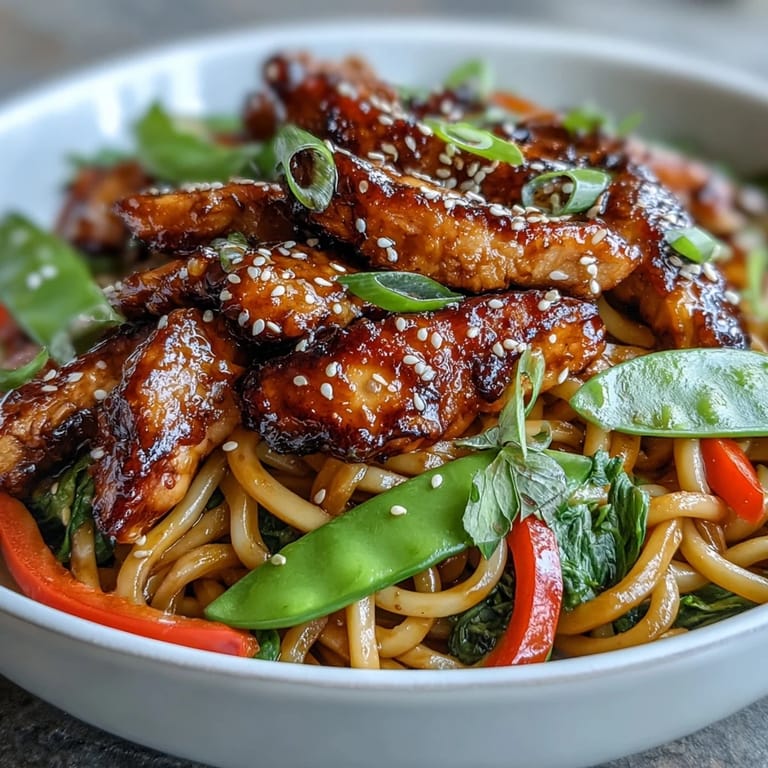
 My neighbor brought over a sesame noodle bowl last summer, and I remember standing in my kitchen at dusk, steam rising from the bowl, wondering how something could smell this good and taste even better. The combination of toasted sesame oil, ginger, and that glossy sauce clinging to tender chicken felt like a small revelation. From that first bite, I became obsessed with recreating it, tweaking the balance of sweet and savory until it felt like mine. Now it's the dish I make when I want to feel like I've traveled somewhere without leaving my kitchen.
I made this for friends during a spontaneous dinner party, and what struck me wasn't just how quickly it came together, but how everyone gravitated toward the kitchen counter where I was assembling the bowls, watching the noodles and vegetables come to life under the sauce. There's something about a noodle bowl that invites people in, makes them curious about each component before it all comes together.
Ingredients
- Boneless, skinless chicken breast or thighs (500 g/1 lb), thinly sliced: Thighs hold moisture better than breast, but either works; the key is slicing them thin so they cook quickly and absorb the sauce.
- Dried udon, soba, or rice noodles (250 g/9 oz): Udon gives you chewiness, soba brings nuttiness, and rice noodles keep things delicate—choose based on what texture calls to you.
- Red bell pepper, thinly sliced (1): The sweetness and crunch matter here; don't skip this as it's the visual star and adds brightness.
- Medium carrot, julienned (1): Julienne them properly so they cook evenly and have that satisfying snap when you bite down.
- Sugar snap peas, trimmed (100 g/3.5 oz): These stay crisp even with heat, giving you texture contrast that feels essential when everything else is tender.
- Spring onions, sliced (2): Add these at the end to preserve their fresh bite; cooked spring onions lose their charm.
- Low-sodium soy sauce (60 ml/4 tbsp): Go low-sodium so you control the saltiness and can taste the other flavors dancing through.
- Brown sugar (2 tbsp): This isn't just sweetness—it rounds out the sauce and keeps it from tasting aggressively salty.
- Toasted sesame oil (1 tbsp): The heart of this dish; genuine toasted sesame oil smells like something your grandmother would treasure, so don't substitute with regular sesame oil.
- Rice vinegar (1 tbsp): The acid that lifts everything and prevents the sauce from feeling heavy.
- Fresh ginger, grated (2 tsp): Microplane it fresh just before use—the difference between jarred and fresh ginger here is honestly night and day.
- Garlic, minced (2 cloves): Mince by hand if you have time; the slight texture matters more than you'd think.
- Cornstarch, optional (1 tsp): Use this only if your sauce feels too thin; it creates a light gloss without making anything gloppy.
- Toasted sesame seeds (2 tbsp): Toast your own if possible, or buy pre-toasted; these are the final flourish that ties everything together visually and adds a subtle crunch.
- Fresh coriander or cilantro, chopped: This brightens the entire bowl in the last moment—don't skip it.
- Lime wedges, optional: A squeeze of lime is optional but changes the whole character of the bowl if you use it.
Tired of Takeout? 🥡
Get 10 meals you can make faster than delivery arrives. Seriously.
One email. No spam. Unsubscribe anytime.
Instructions
- Bring the noodles to life:
- Boil your noodles according to package directions, then drain and rinse under cold water until they're completely cool. This stops them from cooking further and keeps them from clumping together.
- Build your sauce:
- In a small bowl, whisk together soy sauce, brown sugar, sesame oil, rice vinegar, ginger, garlic, and cornstarch if you're using it. Taste it straight from the spoon—it should make your eyes light up with that perfect balance of salty, sweet, and nutty.
- Get your pan hot:
- Heat your skillet or wok over medium-high heat and add a splash of oil. You want it hot enough that the oil moves freely, but not smoking—that's the sweet spot where your chicken will brown instead of steam.
- Cook the chicken until golden:
- Add your sliced chicken and let it sit for a moment before stirring; this creates those gorgeous caramelized edges that taste exponentially better than pale chicken. Cook for 4 to 5 minutes until it's cooked through.
- Sauté the vegetables briefly:
- Remove the chicken to a plate, add a touch more oil to the pan, then add your bell pepper, carrot, and snap peas. Stir constantly for 2 to 3 minutes—you want them to be warm and just beginning to soften, but still with a snap when you bite them.
- Bring it all back together:
- Return the chicken to the pan, pour in your sauce, and toss everything until it's beautifully coated. Let it simmer for 1 to 2 minutes so the sauce clings to every piece and thickens slightly.
- Add the noodles and onions:
- Toss in your cooled noodles and spring onions, stirring gently until everything is warm and mingled. The noodles will pick up the sauce and glisten.
- Serve with intention:
- Divide among bowls and crown each one with sesame seeds, fresh cilantro, and a lime wedge if you're using it. The garnishes aren't decoration—they're the final chapter of flavor.
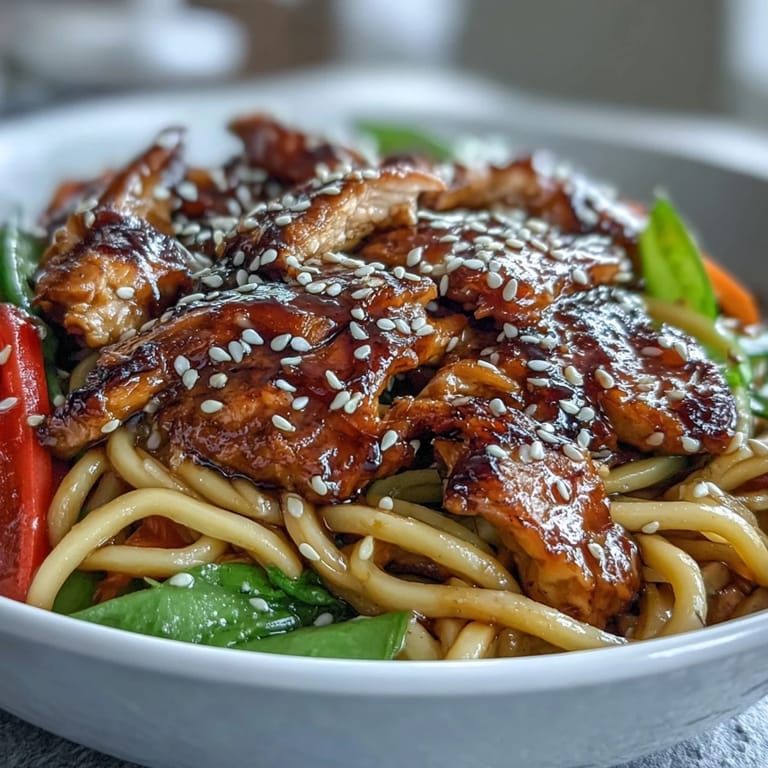 Pin it
 There was one quiet Sunday when I made this for myself after a long week, and I remember sitting with the bowl, no phone, no rush, just the smell of sesame and the gentle warmth of everything together. It became the bowl I made when I needed to feel looked after by my own hands.
The Soul of the Sauce
This sauce is deceptively simple, but it works because of the ratio, not the ingredients themselves. The brown sugar isn't there to make it dessert-sweet; it's there to soften the edges of the soy sauce and create depth. I learned this the hard way by making it with white sugar once and wondering why it tasted harsh. The toasted sesame oil is what gives you that nutty warmth that makes people say this tastes like something from a restaurant, and rice vinegar keeps it from feeling heavy or one-note. Balance the sauce on your spoon before committing—you can always add more soy if it's too sweet, or a squeeze of lime if it tastes flat.
Making It Your Own
I've made this bowl probably fifty times now, and I've never made it exactly the same way twice because that's the beauty of noodle bowls. Some nights I add broccoli or mushrooms because that's what's in my fridge. Other times I'll double the ginger because the weather feels cold and I want that warming heat. For a vegetarian version, press firm tofu and cook it the same way you would the chicken—it'll develop those same golden edges and soak up the sauce like it was meant for it. You could add chili flakes if you want heat, or a drizzle of chili oil at the end for richness.
What Pairs Beautifully Alongside
The one thing I've learned about serving this bowl is that it doesn't need much—it's complete as is. But if you're having people over, a simple salad with fresh greens and a light dressing feels right alongside it, or some steamed edamame if you want a second element. A crisp white wine like Sauvignon Blanc cuts through the richness of the sesame oil beautifully, and honestly, a cold beer works just as well for a more casual dinner.
- Serve this bowl hot the moment it's ready—the warmth brings out the ginger and sesame.
- You can prep all your ingredients hours in advance and cook everything in 15 minutes when you're ready to eat.
- Leftovers taste good cold the next day, though the noodles will stiffen up slightly.
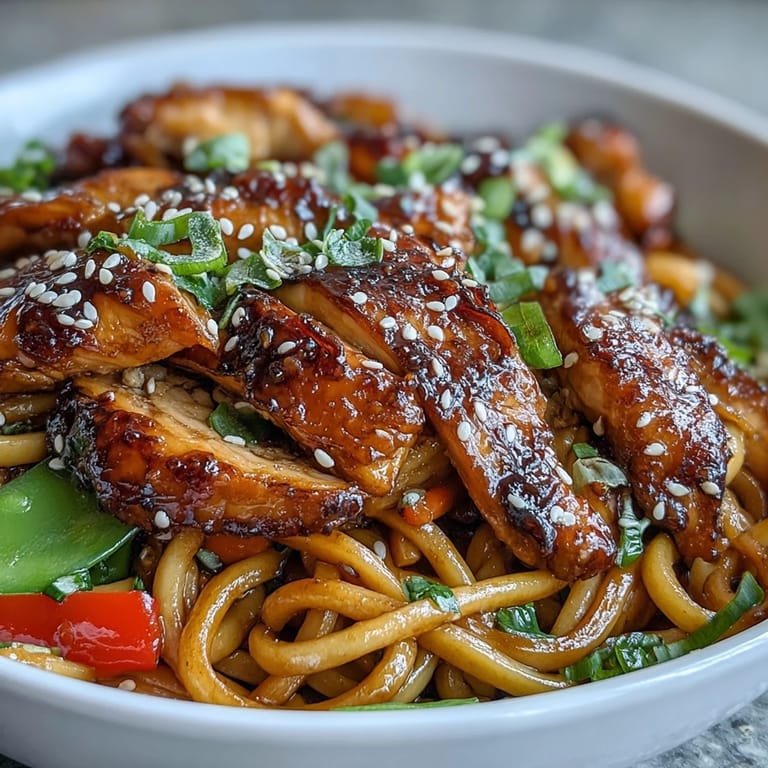 Pin it
 This bowl taught me that simple food doesn't mean boring food—it means knowing exactly which flavors matter and letting them shine. Make it when you want to feel like you're eating something that tastes like care.
Recipe FAQ
- → What type of noodles work best?
Udon, soba, or rice noodles all work beautifully. Udon offers a chewy texture, soba adds a nutty flavor, and rice noodles provide a lighter option. Choose based on preference or what you have available.
- → Can I make this ahead of time?
The sauce can be prepared up to 2 days in advance and stored refrigerated. Cook noodles and vegetables just before serving for best texture. Leftovers keep well for 2-3 days.
- → How do I adjust the spice level?
Add red pepper flakes or sriracha to the sauce for heat. Start with 1/4 teaspoon and adjust to taste. The brown sugar helps balance any added spice.
- → Can I use other proteins?
Yes! Thinly sliced beef, shrimp, or firm tofu work well. Adjust cooking time accordingly—shrimp needs just 2-3 minutes, tofu about 4-5 minutes until golden.
- → Is this gluten-free friendly?
Use tamari instead of soy sauce and select gluten-free rice noodles. Always check labels on ingredients like soy sauce and seasonings to confirm they're certified gluten-free.