 Pin it
 I discovered the magic of arranging food as art when a friend casually folded a slice of prosciutto into a sharp triangle and laid it on a platter like it was the most natural thing in the world. That moment sparked something—the realization that a few quality ingredients and a little patience could transform appetizer hour into something guests would actually remember. The Paper Crane was born from wanting to recreate that feeling, that sense of delight when food becomes more than sustenance. It sits somewhere between a puzzle and a performance, something you build with your hands rather than cook in a pot.
The first time I made this for a dinner party, I was genuinely nervous—not about the taste, but about whether my hands would cooperate with the folding. I laid out the cured meats on my kitchen counter like I was preparing for surgery, trying different angles until something clicked. When my friend walked in mid-arrangement and immediately understood what I was making without me saying a word, I knew I was onto something worth doing again and again.
Ingredients
- Prosciutto, thinly sliced (100g): The backbone of your crane's body—buy it from the deli counter and ask them to slice it paper-thin so it folds without tearing.
- Smoked turkey breast, thinly sliced (100g): Adds a lighter color contrast and a subtle smokiness that rounds out the prosciutto's salty intensity.
- Bresaola or pastrami, thinly sliced (80g): These become your wings—their deeper color and robust texture create visual drama and structural integrity in the design.
- Triangular whole-grain crackers (16 pieces, about 5 cm each side): They're already the perfect shape, so they do half the work for you—choose ones sturdy enough to support the meat without snapping.
- Black sesame or poppy seed crackers, triangular (8 pieces): These add contrast and a subtle nuttiness that grounds the presentation.
- Fresh chives, 1 small bunch: The delicate tail feathers—they stay fresh for hours if you keep them loosely arranged.
- Carrot, peeled (1 small): Use a vegetable peeler to create paper-thin ribbons that become the crane's beak and legs without any cooking required.
- Cream cheese (2 tbsp): Your adhesive—it's neutral enough not to compete with the meats and sets quickly enough to hold details in place.
- Black sesame seeds (1 tbsp): A single sprinkle becomes the eye, and scattered seeds suggest feather texture across the wings.
Tired of Takeout? 🥡
Get 10 meals you can make faster than delivery arrives. Seriously.
One email. No spam. Unsubscribe anytime.
Instructions
- Set Your Stage:
- Pull out your large platter and arrange it in front of you like a canvas—this is your workspace. Take time to envision where each element will go before you start placing anything.
- Prepare Your Carrot Ribbons:
- Using your vegetable peeler, shave the carrot into the thinnest, most delicate ribbons possible. Cut a few of these into narrow strips about 2 inches long—these become the precise beak and legs that define your crane's character.
- Shape the Crane's Body:
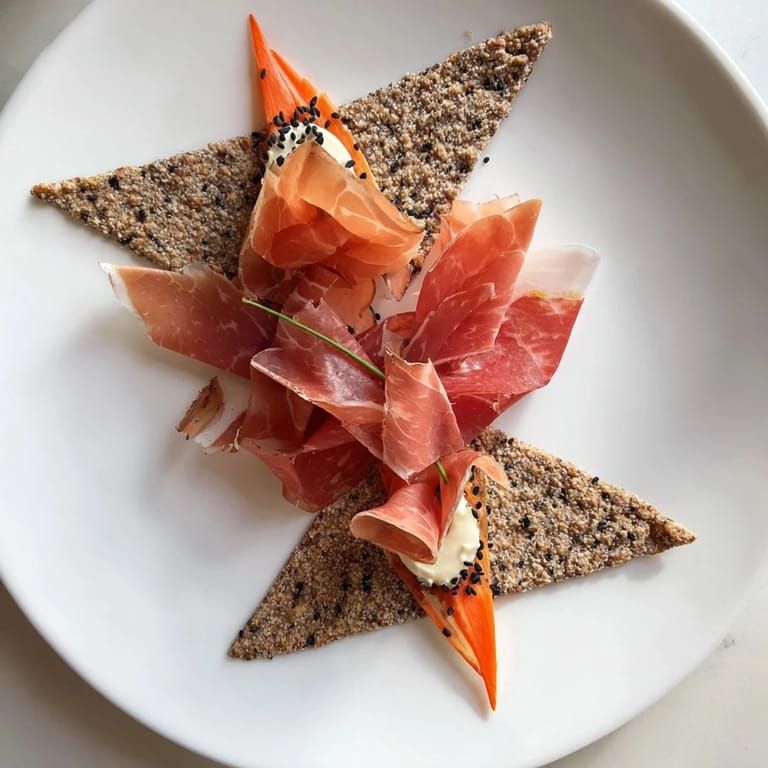
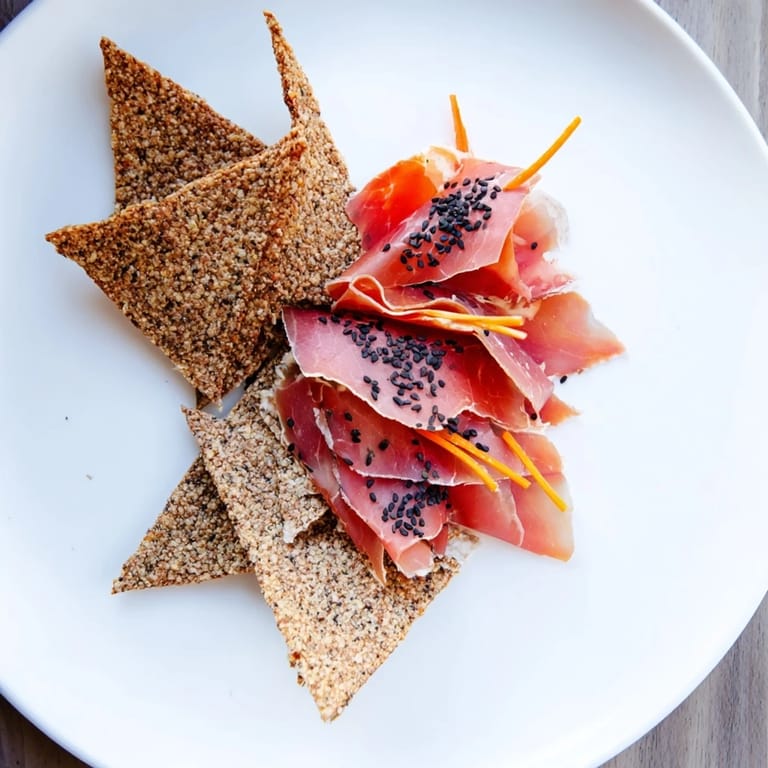
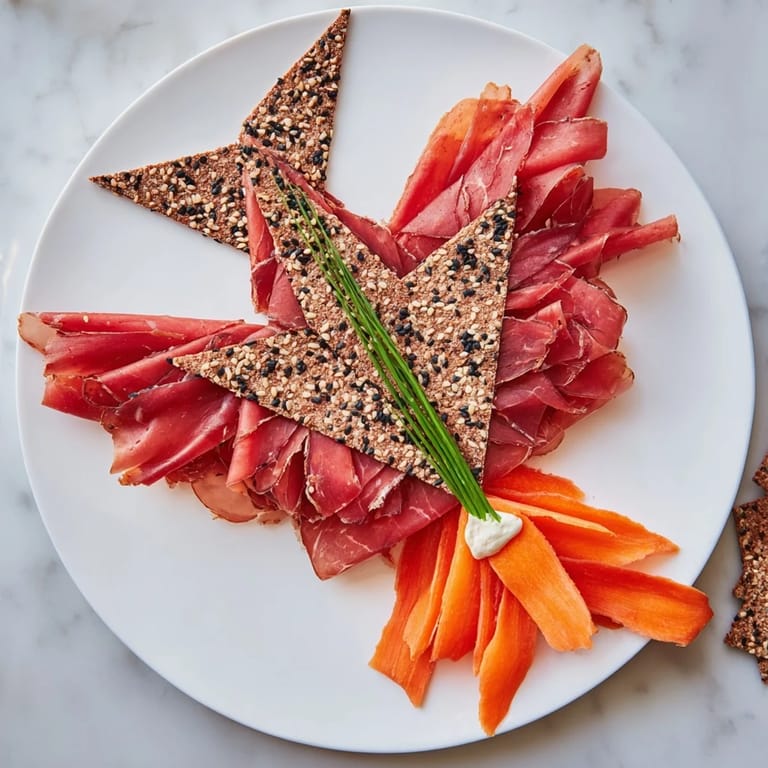
- Take a slice of prosciutto and fold it into a tight, origami-inspired triangle—the key is making sharp creases that hold their shape. Layer these triangles with turkey slices, slightly overlapping them to create dimension and a three-dimensional torso that catches the light.
- Create the Wings in Flight:
- Fold your bresaola or pastrami slices into triangles as well, but arrange them at an upward angle—fanned outward like they're mid-flap. The deeper color naturally draws the eye upward and makes the whole piece feel dynamic.
- Position Your Crackers:
- Arrange the triangular crackers beneath and alongside your folded meats, using them to define the crane's outline and support its silhouette. Let them peek out from under the meat rather than completely hiding them.
- Build the Details:
- Dab tiny amounts of cream cheese where the beak should be and press a carrot strip into it at a slight angle—think inquisitive rather than straight. Use two more carrot strips as legs, positioning them so the crane looks balanced and alive.
- Add the Eyes and Feathers:
- Sprinkle black sesame seeds where an eye would naturally go—just a few seeds create personality instantly. Scatter more seeds across the wing area to suggest feather detail without overdoing it.
- Crown with Tail Feathers:
- Arrange fresh chives delicately behind the body, letting them arch naturally—they should look like they're gently swaying rather than placed with military precision.
- Serve or Hold:
- If your guests are arriving soon, serve immediately when everything is at its visual peak. If you need breathing room, cover loosely with plastic wrap and refrigerate for up to an hour—the flavors actually meld beautifully in that time.
 Pin it
 I realized halfway through arranging my second crane that this dish isn't really about the ingredients—it's about the quiet focus of creating something beautiful with your hands. There's something meditative about it, and when guests finally see it, you're not just offering them cured meats and crackers; you're offering them evidence that you cared enough to make something that takes patience and intention.
Playing with Color and Contrast
The secret to a crane that actually looks like a crane is understanding how color works on a plate. The pale pink of prosciutto becomes the body, the darker burgundy of bresaola creates definition and shadow, and the golden whole-grain crackers ground everything. I've learned that asymmetry is your friend here—if everything is perfectly matched and symmetrical, it looks stiff and unnatural. Let the meats overlap slightly differently on each crane, embrace small imperfections, and suddenly it feels alive instead of manufactured.
Timing and Temperature Considerations
Cold ingredients hold their folds better, but meat that's been sitting at room temperature for 15 minutes has more flavor on the tongue. I pull my cured meats from the refrigerator about 10 minutes before I start folding, and I keep the platter itself cool by running it under cold water and drying it thoroughly. This buys you another 30 minutes of structural integrity without sacrificing taste, and if you're serving this at a party, you want the presentation to hold up through the first round of guests reaching for one.
Customization and Seasonal Shifts
Once you understand the basic structure, this framework becomes endlessly adaptable to what's in your kitchen and what your guests eat. Smoked salmon folded the same way creates a softer, more subtle crane; tofu slices become a vegetarian canvas that takes on whatever garnishes surround it. The beauty is that the technique stays the same, only the ingredients change, and suddenly you have a dish that fits any table and any dietary need.
- Swap crackers for thin cucumber slices or strips of charred bread for a completely different but equally stunning effect.
- Layer microgreens or edible flowers between the meat layers for an extra flourish that feels luxurious without being pretentious.
- Keep backup carrot and chive garnishes in ice water so they stay crisp if you're making these ahead.
 Pin it
 The Paper Crane teaches you something quietly useful every time you make it: that effort spent on presentation is never wasted, and that inviting people to admire something beautiful before they eat it changes the entire meaning of the meal. Serve this, watch the moment people understand what they're looking at, and you'll understand why I keep making it.
Recipe FAQ
- → How are the cured meats prepared for the paper crane?
Thin slices of prosciutto, smoked turkey, and bresaola or pastrami are carefully folded into triangular shapes resembling origami to create the crane’s body and wings.
- → What type of crackers are used in the presentation?
Triangular whole-grain crackers and black sesame or poppy seed crackers add crisp texture and enhance the crane silhouette.
- → How is the crane's beak and legs formed?
Thin carrot strips sliced with a vegetable peeler are attached using cream cheese to form delicate beak and legs details.
- → Can this appetizer be adapted for different dietary preferences?
Yes, smoked salmon or tofu slices can replace cured meats for pescatarian or vegetarian options without sacrificing visual appeal.
- → What garnishes enhance the flavor and appearance?
Chives are used for tail feathers and wing details, while black sesame seeds add texture and a visual focal point resembling the crane’s eye.
- → How long can the platter be prepared before serving?
The arrangement can be covered loosely with plastic wrap and refrigerated for up to one hour without losing its freshness or shape.