 Pin it
 Last summer, I was frantically preparing for a potluck on a sweltering afternoon when I realized my usual casserole plans were ridiculous in that heat. Standing in front of my open fridge, I spotted the deli counter meats I'd grabbed earlier and suddenly thought: why not skewer everything? The Italian sub I'd loved for years could become something you eat with your hands, something that travels, something that actually makes sense when you're sitting on a blanket sweating through your shirt. Those first skewers changed how I think about feeding a crowd in warm weather.
My neighbor brought a store-bought version to our neighborhood barbecue once, and I remember thinking how sad they looked—the meats pale, the aioli clearly from a jar. When I made these skewers the next week and passed them around, something shifted; people slowed down, they tasted each layer, they asked questions. That's when I understood: homemade aioli isn't fancy, it's just the difference between a dish and an experience.
Ingredients
- Genoa salami, deli ham, and mortadella: Buy these sliced from the deli counter, not pre-packaged, because the difference in flavor and texture is the entire foundation of this recipe.
- Fresh mozzarella balls (bocconcini): These stay tender and creamy on the skewer, unlike hard cheese which can feel rubbery—they're the luxe move.
- Cherry tomatoes: Choose ones that are just slightly firm so they don't burst when you thread them, and pick the most fragrant ones you can find.
- Pepperoncini or banana peppers: The brine adds brightness and prevents the skewers from tasting heavy or one-note.
- Marinated artichoke hearts: Their oil and vinegar coating saves you from having to dress these skewers separately, and they add genuine substance.
- Black olives, roasted red peppers, and romaine: These are the freshness trio that makes each bite feel intentional and complete.
- Egg yolk and oils for aioli: Room-temperature ingredients are non-negotiable here—cold eggs and cold oil will break your emulsion, and I learned that lesson the hard way.
Tired of Takeout? 🥡
Get 10 meals you can make faster than delivery arrives. Seriously.
One email. No spam. Unsubscribe anytime.
Instructions
- Thread everything with intention:
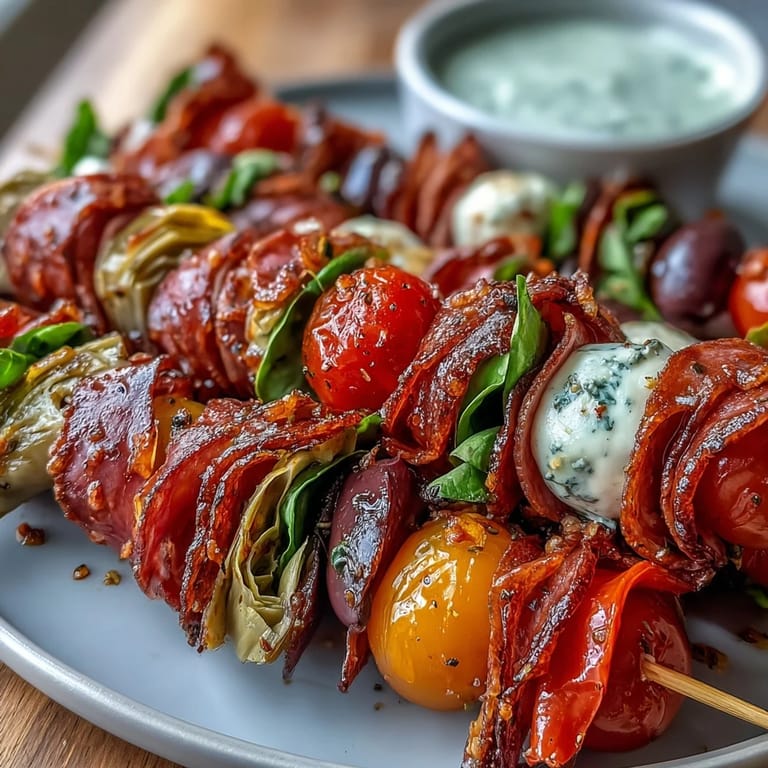
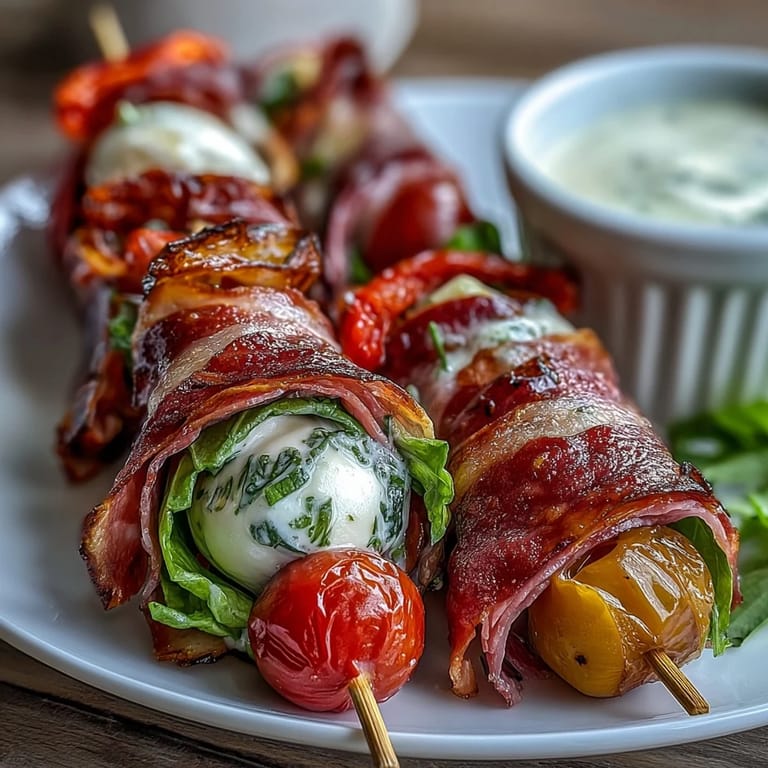
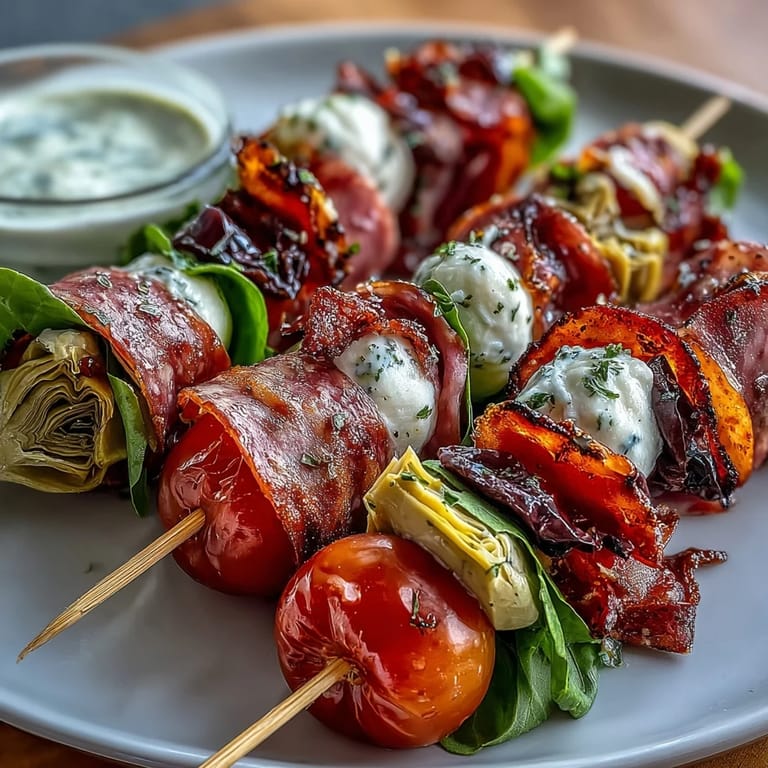
- Start by laying out all your ingredients so you can see the colors—this isn't vanity, it's practical, because knowing what you have prevents you from running out halfway through. Roll or fold each meat slice to create pockets that catch the other flavors, then alternate colors as you build: the deep red of salami, the creamy white of mozzarella, the bright green of pepper, the soft orange of artichoke.
- Make the aioli with patience:
- Whisk your yolk, mustard, garlic, and lemon juice for a full minute before you even think about adding oil—this pre-emulsification is what stops the whole thing from breaking. Add oil in the tiniest drizzles at first, whisking constantly like you're coaxing a secret out of the bowl, then once it starts thickening, you can be slightly bolder but still respectful.
- Chill everything before serving:
- The skewers taste better cold, and the aioli sets into a silkier texture when chilled, which actually makes it more stable for dipping and less likely to separate.
 Pin it
 A friend who normally doesn't eat much at parties sat on my porch with three skewers and actually finished them, then asked about the aioli recipe with genuine curiosity. That moment—not the perfection of the dish, but the fact that someone wanted to understand it—felt like the real success of cooking.
Why These Skewers Work for Every Occasion
Skewers have this invisible magic: they feel fancy enough for a proper gathering but casual enough for a weeknight crowd. You're not asking anyone to balance a plate or navigate a fork and knife while standing. They're the friendliest food format ever invented, and when you pack them with flavors this bold, people actually remember eating them.
The Aioli Is Everything
I used to think homemade aioli was something for restaurants, but making it yourself takes maybe five minutes and transforms the entire dish from good to genuinely special. The reason people love it isn't just taste—it's the silkiness, the way it clings to each ingredient, the fact that you made it by hand that very day. Store-bought aioli can't replicate that feeling.
Make It Your Own
The beauty of these skewers is that they're a template, not a prison. I've swapped in roasted turkey for mortadella on lighter days, added grilled zucchini ribbons for vegetarian friends, and even experimented with sun-dried tomatoes instead of fresh. The key is keeping that balance of cured, fresh, creamy, and bright—as long as you honor those four categories, you can't really go wrong.
- Roast extra red peppers at home if you have time; the flavor is deeper and sweeter than jarred versions.
- Make your aioli the morning of if you're traveling to a picnic—it holds beautifully in a sealed container and actually tastes better after a few hours as flavors settle.
- Use bamboo skewers that have been soaked in water if you're at all worried about them looking weathered; metal skewers are frankly superior and worth owning.
 Pin it
 These skewers live in that perfect space where they're simple enough that anyone can make them, but thoughtful enough that people genuinely feel cared for when they eat them. That's the whole point, really.
Recipe FAQ
- → What meats are used in the skewers?
Salami, deli ham, and mortadella slices are folded and threaded onto each skewer to create savory layers.
- → How is the homemade aioli prepared?
Egg yolk, Dijon mustard, garlic, and lemon juice are whisked together, then olive and neutral oils are slowly drizzled in until a creamy emulsion forms.
- → Can the skewers be made vegetarian?
Yes, omit the meats and substitute grilled vegetables like zucchini or eggplant to maintain a colorful and flavorful bite.
- → What makes these skewers suitable for picnics?
The handheld format with layered ingredients and a separate dip makes them easy to transport and enjoy outdoors without mess.
- → Are there substitution options for the meats?
Turkey or chicken slices can replace the traditional Italian meats for a different flavor while keeping the texture balance.