 Pin it
 Last summer, I was packing snacks for my nephew's soccer tournament when I realized that most portable snacks either crumble in a backpack or taste like cardboard by lunchtime. I grabbed a container of hummus, some vegetables, and a few small mason jars, and something clicked—suddenly I had created these perfect little dipping cups that stayed fresh, stayed contained, and actually made him excited about eating vegetables. Now whenever anyone asks me for a grab-and-go snack idea, this is what I recommend.
I made these for my daughter's field day a few years back, and I still remember how she came home bouncing with energy, telling me her friends had asked where the snack cups came from. What surprised me most wasn't the compliments—it was that she actually ate all her vegetables without complaining, something that rarely happened with typical lunchbox sides.
Ingredients
- Hummus: This creamy base is your secret weapon for keeping vegetables fresh and creating an instant dip—store-bought works perfectly fine, though homemade tastes even better if you have time.
- Carrots: Their natural sweetness and satisfying crunch make them a snack cup essential that everyone reaches for first.
- Cucumber: Cool, hydrating, and light—these sticks add volume without heaviness and pair beautifully with hummus.
- Red and yellow bell peppers: These bring vibrant color and a subtle sweetness that makes the cups feel special rather than just functional.
- Snap peas: They're sturdy enough to stand upright in hummus and have that satisfying snap that makes snacking fun.
- Cherry tomatoes: Pop these whole for bursts of freshness, or halve them if you prefer easier bites.
- Celery and jicama (optional): Celery adds classic crunch, while jicama brings an unexpected subtle sweetness that surprised me the first time I tried it.
Tired of Takeout? 🥡
Get 10 meals you can make faster than delivery arrives. Seriously.
One email. No spam. Unsubscribe anytime.
Instructions
- Wash and prepare your vegetables:
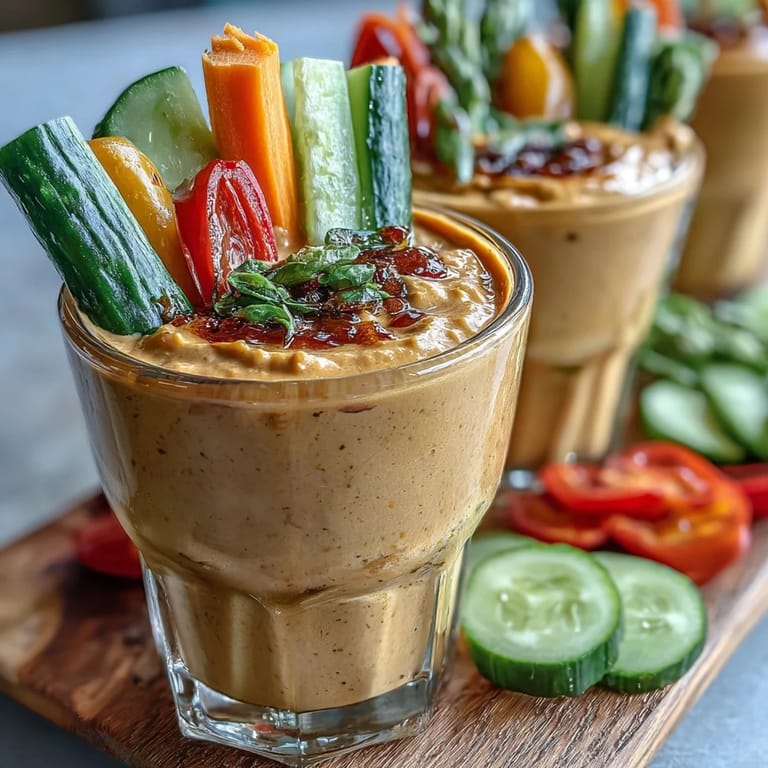
- Rinse everything under cool water and pat dry—moisture on the vegetables will make them wilt faster. Cut carrots, cucumber, and peppers into sticks about the thickness of a pencil, which makes them easy to hold and dip.
- Portion the hummus:
- Divide your hummus evenly among 6 small containers, using roughly a quarter cup per cup. If using jars with wide mouths, you'll have an easier time arranging vegetables and getting good dips.
- Arrange your vegetables:
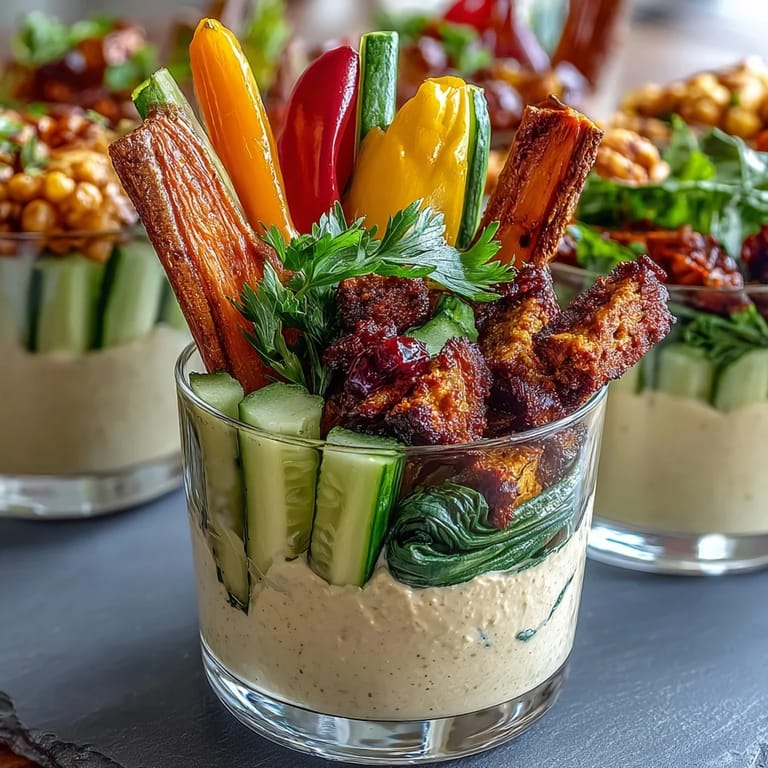
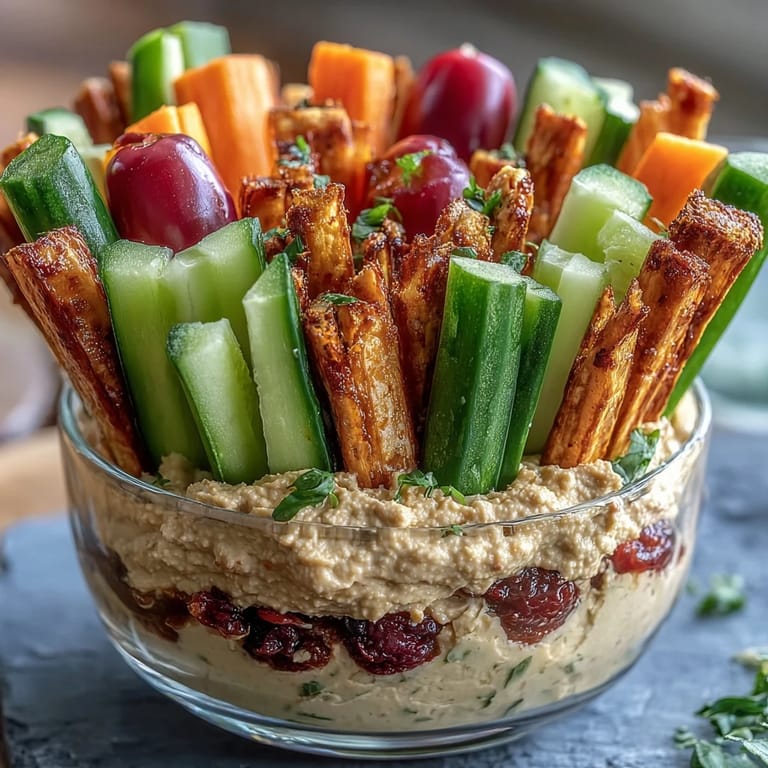
- Stand the vegetable sticks upright in the hummus like a bouquet—this looks appealing and keeps them from tipping over. Start with longer sticks in the center and fill gaps with smaller pieces and cherry tomatoes.
- Chill and cover:
- Seal the containers with lids or plastic wrap and refrigerate until you're ready to go. These keep beautifully for up to 2 days, though they're genuinely best eaten within 24 hours when vegetables are crispest.
 Pin it
 What made me truly love these snack cups was watching my picky eater actually request them for his lunchbox, no negotiation needed. It turns out when vegetables feel intentional and thoughtfully presented, even reluctant eaters see them as a treat rather than an obligation.
Flavor Upgrades Worth Trying
The basic hummus and vegetables combination is perfect as-is, but I've discovered that a light drizzle of olive oil and a sprinkle of paprika or zaatar on top of the hummus elevates these cups from simple to sophisticated. Sometimes I add a tiny pinch of red pepper flakes if I'm making them for adults who enjoy a subtle heat, or fresh herbs like parsley or dill mixed right into the hummus itself.
Seasonal Swaps and Variations
Since I started making these year-round, I've learned that seasonal vegetables keep things interesting and often more affordable. In spring, I use tender asparagus tips and radishes; summer brings green beans and zucchini sticks; fall surprises me with blanched broccoli and cauliflower florets; and winter calls for sturdy items like bell peppers and raw beets. If you want to add protein, cheese cubes, baked tofu sticks, or even hard-boiled egg pieces wedged into the hummus work beautifully.
Storage and Transport Tips
Glass jars with tight-fitting lids are my go-to because they're durable, clear so you can see the pretty vegetables inside, and they don't absorb flavors or stains like plastic can. Pack them in a lunch box with an ice pack if you'll be away from refrigeration for more than a few hours, and they'll stay perfectly fresh through school, work, or outdoor adventures. Remember these are genuinely best consumed within 2 days, though I've found that if vegetables start to soften, they're still perfectly edible—just not quite as satisfying to bite into.
- Use lightweight cups or jars if weight matters for transport, but glass truly keeps food fresher longer.
- Label containers with the date if making several days' worth, or just eat them in order.
- These work beautifully as part of a picnic spread or appetizer platter when you're entertaining too.
 Pin it
 These snack cups have become my answer to nearly every packing situation, from day trips to desk lunches to unexpected gatherings. They're proof that sometimes the simplest ideas, when treated with a little intention and care, become the ones people remember.
Recipe FAQ
- → What vegetables work best for these snack cups?
Crunchy veggies like carrots, cucumbers, bell peppers, snap peas, and cherry tomatoes are ideal for dipping and offer a fresh, crisp texture.
- → Can these snack cups be prepared ahead of time?
Yes, they should be covered and refrigerated, best consumed within two days to maintain freshness and texture.
- → Are there ways to enhance the flavor of the hummus?
Sprinkle with spices such as paprika or zaatar, or drizzle with olive oil before adding vegetables to add extra flavor.
- → Can I add protein to these snack cups?
Add baked tofu sticks or cheese cubes for an extra protein boost, adjusting for dietary preferences.
- → What tools are needed to prepare this snack?
A sharp knife, cutting board, vegetable peeler, and small lidded cups or jars are sufficient for easy assembly.