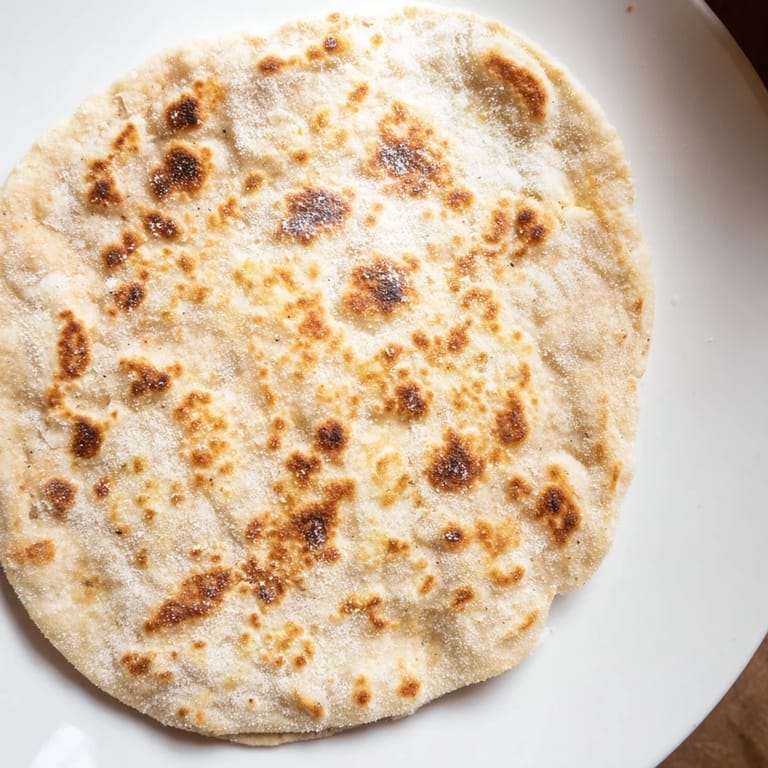
 Pin it
 One lazy Sunday morning, I was standing in my kitchen staring at a container of cottage cheese that was about to expire, and I remembered my grandmother mentioning how she'd stretch yogurt dough with all sorts of additions to make it fluffier. That little spark led me to mix the cottage cheese right into the dough, and the result was something entirely unexpected—flatbreads so tender and pillowy they practically melted on my tongue. The slight tang from the yogurt and cottage cheese created this subtle depth I'd never achieved with plain dough before.
I made these for my book club last month, and watching everyone tear into them while chatting felt like such a small victory—no one even realized how simple they were to make. One friend asked for the recipe right there on the spot, which is always the highest compliment in my kitchen.
Ingredients
- Plain flour (200 g): Use all-purpose flour for the best balance of structure and tenderness; measure by weight if you can, as it eliminates the guesswork that often trips people up.
- Greek yogurt (120 g): The acidity and moisture here are essential—don't substitute regular yogurt, as Greek yogurt's thickness prevents the dough from becoming too wet and sticky.
- Cottage cheese (100 g): The real hero of this recipe; it adds moisture and a subtle tang while keeping the flatbreads impossibly soft.
- Baking powder (1/2 tsp): A small amount helps the flatbreads puff slightly and cook through evenly without making them puffy like naan.
- Fine sea salt (1/2 tsp): Salt brings out the savory notes and balances the tanginess from the dairy.
- Olive oil or melted butter (2 tbsp): For cooking; I prefer butter for the golden spots, but olive oil works beautifully too and keeps them vegetarian-friendly.
Tired of Takeout? 🥡
Get 10 meals you can make faster than delivery arrives. Seriously.
One email. No spam. Unsubscribe anytime.
Instructions
- Mix the dry foundation:
- In a large bowl, whisk together flour, baking powder, and salt so the leavening distributes evenly. This step is quick but matters more than you'd think.
- Bring the wet and dry together:
- Add the Greek yogurt and cottage cheese, then mix with a spoon or your hands until everything comes together in a shaggy, rough mass. It'll look chaotic, but that's exactly right.
- Knead gently into smoothness:
- Transfer to a lightly floured surface and knead for 2–3 minutes, adding just a pinch of extra flour if it feels sticky. You want it soft and slightly tacky, not dry and tough.
- Divide and shape into balls:
- Cut the dough into 6 equal pieces and roll each between your palms into a smooth ball. If the dough is too sticky, dust your hands with a little flour.
- Roll out your flatbreads:
- Working with one ball at a time, roll it out on a floured surface until it's about 5–6 mm thick, rotating it a quarter turn between rolls to keep it even. Don't overthink the shape—rustic is beautiful here.
- Heat your pan with care:
- Set a nonstick skillet or cast iron pan over medium heat and let it warm for about a minute so the flatbreads cook evenly without burning.
- Cook to golden perfection:
- Lightly brush the hot pan with oil or butter, then lay down one or two flatbreads depending on your pan size. Cook for 2–3 minutes per side, watching for those gorgeous golden spots that tell you they're done.
- Keep them warm and ready:
- As each flatbread finishes cooking, transfer it to a plate and cover loosely with a clean kitchen towel. This keeps them warm while you finish the batch and traps just enough steam to keep them soft.
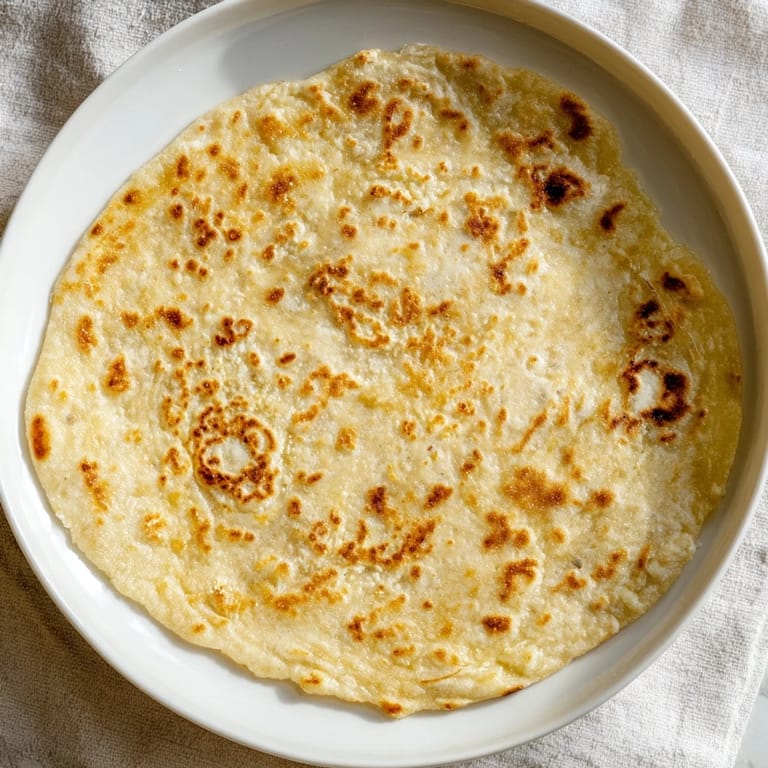 Pin it
 There's something almost meditative about watching these flatbreads cook—the way they puff slightly at the edges and develop those charred spots that make them smell impossibly good. My daughter once asked if we could make them for every dinner, which tells you everything you need to know.
Why This Dough Works So Well
The cottage cheese is doing something quietly magical here—it's adding moisture and tenderness in a way that regular flour and water could never match. Combined with Greek yogurt, you get this perfect balance where the dough is forgiving enough for beginners but sophisticated enough for people who've been cooking for years. The baking powder is restrained on purpose, giving you a gentle lift without the airy crumb of yeast breads.
Serving and Storing
Warm flatbreads are best enjoyed within the first hour of cooking, but that doesn't mean the leftovers suffer—they'll keep in an airtight container at room temperature for up to two days, and reheating them in a dry pan for 30 seconds on each side brings them back to near-perfect warmth. I've even frozen these successfully for up to a month; just thaw and pan-fry gently.
Flavor Variations and Personal Touches
These flatbreads are a blank canvas, and I've learned that even small additions transform them in unexpected ways. Fresh herbs like dill, chives, or parsley fold in beautifully, adding brightness without overwhelming the delicate dairy flavors. Minced garlic is another favorite, though I learned the hard way to not overdo it—a teaspoon is enough to be present without turning them into garlic bread. Once I even mixed in everything bagel seasoning, and it became my go-to for dipping in yogurt-based sauces.
- Fold in chopped fresh herbs (parsley, dill, chives) or minced garlic for instant flavor depth.
- Everything bagel seasoning or za'atar sprinkled on top before cooking creates an unexpected crust.
- A pinch of nigella or sesame seeds adds visual interest and a subtle nutty note.
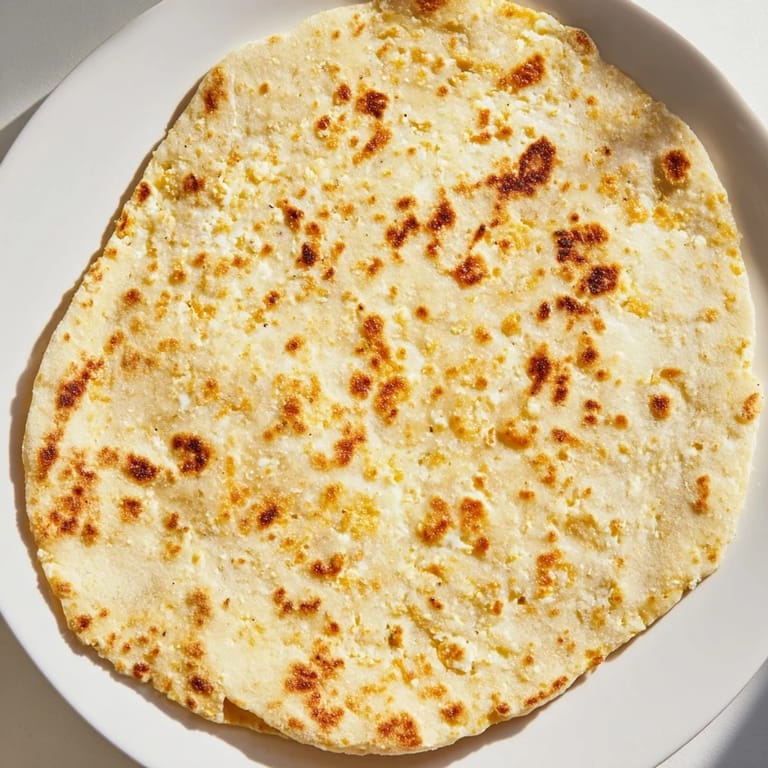 Pin it
 These flatbreads have quietly become a staple in my kitchen, the kind of thing I make when I want something homemade but don't want stress. There's real magic in how something so simple can taste like you've been cooking all day.