 Pin it
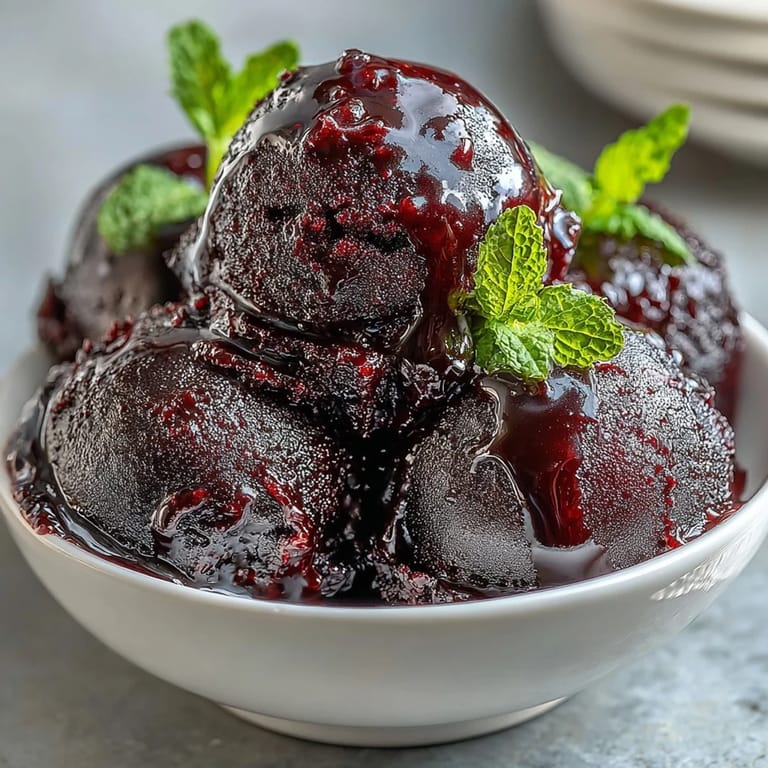
 One July afternoon, I watched my neighbor pull a bag of black currants from her freezer with the kind of reverence usually reserved for treasure. She'd grown them in her garden years ago and frozen them at peak season, waiting for the right moment to transform them into something extraordinary. That moment turned out to be a Saturday when the kitchen was warm and we had nothing but time, so we decided to chase that tart, jewel-like flavor into something cold and impossibly smooth. Black currant sorbet became our accidental discovery that day, and it's been my go-to ever since.
I made this sorbet for my sister's dinner party last June, and someone asked if it was homemade with such genuine surprise that I nearly burst. The moment she tasted it, her eyes widened in that unmistakable way that tells you a recipe has just earned its place in someone's memory. That's when I realized it wasn't just about the black currants or the technique—it was about giving people a moment where they could taste the care you took.
Ingredients
- Black currants (500 g fresh or frozen): These deep purple berries pack an intense, complex tartness that's the heart of this sorbet, and using frozen ones means you're never locked into a short season.
- Granulated sugar (200 g): The sweetener needs to be generous enough to balance the tart without drowning the flavor, and granulated dissolves cleanly without any gritty texture.
- Water (200 ml): This creates the syrup base that carries all the currant flavor through to the final freeze.
- Lemon juice (1 tablespoon freshly squeezed): Just enough acid to brighten everything and prevent the sorbet from tasting flat or one-note.
Tired of Takeout? 🥡
Get 10 meals you can make faster than delivery arrives. Seriously.
One email. No spam. Unsubscribe anytime.
Instructions
- Combine and simmer:
- In a medium saucepan, add the black currants, sugar, and water together, then bring everything to a gentle boil over medium heat. You'll hear the mixture start to bubble and smell that deep, slightly tart aroma filling your kitchen as the sugar dissolves into the fruit, and after about 5 minutes you'll see the currants beginning to burst and release their color into the liquid.
- Cool and blend:
- Let the mixture cool for 10 minutes—this is important because hot fruit pulp can splatter in a blender—then puree it until completely smooth using either a blender or immersion blender. The transformation is dramatic and satisfying, going from a chunky fruit base to a silky, deep purple liquid in moments.
- Strain for refinement:
- Pour the puree through a fine-mesh sieve into a clean bowl, pressing gently with the back of a spoon to extract every bit of liquid while leaving the seeds and skins behind. This step feels meditative, and the resulting liquid will be pure, clear, and intensely flavored without any grittiness.
- Taste and adjust:
- Stir in the lemon juice, then taste a small spoonful and decide if it needs more sweetness—everyone's preference is different, and this is your chance to make it exactly right.
- Chill thoroughly:
- Cover the mixture and refrigerate for at least 1 hour until it's completely cold, which helps the ice cream maker work more efficiently and gives you a better texture in the final sorbet.
- Churn to perfection:
- Pour the chilled mixture into your ice cream maker and churn according to the manufacturer's instructions, usually 20 to 30 minutes, until it reaches a soft-serve consistency. The motion of churning incorporates tiny ice crystals that give sorbet its signature smooth texture.
- Freeze and set:
- Transfer to a freezer-safe container, cover it well, and freeze for at least 3 hours until firm, though overnight is even better if you have the patience to wait.
- Soften before serving:
- Remove from the freezer a few minutes before serving to let it soften slightly, which makes it easier to scoop and brings out the full flavor.
 Pin it
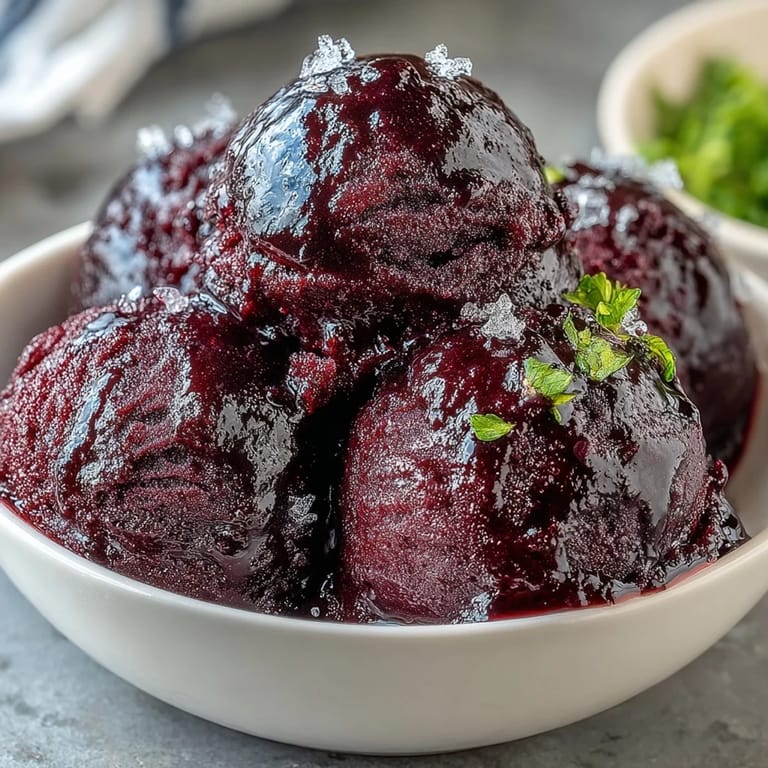
 There's something quietly magical about serving homemade sorbet on a hot evening, watching people close their eyes for just a second as the cold, bright flavor hits their tongue. It's one of those simple desserts that feels both humble and luxurious at the same time.
When Black Currants Aren't Available
Red currants will give you a brighter, slightly less intense flavor, while mixed berries create a more complex taste that's equally lovely. Frozen berries work just as well as fresh, and sometimes even better since they're frozen at peak ripeness and break down more easily during cooking.
Elevating Your Sorbet
I've learned that a teaspoon of cassis liqueur stirred in just before churning adds an almost sophisticated depth that makes people pause and ask what that mysterious flavor is. Serving it alongside fresh mint leaves or with a splash of sparkling wine transforms it from a simple dessert into something you'd find at a proper dinner party.
Storage and Make-Ahead Tips
This sorbet keeps beautifully in the freezer for up to two weeks, though the texture gradually becomes icier as it sits. The syrup itself can be made days in advance and stored in the refrigerator, which means you can churn it whenever you're ready.
- Keep an airtight container in the freezer so it doesn't absorb freezer odors or develop ice crystals on top.
- If your sorbet hardens too much, let it sit on the counter for 5 minutes before scooping rather than fighting a rock-solid block.
- Leftover puree can be drizzled over yogurt or mixed into sparkling water for a refreshing drink.
 Pin it
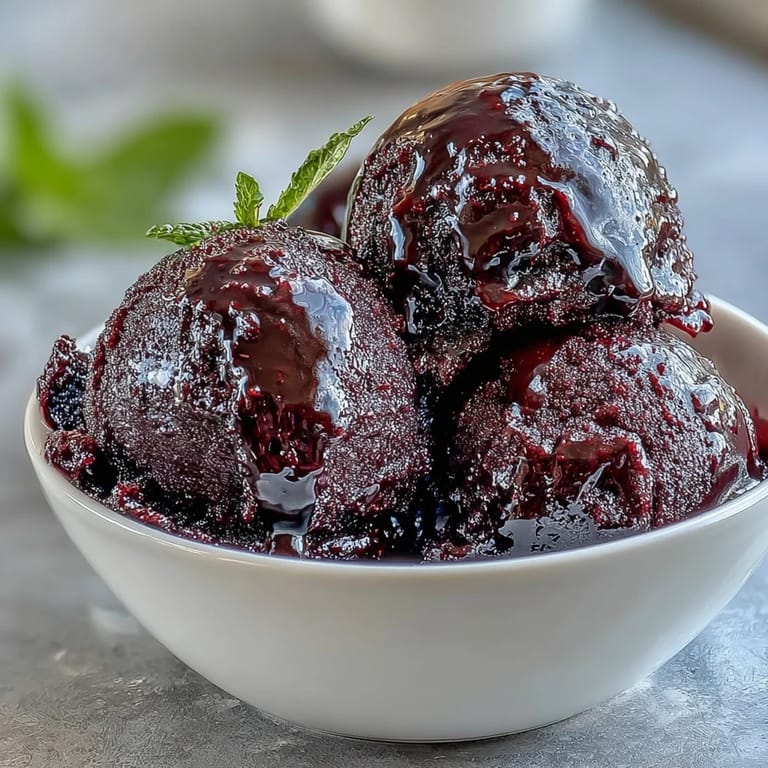
 Black currant sorbet is the kind of recipe that looks simple on paper but tastes like you put real thought into it. Once you've made it once, you'll find yourself making it again and again, each time a little more confident in the magic of it.
Recipe FAQ
- → Can I use frozen black currants?
Yes, frozen black currants work well and provide the same vibrant flavor once simmered and pureed.
- → How do I know when the mixture is ready to churn?
After simmering and cooling, the mixture should be smooth and chilled thoroughly before pouring into the ice cream maker.
- → Is it necessary to strain the puree?
Straining removes seeds and skins for a silky texture, enhancing the sorbet’s smoothness.
- → Can I substitute lemon juice with another citrus?
Lemon juice provides bright acidity, but lime or orange juice can be used for a different citrus note.
- → How long should the sorbet freeze before serving?
Freeze for at least 3 hours or until firm; letting it soften a few minutes at room temperature improves scoopability.