 Pin it
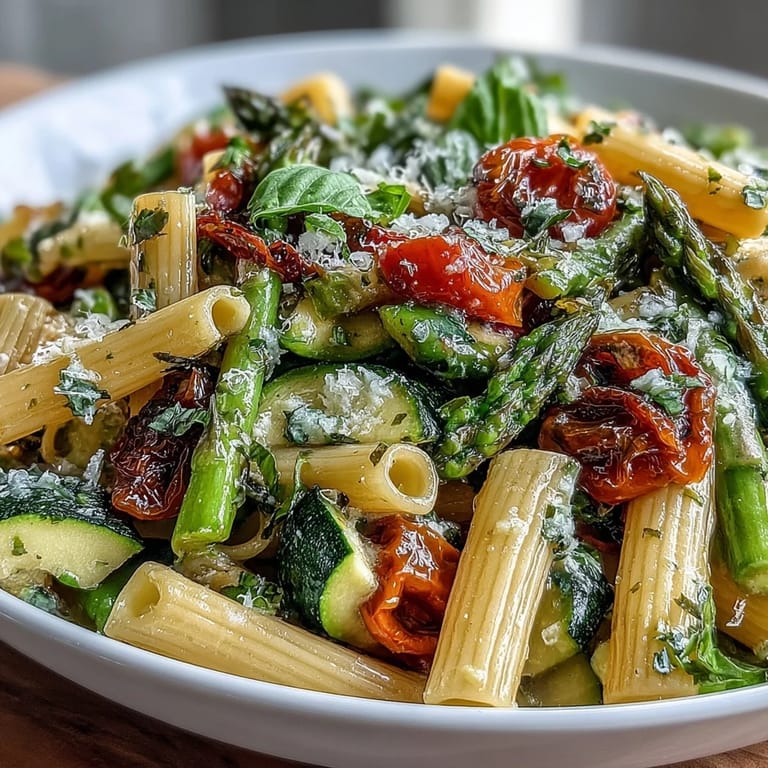
 The sound of bubbling water as I prepared this Spring Pasta Primavera felt like a soundtrack to fresh beginnings. Morning sunlight streamed through the kitchen window, bouncing off a bowl of vibrant veggies I’d just sliced. I wasn’t aiming for anything fancy—just capturing the spirit of spring in a pan. The aroma of basil and lemon zest mingled with garlic, convincing me to linger near the stove longer than usual. That medley of colors and scents turned a simple pasta night into something pretty special.
I remember making this for a small dinner after work, hoping to impress a cousin who claimed to dislike vegetables. We filled the kitchen with laughter as she tried to guess what I’d hidden in the medley. When the sweet scent of roasted tomatoes hit the air, she leaned in, eyes wide, conceding that maybe squash tastes better in spring. The pasta disappeared before I snagged seconds, and the dish earned a new fan that night. There’s something powerful about coaxing joy from humble, fresh ingredients.
Ingredients
- Pasta: A good-quality penne or farfalle gives a satisfying bite — don’t undercook or overcook; al dente is key.
- Zucchini & Yellow Squash: Their tender texture and mild sweetness anchor the dish; slicing evenly makes every forkful balanced.
- Asparagus: Spring’s signature veggie for crunch and color; cut them into bite-sized pieces so guests don’t wrestle with their food.
- Cherry Tomatoes: These burst gently in the pan, lending a natural acidity and sweetness — halving them helps release juices faster.
- Red Bell Pepper: Adds a subtle smack of sweetness and vibrant color; thin slices melt nicely into the sauce.
- Peas: Toss them in toward the end so they stay bright and don’t turn mushy.
- Garlic & Shallot: A fragrant base that brings a savory depth — don’t let garlic brown; it should just turn golden and aromatic.
- Basil & Parsley: Fresh, chopped herbs elevate both taste and aroma; sprinkle more before serving for extra pop.
- Lemon Zest & Juice: These are the soul of primavera, providing freshness that ties everything together; zest before juicing for easier prep.
- Extra-Virgin Olive Oil: Good oil delivers silky richness; split between sautéing and finishing for maximum flavor.
- Parmesan Cheese: The salty tang rounds out the dish; grate extra for topping — success is in the shavings.
- Salt, Black Pepper & Red Pepper Flakes: Season to taste and add a tiny kick with flakes if you’d like; always taste as you go.
Tired of Takeout? 🥡
Get 10 meals you can make faster than delivery arrives. Seriously.
One email. No spam. Unsubscribe anytime.
Instructions
- Cook the Pasta:
- The kitchen fills with steam as you toss the pasta into boiling salted water. Cook until just al dente and skim off a bit of starchy water for the sauce before draining.
- Sauté Aromatics:
- Pour a swirl of olive oil into a hot skillet; add shallot and garlic, listening for that gentle sizzle and breathing in the nutty aroma.
- Veggie Time:
- Drop in zucchini, squash, asparagus, and bell pepper, stirring so they soften while staying bright—watch colors sharpen as they cook.
- Add Tomatoes and Peas:
- Toss in cherry tomatoes and peas, letting the tomatoes collapse a little and the peas pop a verdant green.
- Toss Pasta with Veggies:
- Return the cooked pasta to the skillet, folding gently to combine everything without crushing the veggies.
- Build the Sauce:
- Add reserved pasta water, lemon zest, juice, fresh basil, parsley, and a drizzle of olive oil. Season as you stir, smelling the sauce brighten as herbs and citrus mix in.
- Finish with Parmesan:
- Remove from heat, sprinkle Parmesan and fold it in for creamy tang. Serve piping hot, finished with more cheese and herbs if you fancy.
 Pin it
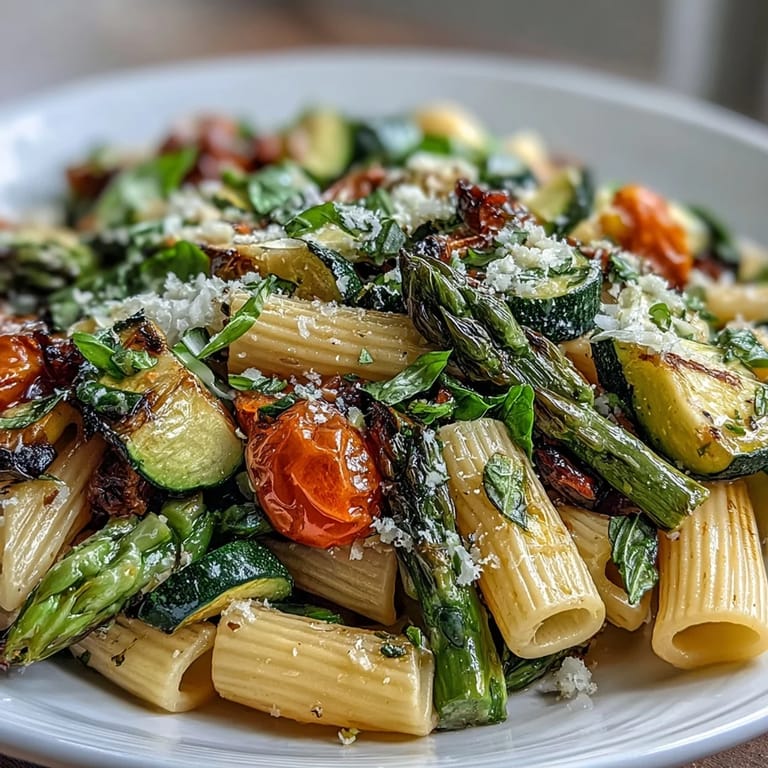
 The night I cooked this for friends, I scattered extra basil leaves with abandon just before serving, and the table erupted with oohs and ahhs. That moment made me realize how the simplest gestures (like fresh herbs or a little zest) can turn ordinary into memorable. Cooking together, passing the bowl and trading stories, the dish felt like an invitation for conversation. It was more than a meal—it opened up spring for everyone at the table. I’ve chased that easy, joyful feeling in my kitchen ever since.
Getting Your Veggies Just Right
Timing the vegetables matters—if you follow the steps and don’t rush, each one ends up tender with a hint of crunch. The skillet should stay roomy so they caramelize instead of just sweating out flavor. Sautéing onions and garlic before veggies creates a foundation that hugs every bite. I always listen for that little sizzle that means everything’s waking up. Even the colors brighten when the heat’s just right.
How to Make the Sauce Sing
Lemon zest, reserved pasta water, and good olive oil transform everything. Fold the ingredients gently to avoid breaking the veggies, and don’t forget the finishing drizzle for extra gloss. Parmesan slips in at the end, melting into a creamy coating rather than clumping. Each element builds balance; too much lemon and it overpowers, too little and it’s missing spring’s spark. Taste as you go, adjusting until the sauce feels lively but not sharp.
Easy Swaps & Serving Ideas
Don’t stress if you’re missing a veggie—snap peas, baby spinach, or even broccoli are welcome here. The dish also pairs beautifully with a quick salad and chilled white wine if you’re feeling celebratory. Sometimes I replace Parmesan with a plant-based cheese to keep it vegan, and nobody’s ever complained. Keep pasta warm for serving, or toss leftovers cold for lunch—they taste even brighter the next day.
- Squeeze a little extra lemon just before serving for a fresh pop.
- Don’t skip the fresh herbs—they’re what makes this a primavera, not just pasta and vegetables.
- If your veggies seem watery, cook them an extra minute to concentrate their flavor.
 Pin it
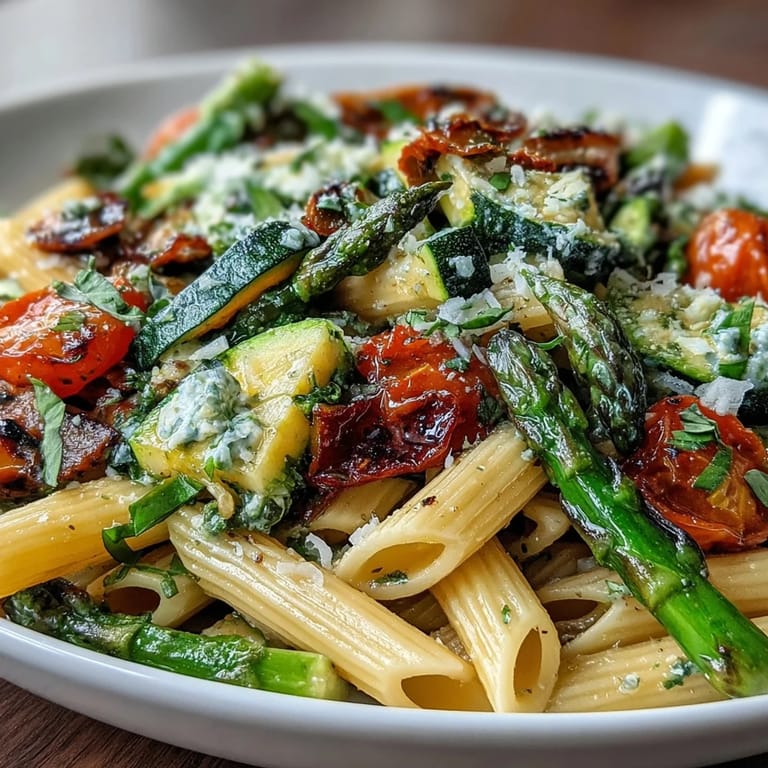
 Every time I make this pasta, it’s a celebration of simple abundance and the playful energy of spring in the kitchen. Share it with friends or savor it solo—every bite feels like a little toast to the season.
Recipe FAQ
- → What vegetables work best for primavera?
Use zucchini, yellow squash, asparagus, cherry tomatoes, bell pepper, and peas to capture spring flavor. Swap in snap peas or baby spinach for extra variety.
- → How do I make this dish vegan?
Simply omit the Parmesan or use a plant-based alternative cheese. The sauce and vegetables provide plenty of flavor.
- → Is pasta primavera suitable for meal prep?
Yes. Prepare ingredients in advance and store cooked pasta and veggies separately. Assemble and reheat gently before serving.
- → Can I use frozen vegetables?
Frozen peas work well. For other vegetables, thaw and sauté to retain texture and taste.
- → What wine pairs with this pasta?
Try crisp white wines like Pinot Grigio or Sauvignon Blanc to complement the bright and herbal notes in the dish.
- → How do I keep vegetables crisp?
Sauté on medium heat and avoid overcooking. Add softer vegetables, like tomatoes, last for best texture.