 Pin it
 My coworker brought this to a potluck on a gray Tuesday, and I watched everyone abandon their salads to crowd around the slow cooker. The steam rising off those creamy noodles carried something unexpected—ginger, garlic, the unmistakable funk of gochujang—and I knew immediately this wasn't your standard comfort food. When I finally tasted it, the heat hit first, then melted into something sweet and savory that made me chase another bite before I'd even swallowed. I went home that night and made my own version, tweaking the spice level until my kitchen smelled like Seoul and my favorite diner had a baby.
I made this for my friend Sarah on a Friday night when she'd had a rough week, and I watched her shoulders relax with the first forkful. She looked up at me confused and said, "Why does this taste like two completely different dinners I love?" That question stuck with me because it's exactly what this dish is—a conversation between two kitchens that somehow decided to become best friends on your plate.
Ingredients
- Elbow macaroni (300 g): The shape matters more than you'd think—those little tubes trap the cheese sauce like they were designed for it, and they give the turkey something to nestle into.
- Unsalted butter and all-purpose flour (2 tbsp each): This is your roux foundation, the quiet workhorse that transforms milk into silk; don't skip the slow cooking or you'll taste raw flour.
- Whole milk (500 ml): Use the real thing, not a substitute, because this sauce needs fat to stay creamy and forgiving.
- Sharp cheddar and mozzarella cheese (150 g and 60 g): The cheddar brings personality while mozzarella keeps everything stretchy and smooth; cheap cheese will let you down here.
- Dijon mustard (1 tsp): A secret ingredient that deepens the cheese flavor without making anything taste spicy or vinegary.
- Ground turkey (400 g): Leaner than beef but more flavorful than chicken when it's coated in this Korean glaze; don't overcook it or it becomes mealy.
- Gochujang (2 tbsp): Korean chili paste that brings heat, sweetness, and umami all at once; find it in the Asian aisle or accept that your version won't taste quite right.
- Garlic, ginger, soy sauce, honey, rice vinegar, and toasted sesame oil: Together these create a glaze that tastes like it took all day to develop but actually comes together in minutes.
- Scallions (3, thinly sliced): The fresh green brightness that prevents this dish from feeling too heavy, and honestly, the color matters too.
Tired of Takeout? 🥡
Get 10 meals you can make faster than delivery arrives. Seriously.
One email. No spam. Unsubscribe anytime.
Instructions
- Salt your pasta water like the sea:
- Get that pot boiling aggressively and add enough salt that you can taste it—this is your only chance to season the pasta itself. Cook the macaroni to al dente, which means it should still have a tiny bit of resistance when you bite it, because it'll soften slightly when you mix it with the hot cheese sauce.
- Get the turkey golden and broken up:
- Heat your oil until it shimmers, then add the ground turkey and let it sit for a minute before stirring—this helps it brown instead of just turning gray and steaming. Break it into small pieces as it cooks, and when you can't find any pink anymore, you're ready to move forward.
- Wake up the aromatics:
- Add your garlic and ginger and give it exactly one minute—the kitchen will smell incredible and you'll know it's ready when you can't ignore the fragrance anymore. Don't let it burn or it'll taste bitter and mean.
- Build the glaze with intention:
- Stir in the gochujang, soy sauce, honey, rice vinegar, and sesame oil all at once, and watch the turkey get glossy and dark. Simmer for a few minutes and you'll see the sauce thicken slightly and cling to the meat; this is when you know it's done.
- Make your roux without lumps:
- Melt the butter over medium heat, whisk in the flour, and let it bubble and cook for about a minute—this removes the raw flour taste. You're looking for something that smells nutty and toasty, not like wet flour.
- Transform milk into sauce with patience:
- Pour the milk in slowly while whisking constantly, and keep whisking even when your arm gets tired, because that's how you stop lumps from forming. The mixture will thicken after a few minutes and should coat the back of a spoon.
- Melt the cheese into creaminess:
- Take the pan off heat, then add the cheeses, mustard, salt, and pepper—the residual heat is enough to melt everything without making it break or get grainy. Stir until it's smooth and completely combined, tasting as you go because cheese varies.
- Marry the pasta with the sauce:
- Combine the drained macaroni with the cheese sauce and stir gently but thoroughly so every piece of pasta gets coated. This is meditative and important, not something to rush.
- Plate and crown with turkey:
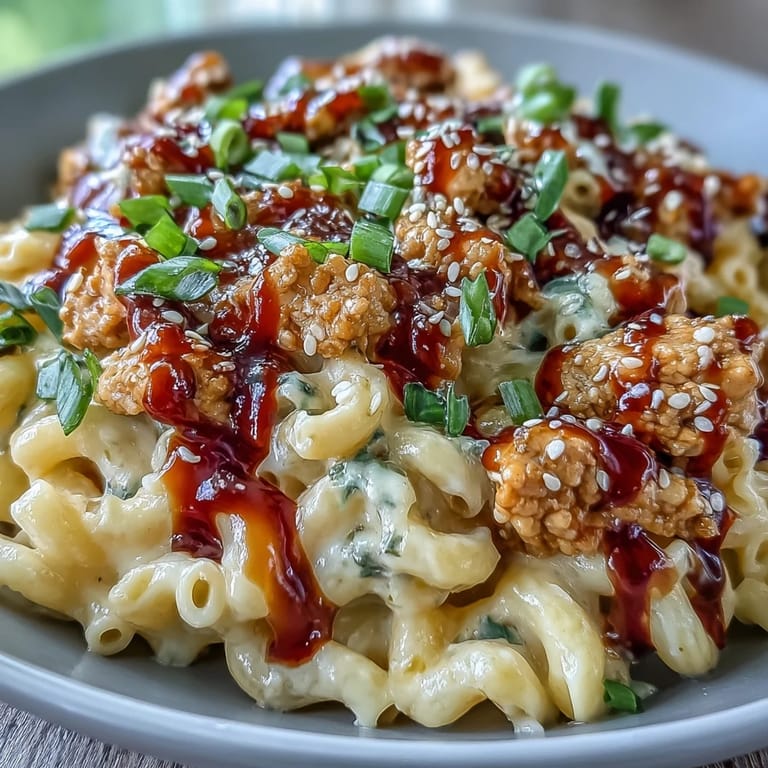
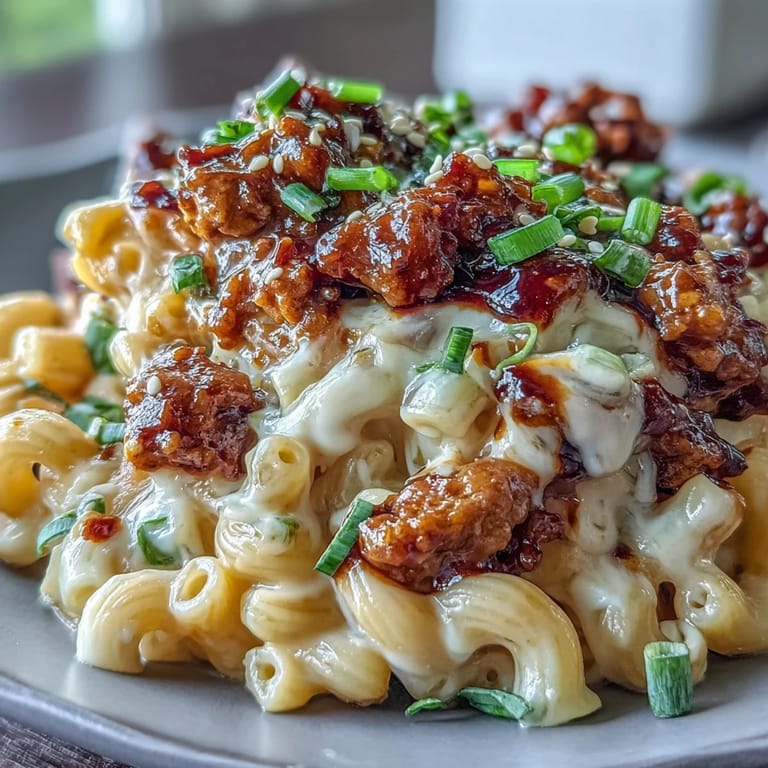
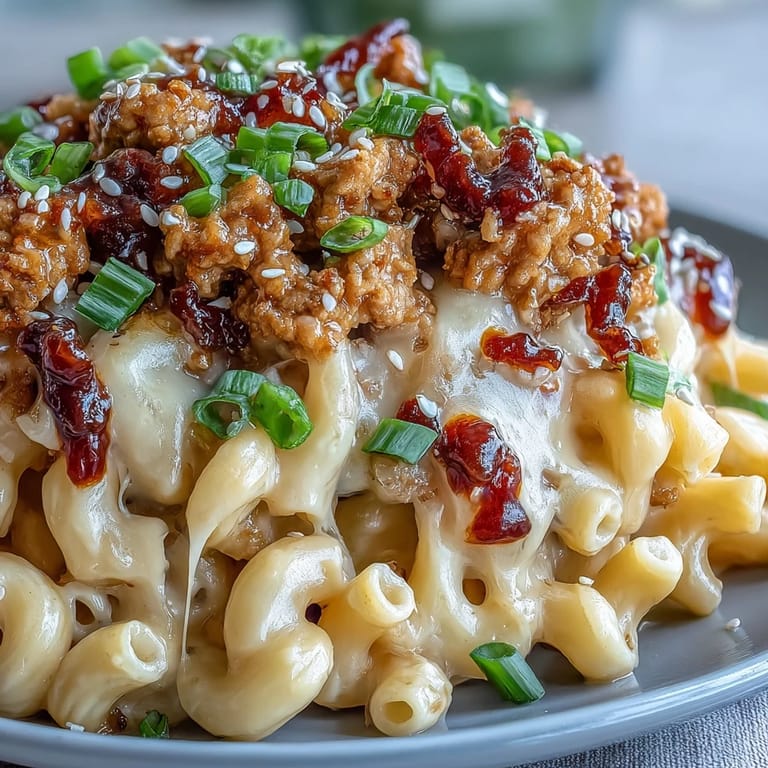
- Divide the mac and cheese into bowls, then top each one with a generous spoonful of the Korean turkey—don't mix them together, let them be distinct so people get both sensations at once. The contrast is the whole point.
- Finish with brightness:
- Scatter sliced scallions and sesame seeds over the top, and watch how the green cuts through the richness and makes the whole thing look alive.
 Pin it
 There was a moment when my ten-year-old nephew took his first bite and his eyes went wide, and he said, "This is fancy," which might be the highest compliment a kid can give. That's when this dish stopped being just dinner and became something that made someone happy on a random Thursday night.
The Roux: Your Creamy Secret Weapon
I used to skip making a proper roux and just melted cheese into hot milk, and every single time it would break or get grainy or taste like something was missing. The roux—that butter-and-flour paste—does something miraculous: it teaches the starch to thicken and hold the milk and cheese together like they were always meant to be family. Once I started taking this step seriously, my mac and cheese became something I could actually be proud of.
Why the Korea Part Works
Gochujang and mac and cheese seem like they should fight, but they don't—the sweetness in the chili paste mirrors the sweetness of honey, and the umami from gochujang and soy sauce deepens the cheese in a way that feels natural. The heat on top of creamy feels luxurious instead of aggressive, like two different cravings decided to meet in the middle. I think it works because both dishes are, at their heart, about comfort and satisfaction, just expressed in different languages.
Making This Your Own
The beauty of this recipe is that it tolerates personality and improvisation better than most fusiony things. I've added extra gochugaru for people who like it hotter, used different cheeses depending on what I had on hand, and even tried it with ground beef once when I was out of turkey and it was honestly still delicious.
- If you want it spicier, add gochugaru (Korean chili flakes) to the turkey mixture a pinch at a time and taste as you go.
- Substitute ground chicken or beef if you prefer, though the cooking time might shift slightly depending on the meat.
- The cheese sauce is forgiving enough to handle adjustments—add a splash of milk if it gets too thick, or let it simmer uncovered for a minute if it's too thin.
 Pin it
 This dish sits at the table like it belongs there, like it was always part of your kitchen story. Serve it hot, make it whenever you want people to feel both comforted and surprised, and know that you're doing something right.
Recipe FAQ
- → Can I make this dish gluten-free?
Use gluten-free macaroni, replace all-purpose flour with a 1:1 gluten-free flour blend, and substitute soy sauce with tamari. Check that your gochujang is certified gluten-free.
- → Is gochujang very spicy?
Gochujang offers moderate heat with sweet and savory notes. For more spice, add gochugaru chili flakes. For less heat, reduce the amount slightly.
- → Can I prepare components ahead?
The cheese sauce and Korean turkey can be made separately up to 2 days in advance. Reheat gently before combining with freshly cooked pasta.
- → What protein alternatives work well?
Ground chicken, beef, or pork all substitute beautifully for turkey. Plant-based crumbles also work for a vegetarian version.
- → How do I store leftovers?
Store in an airtight container refrigerated for up to 3 days. Reheat with a splash of milk to restore creaminess to the cheese sauce.