 Pin it
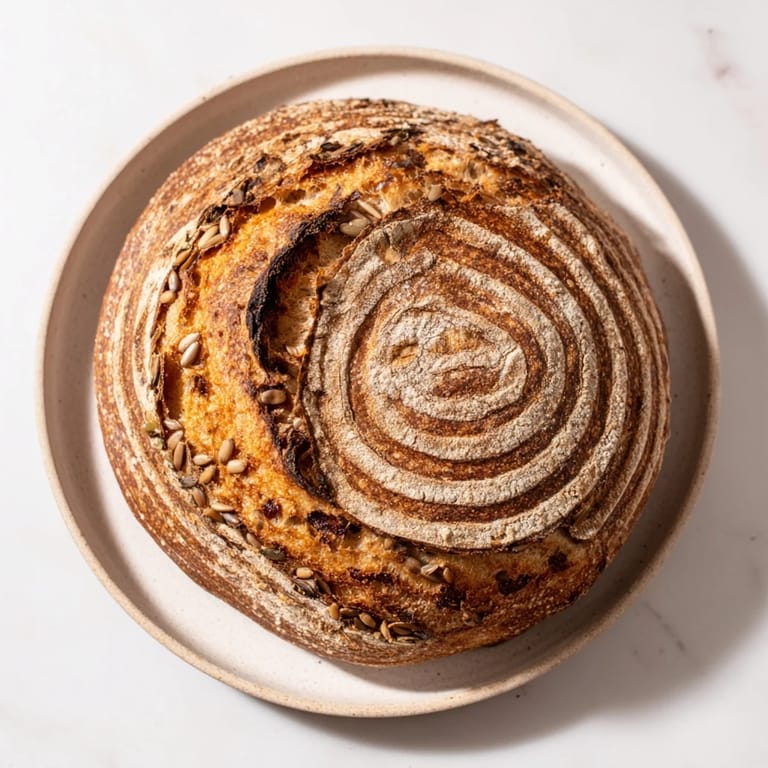
 I'll never forget the afternoon I discovered the Fibonacci spiral in nature while sketching in my garden—golden spirals in sunflower centers, nautilus shells, and pinecones. That evening, I couldn't stop thinking about recreating that pattern in bread. After weeks of experimenting, I finally nailed it: a stunning artisan loaf where each spiral segment grows larger and denser, transforming humble flour and water into edible mathematics. Every time I pull this bread from the oven, I'm still amazed at how nature's blueprint translates into something so delicious.
I first made this for a dinner party that almost didn't happen. A friend had canceled, and I was deflated, so I threw myself into creating something extraordinary to celebrate the people who did show up. When I revealed that bread, the whole table went silent for a moment—then erupted. That bread became the story of the night, and I realized that feeding people something made with intention and wonder changes everything.
Ingredients
- Strong bread flour (500 g): This high-protein flour is your foundation for structure and chew. Don't skip this for all-purpose—I learned the hard way that the difference is real
- Lukewarm water (350 ml): Warm enough to activate yeast, cool enough not to kill it. I always test it on my wrist like I would for a baby's bath
- Sourdough starter or instant yeast (100 g starter or 7 g yeast): Sourdough gives you that complex flavor and patience-building ritual, but instant yeast works beautifully if you're short on time
- Fine sea salt (10 g): This is non-negotiable for flavor and gluten development—table salt has different mineral content and will throw everything off
- Olive oil (15 ml): This adds tenderness to the crumb and richness that lingers on your tongue
- Toasted sunflower seeds (20 g): The smallest spiral segment, toasted to release their nutty essence. Toasting changes everything—raw seeds taste flat by comparison
- Chopped walnuts (30 g): Each spiral grows slightly denser and richer. Walnuts bring earthiness and a delicate bitterness that balances the sweet sun-dried tomatoes later
- Pumpkin seeds (40 g): Continuing the crescendo, these seeds add a gentle pop and mineral-rich heartiness
- Grated hard cheese (50 g): Gruyère or Parmesan brings umami depth. I learned to grate it fresh, never pre-shredded, for better melting and flavor
- Chopped sun-dried tomatoes (60 g): These jewels add sweetness and tang that surprised me the first time I added them to bread
- Mixed olives (70 g): Pitted and chopped, they introduce a briny complexity that makes people ask what that amazing flavor is
- Sautéed spinach (80 g): The final, largest segment. Sauté and drain it thoroughly—this was my biggest lesson. Wet spinach ruins bread structure
Tired of Takeout? 🥡
Get 10 meals you can make faster than delivery arrives. Seriously.
One email. No spam. Unsubscribe anytime.
Instructions
- The Autolyse—Flour and Water First:
- Combine your flour and lukewarm water in a large bowl, mixing until every bit of flour is hydrated. Cover and let it rest for 30 minutes. I know it feels strange to wait when you're eager to make bread, but this step is where gluten begins forming on its own, and it transforms everything. You'll notice the dough feels more cohesive when you return to it.
- Bringing It Together:
- Add your sourdough starter or yeast, along with salt and olive oil. Mix thoroughly until a sticky dough forms. Now comes the kneading—work it on a lightly floured surface for 8 to 10 minutes. You'll feel it transform under your hands, becoming smooth and elastic. This is satisfying work, and you're building the gluten network that will trap those air pockets later.
- The Long, Patient Rise:
- Place your dough in a lightly oiled bowl, cover it, and let it rise at room temperature for 8 to 12 hours. Sourdough especially rewards patience. I often do this overnight, and waking up to a doubled dough feels like a small miracle. If you're using instant yeast, it'll be faster, but don't rush—the flavors develop with time.
- Dividing for the Spiral:
- Turn your risen dough onto a lightly floured surface and divide it into 7 equal portions. I use a kitchen scale for precision here—each piece should be roughly 100 grams if your total dough is about 700 grams. This is where the magic of the Fibonacci spiral begins.
- Building Density with Each Segment:
- Here's where this bread becomes an adventure. Take your first, smallest piece of dough and gently knead in the sunflower seeds. Feel them distributing evenly. Then move to the next piece and knead in the walnuts, then pumpkin seeds, then cheese, then sun-dried tomatoes, then olives, and finally—in your largest piece—the well-drained sautéed spinach. Each addition is an intentional choice, and you'll notice how the character of the dough shifts with each flavor.
- Forming the Spiral:
- Roll each dough portion into a rope, starting with your smallest seed-studded rope. On a parchment-lined baking sheet, coil that first rope around a central point, then wrap the next rope around it, creating a Fibonacci spiral. Press the ends together to seal. I find this meditative—watching the spiral form is almost as satisfying as eating it.
- The Final Rise:
- Cover loosely with plastic wrap or a damp towel and let rise for about 1.5 hours until the loaf looks puffy and feels light to the touch. It should seem almost delicate.
- Preparing for the Oven:
- Preheat your oven to 230°C (445°F) and place an empty tray on the bottom rack. This is crucial for steam, which creates that crackling crust you're after.
- The Bake:
- Dust your spiral loaf with flour to enhance that rustic look. Using a sharp blade or bread lame, score lines that echo the spiral pattern—this guides where the bread will expand and adds to the visual drama. Pour a cup of hot water into the bottom tray to create steam, then bake for 40 minutes, rotating the sheet halfway through. You're looking for deep golden brown and a crust that sounds hollow when tapped.
- The Rest:
- Cool completely on a wire rack before slicing. I know it's hard to wait—the aroma is intoxicating—but cutting into warm bread collapses the crumb. Once cooled, slice into that spiral and watch everyone's eyes light up.
 Pin it
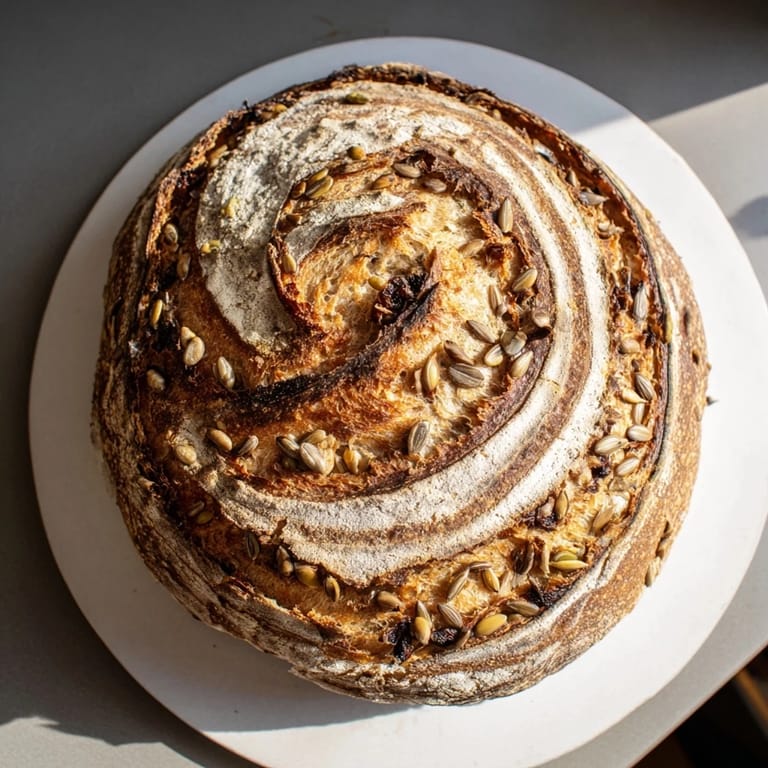
 There's a moment, just after you pull this bread from the oven, when the kitchen fills with an aroma so complex and layered that you're transported. My partner once said it smelled like autumn, the sea, and the earth all at once. That's when I knew this bread had become something special—it wasn't just technically interesting anymore, it was emotional.
Understanding the Fibonacci Pattern
The Fibonacci spiral isn't just pretty—it's mathematically elegant in a way that feels almost sacred. Each spiral segment contains ingredients that increase in quantity, creating a visual and textural story as you work through the loaf. The pattern appears throughout nature because it's efficient and beautiful, and when you replicate it in bread, you're creating something that feels aligned with the natural world. I started researching spirals in shells and plants specifically to understand why this pattern felt so right for bread, and what I discovered was that it naturally creates variation in flavor and texture that keeps every bite interesting.
Customizing Your Spiral
This recipe is really an invitation to play. While I've given you a specific combination that I've tested countless times, the beauty is that you can build your own flavor journey. Think about ingredients you love and how they might work in increasing densities. One time, I made a completely different version with herbs and cheese in the early spirals and roasted vegetables in the later ones. The base recipe stays the same—it's just the spiral additions that change. Your instincts are usually right, so trust them.
Serving and Storing Your Masterpiece
This bread is stunning on its own, but I've learned a few serving tricks that make it shine. Slice it thick and toast it briefly, then brush with good olive oil and perhaps a sprinkle of fleur de sel. It's incredible alongside a simple soup or as the centerpiece of a bread board with good butter and preserves. For storage, keep it in a paper bag at room temperature for a day or two, then slice and freeze what remains. Toasting frozen slices brings them back to life beautifully, which I discovered when I wanted to stretch one loaf across an entire week.
- Serve with excellent olive oil or herbed butter for maximum impact
- Toast day-old slices to refresh them and highlight the crust
- Freeze sliced portions for quick, high-impact breakfasts across the week
 Pin it
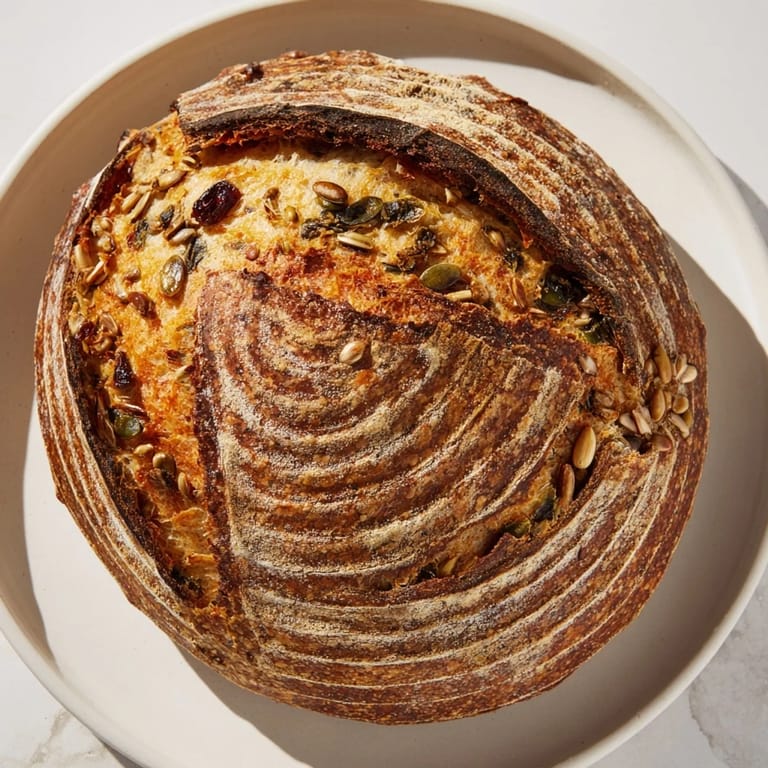
 Making this bread changed how I think about cooking. It reminded me that the most memorable dishes aren't always the easiest—they're the ones made with attention and creativity. Every time someone tastes this spiral and experiences that moment of wonder, I'm reminded why feeding people matters.
Recipe FAQ
- → What is the unique characteristic of this bread's shape?
The bread is shaped into a spiral inspired by the Fibonacci sequence, with each coil growing in size and density, creating a visually stunning layered effect.
- → How do the ingredients contribute to the bread's texture?
Adding seeds, nuts, cheese, and vegetables in increasing amounts per dough portion builds diverse textures, from crunchy to tender crumb throughout the spiral.
- → What is the purpose of steaming during baking?
Introducing steam creates a moist oven environment that promotes a crisp crust while allowing the interior crumb to remain soft and tender.
- → Can this loaf be made suitable for vegan diets?
Yes, by omitting or substituting the cheese with vegan cheese, the loaf remains flavorful and aligns with vegan-friendly preferences.
- → Why is a long fermentation time important?
Extended rising enhances flavor complexity, develops gluten structure, and contributes to the bread's light yet chewy texture.
- → Which tools are essential for preparing this bread?
A large mixing bowl, dough scraper, parchment paper, baking sheet, sharp blade, and kitchen scale are recommended for precise preparation and shaping.