 Pin it
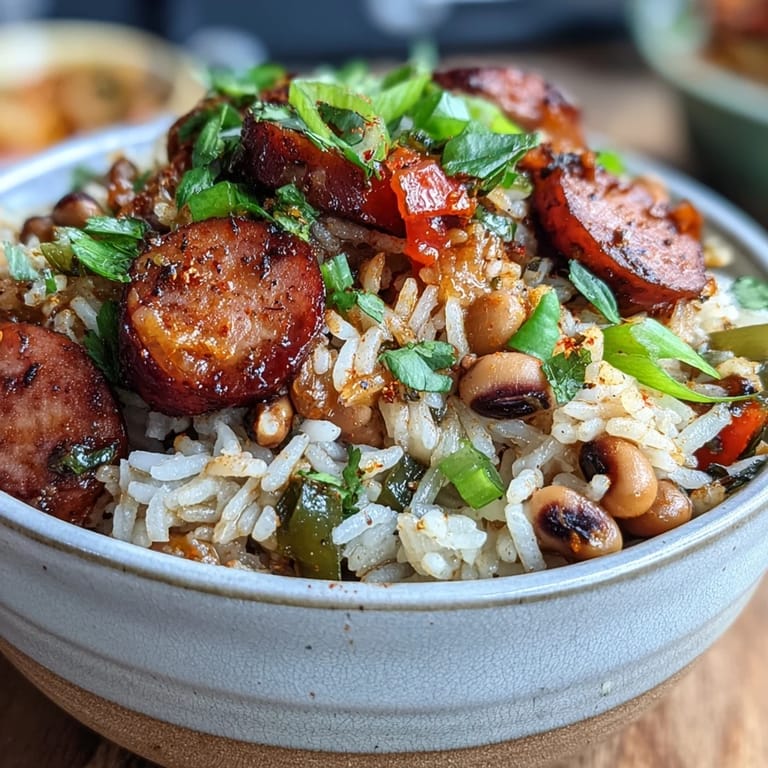
 My neighbor Marcus brought over a pot of jambalaya one rainy Saturday, and I watched him stir it with the kind of confidence only comes from making something a hundred times. The kitchen filled with this smoky, spicy aroma that made everything else fade away, and I realized right then that I needed to learn how to make this. What started as a casual recipe request turned into one of my most-reached-for dishes, especially when I want something that feels both comforting and exciting at the same time.
I made this for my book club once when it was my turn to host, and someone asked for the recipe before we'd even finished eating. That moment when people stop talking mid-sentence because the food is that good—that's the jambalaya effect. Now I make it whenever I want to impress people without breaking a sweat or spending hours in the kitchen.
Ingredients
- Smoked sausage (340 g / 12 oz), sliced: This is your flavor anchor, so don't skip it or substitute with regular sausage; the smoke is what makes this taste authentically Cajun.
- Onion, celery, and bell peppers (1 medium onion, 2 celery stalks, 1 red and 1 green bell pepper): This holy trinity of vegetables is the backbone of Cajun cooking, and dicing them evenly helps them cook at the same rate.
- Garlic (3 cloves), minced: Fresh garlic transforms the dish in the final minute, so don't use powder here.
- Black-eyed peas (1 can, 425 g / 15 oz), drained and rinsed: Canned is perfectly fine and actually easier; I've stopped worrying about dried beans for this because the cooking time is perfect as-is.
- Long-grain white rice (300 g / 1 ½ cups): Long-grain stays separate and fluffy, which is what you want for jambalaya texture.
- Low-sodium chicken broth (800 ml / 3 ⅓ cups): The liquid-to-rice ratio is crucial, so measure carefully and use broth, not water, for depth.
- Diced tomatoes with juices (1 can, 400 g / 14 oz): The juices matter as much as the tomatoes, so don't drain them.
- Cajun seasoning (1 ½ tsp): This is your spice foundation; I prefer to use a good-quality blend rather than making my own because it's more consistent.
- Smoked paprika (1 tsp), dried thyme (½ tsp), dried oregano (½ tsp): These work together to build that complex, smoky flavor profile that makes people ask what's in it.
- Bay leaf (1), salt (½ tsp), black pepper (¼ tsp), cayenne pepper (¼ tsp, optional): Bay leaf adds a subtle herbal note; taste as you go and adjust heat at the end if needed.
- Olive oil (2 tbsp): Just enough to coat the pot and help everything brown without making it greasy.
- Spring onions and fresh parsley (2 spring onions sliced, 2 tbsp parsley chopped): These go on at the very end to brighten everything up and add a fresh contrast.
Tired of Takeout? 🥡
Get 10 meals you can make faster than delivery arrives. Seriously.
One email. No spam. Unsubscribe anytime.
Instructions
- Brown that beautiful sausage:
- Heat your olive oil in a large Dutch oven or heavy pot over medium heat until it shimmers, then add the sausage slices. Let them sizzle for 4 to 5 minutes, stirring occasionally, until they're golden brown on the edges and the fat starts rendering into the pot. This browned layer is where flavor lives.
- Soften the holy trinity:
- Toss in your diced onion, celery, and both bell peppers, and let them cook undisturbed for about a minute so they start to caramelize, then stir and cook for another 4 minutes until everything softens and becomes fragrant. You'll notice the vegetables releasing their juices and mixing with the sausage fat—this is exactly what you want.
- Wake up the garlic:
- Add your minced garlic and cook for just about 1 minute, stirring constantly, until the raw edge disappears and the whole pot smells incredible. Don't let it brown or it'll turn bitter.
- Toast the rice:
- Stir in your long-grain white rice and let it coat in all those oils and vegetable bits for about 2 minutes, stirring frequently. This toasting step helps the rice cook evenly and keeps the grains separate.
- Build the broth base:
- Pour in your chicken broth, diced tomatoes with their juices, and the drained black-eyed peas. Add your Cajun seasoning, smoked paprika, thyme, oregano, bay leaf, salt, black pepper, and cayenne if you're using it. Stir everything together so the seasonings distribute evenly and nothing sticks to the bottom.
- Simmer it low and slow:
- Bring the mixture to a boil (you'll see it bubbling vigorously), then reduce the heat to low, cover with a lid, and let it simmer for 20 to 25 minutes. You're not stirring anymore; you're just letting the rice absorb all that flavorful liquid. The sizzle quiets down and the whole house smells like a New Orleans kitchen.
- Rest and fluff:
- When the rice is tender and the liquid is absorbed, remove the pot from heat and let it sit covered for 5 minutes. This resting time lets everything settle and the flavors marry. Fluff gently with a fork and discard the bay leaf.
- Finish with brightness:
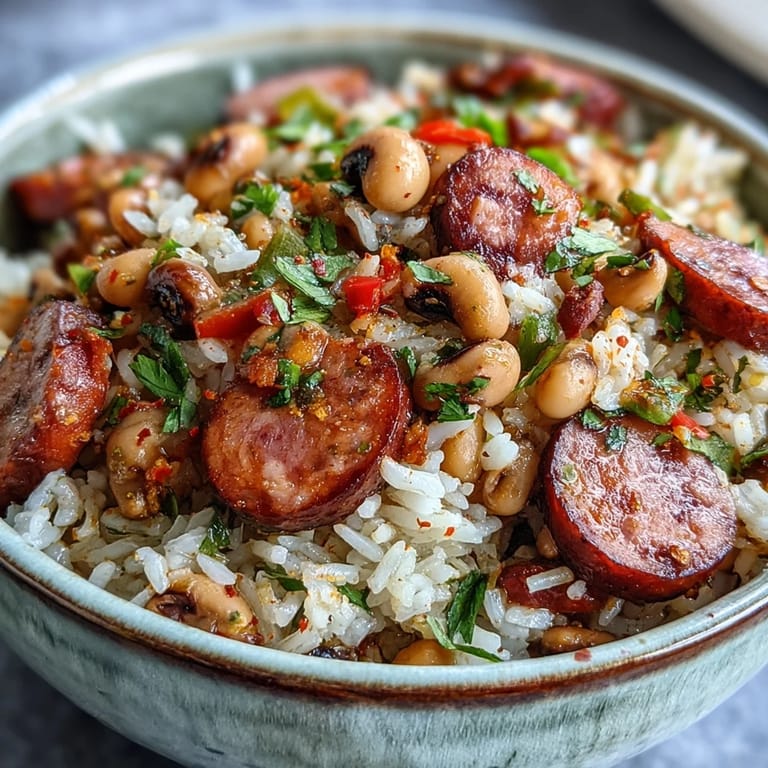
- Top each serving with sliced spring onions and fresh chopped parsley. That green and white garnish isn't just pretty; it adds a fresh bite that cuts through the richness and makes you want another spoonful.
 Pin it
 The first time someone brought me seconds without asking and just started eating straight from the pot while standing in my kitchen, I knew this recipe had become something special. It's one of those dishes that turns a regular evening into something worth remembering.
Why This Dish Tastes So Good
Jambalaya works because it's layered—you build flavor at every step instead of just throwing ingredients together. The sausage browns first so the fat carries that smoky taste through everything. The vegetables soften into the oil and sausage drippings, deepening their natural sweetness. The rice toasts before it cooks, which changes how it absorbs the broth. By the time everything combines, you're not eating separate ingredients; you're eating a unified dish where every bite tastes intentional.
Playing with Heat Levels
Cajun food doesn't have to be face-melting spicy, but it should have some backbone. The Cajun seasoning blend gives you a gentle warmth and depth without overwhelming heat, while the optional cayenne pepper at the end is there if you want to turn up the dial. I've made this for groups where some people want it mild and others want it fiery, and I just add a few dashes of hot sauce to individual bowls rather than putting it all in the pot—that way everyone's happy and no one's kitchen burns down.
Making It Your Own
Once you nail the basic recipe, this is a dish that actually improves with your own tweaks. Some people add okra near the end for that classic Cajun texture, others swap in different sausages or add shrimp if they want seafood vibes. If you're cooking for vegetarians, just skip the sausage, use vegetable broth, and throw in some sliced mushrooms or extra beans to keep it hearty. The beauty of jambalaya is that it's forgiving enough to change with what you have on hand but structured enough that it always works.
- Okra additions: Add diced okra in the last 5 minutes of simmering if you want that traditional thickening agent and slightly slimy texture.
- Protein swaps: Shrimp works beautifully if you add it in the last 3 minutes, or chicken thighs if you cook them first and shred them.
- Leftover magic: This reheats perfectly and actually tastes better the next day when flavors have settled, so don't hesitate to make extra.
 Pin it
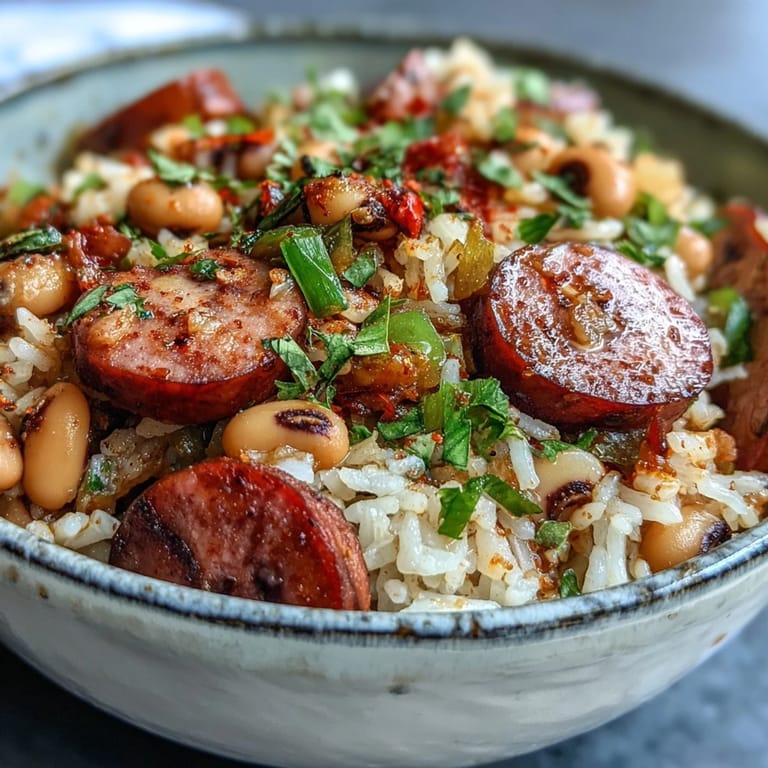
 This is the kind of recipe that feels impressive but never asks for more than you're willing to give. Make it once and you'll understand why it's been a staple in Cajun kitchens for generations.
Recipe FAQ
- → Can I make this vegetarian?
Yes, simply omit the smoked sausage and substitute vegetable broth for the chicken broth. Add extra black-eyed peas, mushrooms, or plant-based sausage to maintain heartiness and protein content.
- → What type of rice works best?
Long-grain white rice is ideal as it stays fluffy and doesn't become sticky. Brown rice can be used but will require additional liquid and longer cooking time—about 45 minutes total.
- → How spicy is this dish?
The heat level is medium with Cajun seasoning and optional cayenne. Reduce cayenne or use mild Cajun seasoning for a milder version. Hot sauce on the table lets everyone adjust to their preference.
- → Can I use dried black-eyed peas instead of canned?
Absolutely. Soak 1 cup dried peas overnight, then simmer for 45-60 minutes until tender before adding to the jambalaya. You may need slightly more liquid during the final cooking stage.
- → How long do leftovers keep?
Store in an airtight container in the refrigerator for up to 4 days. The flavors often improve overnight. Reheat gently with a splash of broth or water to restore moisture.
- → What sausage alternatives work well?
Andouille is traditional, but kielbasa, chorizo, or any smoked pork sausage adds excellent flavor. For leaner options, try turkey kielbasa or smoked turkey sausage.